

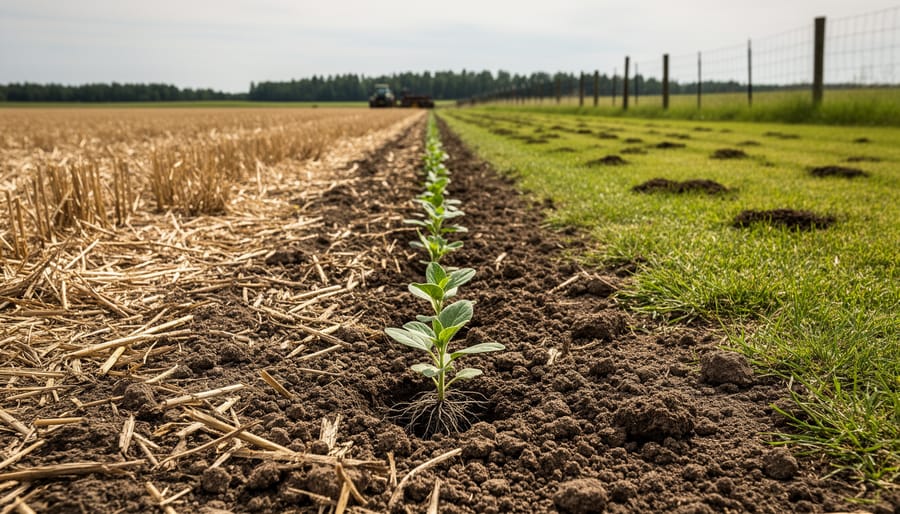
Unsustainable agricultural practices are farming and ranching methods that degrade soil health, deplete water resources, rely heavily on synthetic inputs, or reduce biodiversity to the point where land productivity declines over time. In Alberta, these practices most commonly include continuous monoculture cropping without rotation, excessive tillage that accelerates erosion, overgrazing that depletes native grasslands, and irrigation strategies that draw down aquifers faster than they recharge. The good news? Most producers currently using these methods can transition to regenerative alternatives with the right support, often seeing improved yields and reduced input costs within three to five years.
Alberta’s ag community has already begun this shift. Across the province, grain farmers are adopting no-till systems paired with cover crops, ranchers are implementing rotational grazing that mimics natural bison movement, and mixed operations are integrating livestock with crop production to build soil organic matter. These aren’t fringe experiments. They’re proven strategies backed by university research, supported by provincial programs, and demonstrated on working farms from the Peace Country to the Palliser Triangle.
The challenge isn’t whether sustainable practices work in our climate. It’s identifying which practices on your operation need adjustment and accessing the technical knowledge and financial support to make changes without risking your livelihood. This guide walks you through that process, from assessing your current methods to connecting with agronomists, pilot programs, and fellow producers who’ve successfully made the transition.
What Unsustainable Agricultural Practices Are
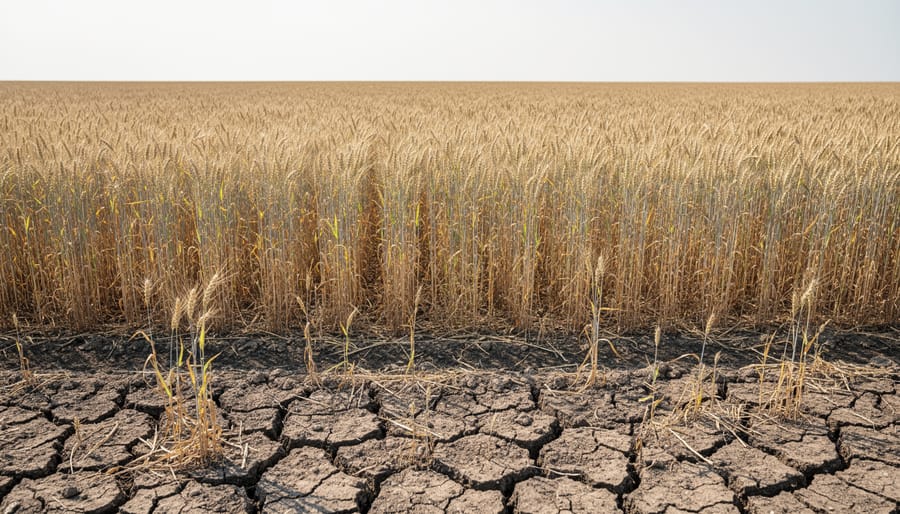
Common Unsustainable Methods in Alberta
Alberta’s agricultural landscape faces several persistent challenges from practices that degrade soil, water, and long-term productivity. The most common unsustainable methods include:
- Continuous cropping without rotation: Growing the same crop year after year depletes specific nutrients, encourages pest and disease buildup, and breaks down soil structure. Evidence shows crop rotation benefits yields by 10-15% compared to monoculture systems.
- Over-reliance on synthetic fertilizers and pesticides: Excessive chemical inputs disrupt beneficial soil microbes, increase production costs, and create resistance in weeds and pests. Studies document the pesticides water contamination risk in agricultural watersheds across the prairies.
- Improper irrigation leading to salinization: Applying too much water or using inefficient methods raises water tables and brings salts to the surface. Research confirms that improper irrigation increases salinity particularly in southern Alberta’s irrigated districts where poorly managed systems have rendered thousands of acres less productive.
- Livestock overgrazing: Keeping too many animals on pasture for too long compacts soil, reduces plant diversity, and accelerates erosion on sloped land.
These practices share a common thread: they prioritize immediate convenience or short-term yields over the soil health principles that sustain farming operations across generations. Many Alberta producers inherited these methods from an era when chemical inputs were cheap and environmental consequences poorly understood. Recognizing them as unsustainable isn’t about assigning blame, it’s about identifying opportunities for improvement that protect both farm profitability and the land itself.
Which Alberta Farms and Operations Are Affected
No farm in Alberta sets out to damage the land, but certain operational profiles are more prone to slipping into unsustainable patterns. Understanding whether your operation falls into a high-risk category is the first step toward making informed changes.
Grain Operations with Intensive Monoculture
Large-scale grain farms that plant the same crop year after year face the highest risk. Continuous wheat or canola cultivation without rotation depletes specific soil nutrients, builds up pest populations, and increases disease pressure. These operations often compensate with heavier chemical applications, creating a cycle that becomes harder to break. If you’re planting the same crop on the same fields for three or more consecutive years, you’re in this category.
Livestock Operations with High Stocking Densities
Feedlots and confined livestock operations can stress pastureland beyond its recovery capacity. When too many animals graze too small an area for too long, soil compaction increases, vegetation disappears, and manure concentrations overwhelm natural nutrient cycling. Operations running stocking rates above recommended levels for their soil type and precipitation zone should evaluate their grazing management.
Irrigated Farms in Southern Alberta
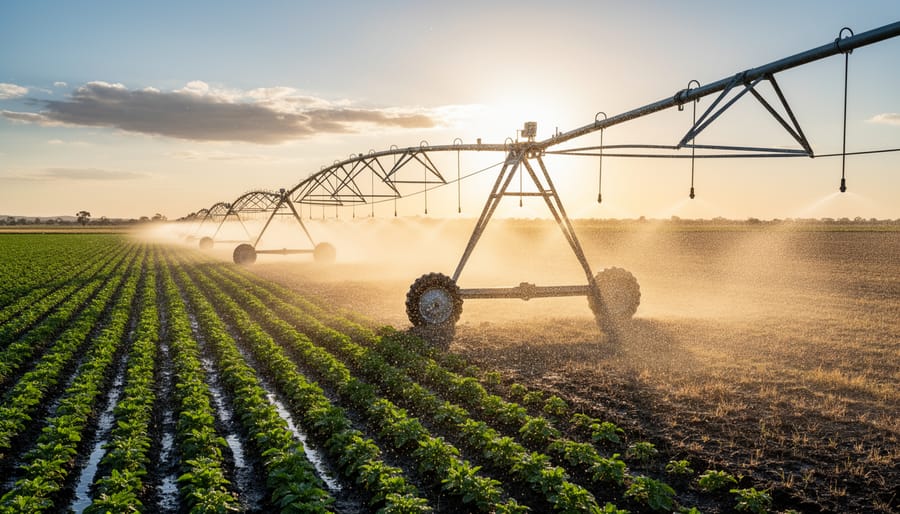
Irrigation brings enormous productivity gains, but mismanagement creates lasting problems. Over-irrigation leads to salinization, waterlogging, and aquifer depletion. Farms using flood irrigation or applying water without monitoring soil moisture levels often use two to three times what crops actually need. If you irrigate but don’t measure application rates or haven’t tested for salt buildup, your practices may qualify as unsustainable.
Legacy Operations Using Outdated Methods
Multi-generational farms sometimes continue practices that made sense decades ago but harm productivity today. Heavy tillage, minimal soil testing, calendar-based rather than need-based fertilizer applications, and equipment that hasn’t been updated in twenty years all signal potential problems. There’s no shame in inherited methods, but there’s real cost in not updating them.
Most Alberta farms aren’t purely sustainable or unsustainable, they’re somewhere in between, with some practices that work and others that need attention. The key is honest self-evaluation. Look at your input costs over the past five years. If fertilizer, pesticide, and fuel expenses keep climbing while yields plateau or drop, that’s a strong signal. Check your soil organic matter levels; if they’ve declined, your practices are extracting more than they’re returning.
You don’t need to fit every characteristic to benefit from transitioning. Even farms with one or two risk factors can improve profitability and resilience by addressing those specific issues.
How to Transition Away from Unsustainable Practices
First Steps: Assessment and Planning
Start by documenting what you’re doing now. Walk your fields with a notebook and record current crop rotations, tillage methods, input applications, and irrigation patterns. Take photos of soil conditions, erosion areas, and water management infrastructure. This baseline snapshot shows exactly where you stand and makes tracking progress possible.
Next, get your soil tested. Alberta’s provincial soil testing labs offer comprehensive analysis that reveals nutrient levels, organic matter content, pH, and salinity. These numbers tell you what your land actually needs versus what you’ve been applying. Many Alberta agrologists will review your results at no charge during initial consultations and help you spot where inputs exceed requirements or where soil health has declined.
Identify your top two or three priority areas. Don’t try fixing everything at once. If soil tests show severe nutrient depletion, focus there first. If erosion threatens productivity, make conservation the priority. Ranking by financial impact and environmental risk helps you allocate limited time and capital effectively.
Set specific, measurable goals with realistic timelines. “Reduce fertilizer costs by 15% within two years through precision application” beats vague aspirations. Build in checkpoints every six months to assess progress. Alberta Agriculture extension offices connect you with transition planning templates and can link you to farmers who’ve completed similar shifts, including those supplying the local food movement who often share practical timelines and budgeting strategies.
Implementation Strategies That Work
Starting with crop rotation breaks the pest and disease cycles that monoculture perpetuates. A three- or four-year rotation, alternating canola with wheat, barley, and a pulse crop like peas, restores soil nitrogen naturally and cuts fertilizer costs by 15 to 30 percent within two seasons. Plant your pulses first, then cereals, and finish with oilseeds; this sequence maximizes residual nitrogen and disrupts weed patterns without additional herbicide passes.
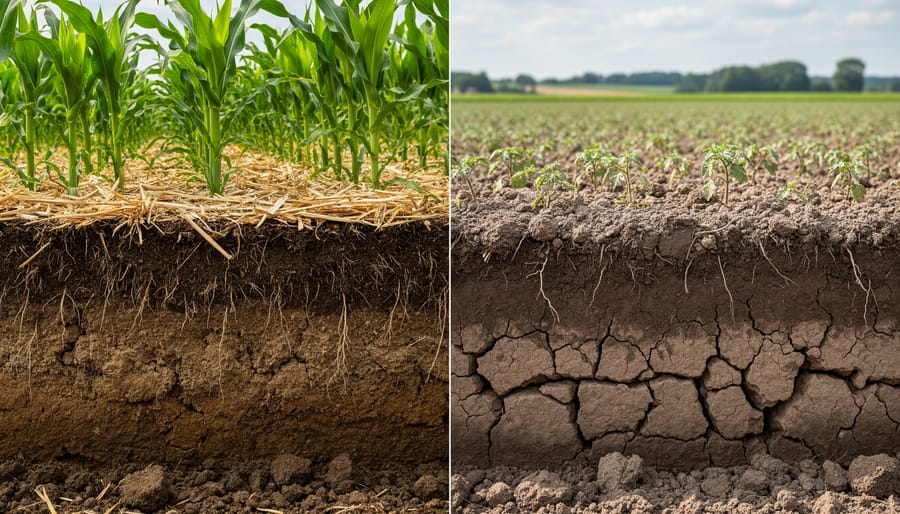
Conservation tillage preserves soil structure and moisture. Switch from conventional plowing to minimum-till or no-till equipment. You’ll see fuel savings immediately and, over three years, measurable increases in organic matter. Invest in a quality air-seeder with narrow openers; it places seed accurately through residue and reduces the temptation to work the field heavily beforehand.
Reduce chemical inputs by adopting integrated pest management. Scout fields weekly during the growing season, apply pesticides only when thresholds are met, and use targeted products instead of broad-spectrum treatments. Pair this with cover crops like winter rye or hairy vetch between cash crops to suppress weeds and add biomass.
For livestock operations, rotational grazing transforms pasture health. Divide paddocks with temporary electric fencing, move cattle every two to four days, and rest pastures for at least 30 days before regrazing. This approach boosts forage productivity by up to 40 percent and minimizes overgrazing damage.
Near Lacombe, a 900-acre grain and cattle operation made these changes over five years. They introduced a canola-barley-peas rotation, cut tillage passes from four to one, and divided pastures into twelve paddocks. Fertilizer costs dropped 22 percent, pasture carrying capacity increased by a third, and soil organic carbon rose measurably. The transition required patience and careful cash-flow management, but profitability improved steadily after year three.
Your Rights and Obligations as an Alberta Farmer
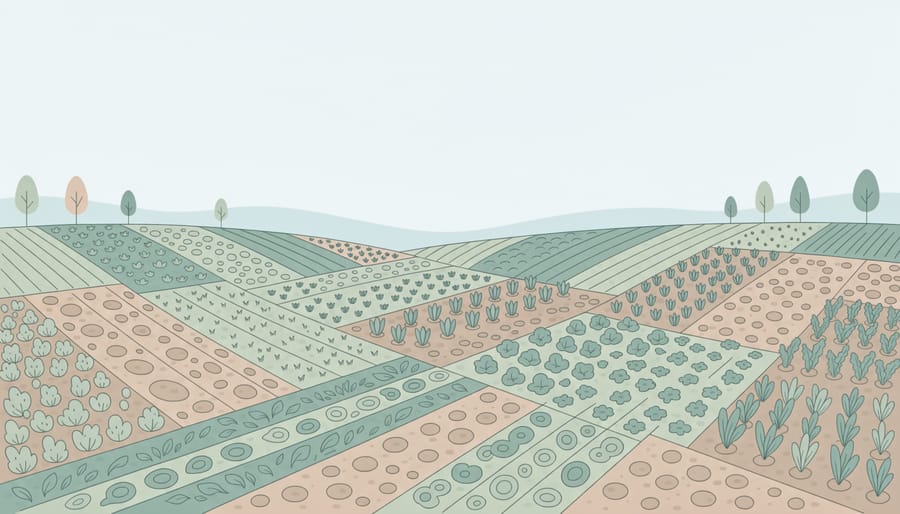
As an Alberta farmer, you have clear entitlements and responsibilities when it comes to agricultural practices. Understanding both helps you navigate the transition to sustainable methods while staying compliant with provincial requirements.
You’re entitled to access several forms of support at no or low cost. Alberta Agriculture and Irrigation provides free technical assistance through regional agrologists who can assess your operation and recommend changes. Cost-share programs cover portions of expenses for soil testing, water management upgrades, and conservation infrastructure. Federal-provincial funding streams, including the Canadian Agricultural Partnership, offer financial assistance specifically for farmers adopting sustainable practices. You also have the right to participate in research trials and demonstration projects that test new methods before you commit to full implementation.
| Your Rights as an Alberta Farmer | Your Obligations Under Alberta Law |
|---|---|
| Access to free extension services and agronomic advice | Comply with Environmental Protection and Enhancement Act for waste management |
| Eligibility for cost-share programs and transition funding | Obtain water licenses under the Water Act for irrigation withdrawals |
| Technical support for soil health and conservation planning | Follow pesticide application rules and maintain spray records |
| Participation in voluntary certification and incentive programs | Meet nutrient management standards to prevent runoff into waterways |
Most changes away from unsustainable practices are voluntary, meaning you choose when and how to transition. However, certain baselines are mandatory. You must comply with the Environmental Protection and Enhancement Act, which governs manure storage, chemical handling, and waste disposal. The Water Act requires licenses for irrigation and sets withdrawal limits to protect river flows. Pesticide regulations under the Pest Management Regulatory Agency demand certified applicator training and record-keeping for commercial applications.
These obligations exist whether you farm conventionally or sustainably, but transitioning often makes compliance easier. Practices that improve soil structure naturally reduce erosion and nutrient runoff, helping you meet water quality standards without additional infrastructure. Integrated pest management cuts chemical use, simplifying reporting requirements.
The key distinction is this: regulatory compliance is non-negotiable, but how you achieve it remains flexible. Alberta encourages voluntary adoption of better methods through incentives rather than mandates, giving you control over your transition timeline while ensuring environmental baselines are met.
Where to Get Help and Resources
Alberta farmers looking to transition away from unsustainable practices have access to a robust network of support services and resources designed specifically for producers in the province. You don’t need to navigate this shift alone, multiple organizations provide technical expertise, financial assistance, and practical guidance tailored to Alberta’s unique agricultural landscape.
Start with Alberta Agriculture and Irrigation’s extension services, which offer free consultations with agrologists who can assess your operation and recommend science-based improvements. These specialists understand local soil conditions, climate patterns, and crop systems, providing advice that works in Alberta’s context rather than generic solutions. The department also runs soil health initiatives that include testing subsidies and conservation planning support.
Financial help comes through several channels. The Canadian Agricultural Partnership provides cost-share funding for environmental farm plans, precision agriculture equipment, and infrastructure upgrades that support sustainable practices. The Agricultural Climate Solutions program offers payments for adopting practices like cover cropping and reduced tillage that sequester carbon. Your local municipal district may also run programs supporting water efficiency improvements or beneficial management practices.
For hands-on learning and community support, connect with agricultural societies and producer groups across the province. These organizations host field days, workshops, and peer-to-peer learning opportunities where you can see sustainable practices in action on neighbouring farms and learn from producers who have successfully made the transition.
Technology providers specializing in precision agriculture offer another valuable resource. Companies operating in Alberta provide soil mapping services, variable-rate application equipment, and data analytics platforms that reduce input costs while improving environmental outcomes. Many offer trial periods or demonstrations so you can evaluate tools before investing.
The Alberta Conservation Association and Ducks Unlimited Canada both work with farmers on wetland conservation and water management projects, often providing technical support and funding for on-farm improvements. These partnerships can help address water-related sustainability challenges while enhancing wildlife habitat on your land.
How to Apply or Complete the Process
While there’s no single “application” to stop using unsustainable practices, Alberta farmers do need to navigate specific regulatory and compliance steps when transitioning methods, particularly around water use, pesticide application, and environmental protection.
Start by reviewing your current permits and registrations with Alberta Environment and Protected Areas. If you’re changing irrigation practices or water sources, update your water licence through the online portal or contact your local watershed planning and advisory council. Changes that reduce water use may simplify compliance, but you still need to notify regulators.
For pesticide use modifications, ensure anyone applying chemicals holds a valid pesticide applicator certificate. If you’re reducing or eliminating certain products, update your farm’s pesticide use records accordingly, Alberta requires three years of documentation for inspection purposes.
Soil conservation changes typically don’t require permits, but if you’re altering land drainage or implementing major erosion control structures, check with your municipal district about development permits.
Document your transition plan and keep records of practice changes, soil tests, and input reductions. This documentation proves compliance during inspections and supports applications for cost-share programs through Growing Forward or Environmental Stewardship programs, which have separate application processes with defined deadlines each year.
Common Questions About Transitioning Practices
How much does transitioning away from unsustainable practices cost?
Initial costs vary widely depending on your operation size and chosen changes, ranging from minimal expenses for crop rotation planning to significant investments in equipment like no-till drills or precision agriculture technology. Many Alberta farmers offset these costs through federal-provincial cost-share programs and find that reduced input expenses (particularly fertilizer and fuel) begin offsetting transition costs within two to three years.
How long before I see positive results from sustainable practices?
Soil health improvements typically become measurable within 18-24 months, though some benefits like better water infiltration can appear in a single growing season. Economic returns often take three to five years to stabilize as your operation adjusts, but early adopters in Alberta report seeing reduced input costs and improved resilience to drought conditions well before that timeline.
Will my yields drop during the transition period?
A temporary yield dip of 5-15% is common in the first one to two years as soil biology rebuilds and you fine-tune new methods, but this isn’t universal, some farms maintain yields while others see immediate improvements in stressed or degraded land. The key is managing expectations and planning financially for short-term variability while your operation adapts.
Can I maintain profitability while transitioning?
Yes, especially when you phase changes strategically and tap into premium market opportunity pricing for sustainably grown products. Many Alberta farmers protect profitability by starting with low-cost changes like cover cropping on a portion of acres, accessing transition support programs, and diversifying revenue streams while gradually expanding sustainable practices across their operation.
The biggest concern most farmers voice isn’t whether to transition, but how to do it without jeopardizing their operation’s financial stability. The answer lies in treating the shift as a managed process rather than an overnight overhaul, start small, monitor closely, and scale what works for your specific land and market conditions.
Transitioning away from unsustainable practices isn’t about abandoning what’s kept Alberta farms running. It’s about protecting their future. The short-term gains from intensive monoculture, heavy chemical reliance, or overgrazing can mask the erosion of the very assets your operation depends on: healthy soil, clean water, and resilient ecosystems.
The good news? You don’t have to overhaul everything overnight. Start with one field, one herd, or one practice. Test conservation tillage on a quarter section. Introduce a single rotation crop. Adjust grazing patterns on your most degraded pasture. Small, deliberate steps reduce risk while building the knowledge and confidence needed for broader changes.
Alberta farmers aren’t making this shift alone. Extension agrologists, soil conservation programs, and federal-provincial cost-share initiatives provide both technical guidance and financial support. Local agricultural societies and producer groups offer peer learning and real-world examples from neighbours who’ve successfully made the transition.
The farms that will thrive in 2030 and beyond are the ones adapting now. The resources exist, the knowledge is proven, and the community is ready to help. Your first step is simply deciding to take it.