

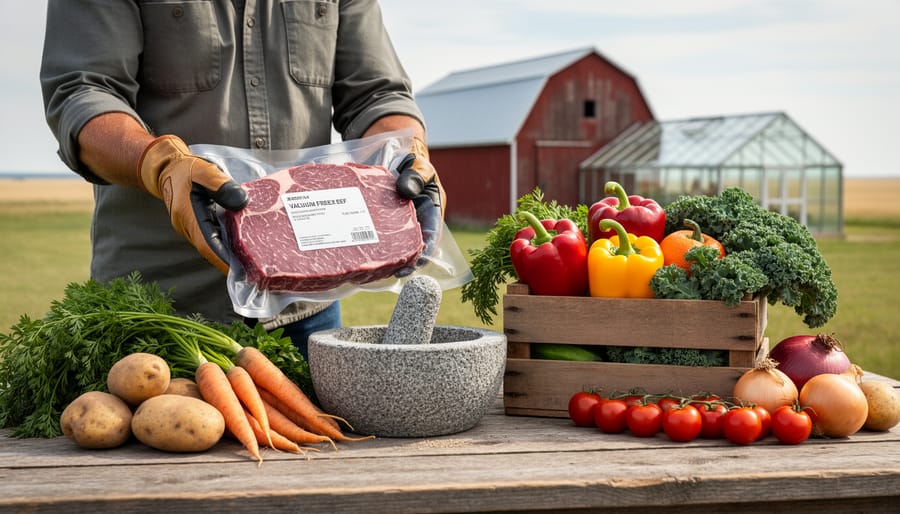
The local food movement connects Alberta producers directly with consumers who want fresh, traceable products from farms and ranches they can visit or learn about. For grain farmers, livestock producers, and market gardeners across the province, this shift represents a growing revenue stream that bypasses traditional commodity markets and builds customer loyalty through transparency and quality. The movement isn’t new, but participation among commercial-scale operations has surged since 2020 as both consumer demand and distribution infrastructure have matured.
At its core, local food means products grown, raised, or processed within a defined geographic area and sold closer to home. In Alberta, that typically means within the province or a specific regional foodshed. This approach benefits the Alberta ag community by capturing more value at the farm gate. Instead of selling beef calves into the commodity chain at standard rates, a rancher might finish cattle for direct-to-consumer freezer beef at premium prices. A grain producer could mill wheat into flour for bakeries and restaurants willing to pay more for identity-preserved, locally-sourced ingredients.
The economics are compelling. Local food sales in Canada reached $4.7 billion in 2024, and Alberta producers captured a meaningful share through farmers’ markets, community-supported agriculture programs, online platforms, and wholesale accounts with restaurants and retailers seeking local provenance. Producers who engage strategically report profit margins 20 to 40 percent higher than conventional channels, though success requires attention to marketing, logistics, and food safety compliance.
This movement also addresses practical challenges you face. Transportation costs, volatile commodity prices, and limited market access have pushed many operations to explore alternatives. Local food offers a hedge against those pressures while strengthening rural economies and reconnecting consumers with how their food is produced.
What Drives the Local Food Movement in Alberta
Several powerful forces are converging to make local food a priority for Albertans in 2026, and understanding these drivers helps producers position themselves strategically in this expanding market.
Consumer demand for transparency sits at the heart of the movement. Shoppers increasingly want to know exactly where their food comes from, how it was raised, and who grew it. This isn’t abstract curiosity, surveys show Alberta consumers will pay premium prices for products with clear origin stories and verified production methods. Farmers’ markets, on-farm tours, and direct sales channels let producers meet this demand while building loyal customer relationships that generic retail channels can’t match.
Environmental considerations play a significant role too. Shortened supply chains mean fewer transportation miles, which resonates with environmentally conscious buyers. Beyond carbon reduction, local food systems encourage crop diversity and regenerative practices that improve soil health, benefits Alberta producers can highlight when marketing their products. The environmental angle isn’t just good PR; it’s becoming a competitive advantage as climate concerns shape purchasing decisions.
Economic resilience drives both producers and communities toward local food. When farmers sell directly or through regional partnerships, more revenue stays in rural Alberta instead of flowing to distant processing facilities and retail chains. Local food creates jobs in processing, distribution, and retail while strengthening the economic fabric of small towns. For individual producers, local markets offer better margins than commodity sales and provide insulation from volatile global price swings.
Food security concerns have intensified since supply chain disruptions highlighted Alberta’s dependence on imported food. Communities recognize that strong local food systems provide stability when global networks falter. This awareness translates into institutional support, schools, hospitals, and municipalities increasingly prioritize local procurement, creating reliable markets for Alberta producers willing to meet institutional needs.
Economic Opportunities for Alberta Producers
Direct Marketing Channels
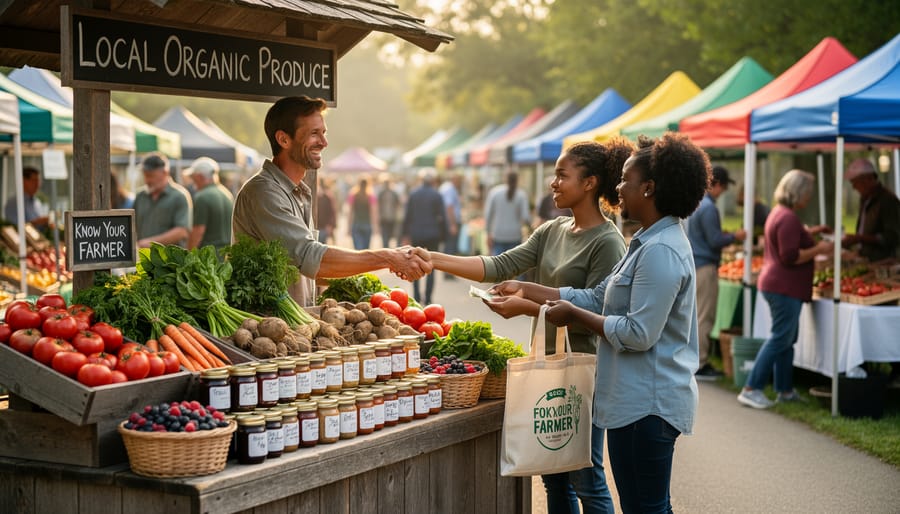
Alberta producers have multiple proven channels to sell directly to consumers, each offering distinct advantages for building customer relationships and capturing retail margins.
Farmers’ markets remain the most accessible entry point. Alberta hosts over 140 markets from May through October, with year-round indoor markets in Calgary, Edmonton, and Red Deer. Markets let you test products, gather immediate customer feedback, and build a loyal following. Expect to pay $30-80 per market day for a booth, with prime locations requiring advance booking. Successful vendors treat markets as brand-building exercises, not just sales events.
On-farm sales transform your operation into a destination. Whether it’s a roadside stand, u-pick operation, or farm gate store, selling at source eliminates intermediaries and lets customers experience where their food originates. Many Alberta cattle ranchers now sell freezer beef directly from the farm, while grain producers offer bulk sales of specialty flours and pulses. You’ll need proper signage, adequate parking, and clear hours of operation to make this work.
Community Supported Agriculture programs create predictable cash flow through advance subscriptions. Members pay upfront for a season’s share of your harvest, typically $400-800 for weekly vegetable boxes from June to October. CSAs shift market risk to consumers who accept seasonal variety, though you must deliver consistent quality and communicate well about what’s available each week.
Online platforms have exploded since 2024. Services like ACFA Direct Connect and Good Food Box allow producers to list products, process orders, and coordinate pickup points across Alberta communities, reaching urban buyers without physical market presence.
Value-Added Product Development
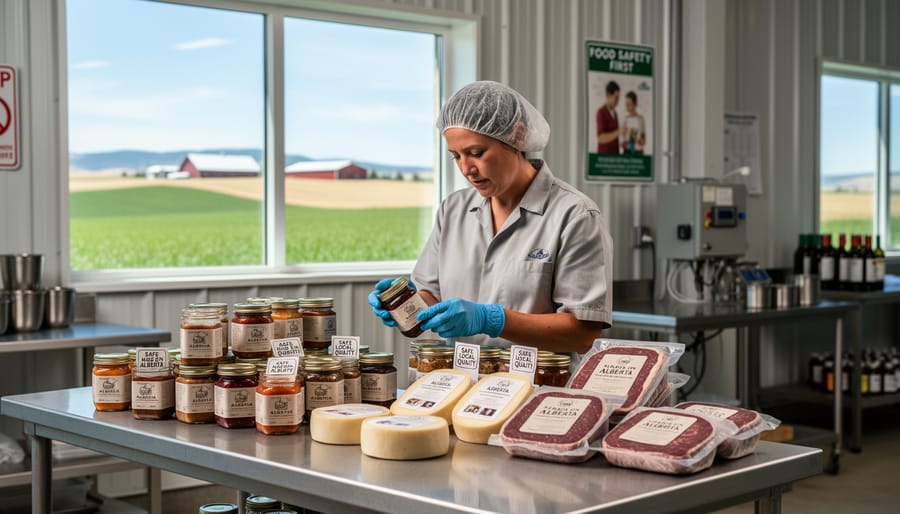
Alberta producers are discovering that transforming raw commodities into finished products can dramatically improve their bottom line while meeting consumer demand for authentic, locally-crafted foods.
Processing raw milk into aged cheddar or chèvre, turning grass-fed beef into jerky and salami, or milling heritage wheat into specialized flour allows farmers to capture more value from each unit they produce. Instead of selling raw beef at commodity prices, a rancher processing their own charcuterie can see margins increase by 200-400%. A grain grower who mills and packages their own organic flour directly to consumers or local bakeries commands premiums that bulk commodity sales never deliver.
The key is starting small with products that match your operation’s strengths and available infrastructure. Many successful Alberta producers begin with one signature item, perhaps a farmstead cheese or smoked meat, test it at farmers’ markets, then gradually expand their line based on customer feedback.
Provincial food hubs and shared kitchen facilities reduce the barrier to entry, offering processing space and equipment that would be prohibitively expensive for individual farms. This infrastructure lets you experiment with recipes and production volumes before committing to on-farm processing facilities.
Regional Supply Chain Partnerships
Alberta producers are forging profitable partnerships with institutional buyers and commercial kitchens that value consistent, traceable local supply. Restaurants across Calgary and Edmonton increasingly feature farm-to-table menus built around seasonal Alberta ingredients, creating predictable demand that helps farmers plan production cycles. Schools and hospitals are adopting local procurement policies, some hospital networks now source up to 30% of their produce from within 200 kilometers, providing volume contracts that stabilize cash flow for mid-sized operations.
These partnerships work because they solve problems for both sides. Chefs get fresher ingredients and menu storytelling opportunities; producers gain reliable buyers who pay fair prices and order in advance. Retailers like independent grocers are establishing dedicated “Local Alberta” sections with preferred supplier relationships, reducing the uncertainty of selling through multiple channels while building customer loyalty around regional food identity.
Alberta Success Stories: Farmers Leading the Movement
Alberta’s local food movement isn’t theoretical, it’s built on the real-world success of producers who took the leap and found profitable, sustainable business models. These examples demonstrate what’s possible when farmers align their operations with consumer demand for local, traceable food.
TK Ranch near Hanna transformed from a conventional cattle operation into a thriving direct-to-consumer beef business starting in 2019. Owner Tom Kline began selling quarter and half beef shares directly to families in Calgary and Edmonton, cutting out multiple middlemen. By 2023, he’d built a customer base of over 300 households and added value by offering custom processing options and delivering monthly to pickup points in both cities. His profit margins increased by roughly 40 percent compared to selling through traditional auction markets, and the direct relationships with customers created stability even when commodity prices fluctuated. Kline reinvested those gains into rotational grazing infrastructure that improved pasture health while reducing feed costs, a win for both profitability and land stewardship.
In central Alberta, Poplar Bluff Organics near Red Deer built their business entirely around community-supported agriculture. The Janzen family started with 30 CSA shares in 2017, providing weekly vegetable boxes to local families. By 2026, they’re running 180 shares across three seasons and have added a farm store selling their own preserves, frozen berries, and value-added products like pesto and kimchi made from surplus produce. Their CSA model provides predictable cash flow at the start of each season, members pay upfront, which eliminates the financial uncertainty that plagues many vegetable operations. The Janzens also partner with two Red Deer restaurants that feature their produce on seasonal menus, creating additional wholesale revenue without the logistics headaches of farmers’ markets.
Highwood Crossing near Aldersyde shows how grain farmers can tap into local markets. They mill heritage wheat varieties into flour sold directly through their farm store and online, plus supply dozens of Alberta bakeries and restaurants. By processing grain into flour rather than selling raw wheat, they capture significantly higher per-acre returns. Their brand emphasizes Alberta-grown heritage grains and transparent farming practices, which resonates with consumers willing to pay premium prices for local, traceable ingredients. They’ve also created an agritourism component with farm tours and baking workshops that generate additional income while building customer loyalty.
These operations share common threads: direct customer relationships, value-added processing, diversified revenue streams, and alignment with what today’s consumers value in their food supply.
Technology and Innovation Supporting Local Food Systems
Technology has become a powerful ally for Alberta producers looking to build or expand their presence in local food markets, making what once required significant capital or labor far more accessible. You don’t need a corporate-scale operation to benefit from digital tools that streamline sales, manage inventory, and connect you directly with customers who value knowing where their food comes from.
Digital marketplaces have transformed how Alberta farmers reach local buyers. Platforms like LocalLine and FreshSpire allow producers to set up online storefronts, manage orders, coordinate pickups or deliveries, and process payments without building their own e-commerce systems from scratch. These tools integrate with farmers’ markets, CSA programs, and direct-to-consumer sales channels, giving small operations a professional sales infrastructure that scales with demand. Mobile payment systems and QR code ordering at farm stands or markets have similarly removed friction from transactions, letting customers buy on the spot without cash.
Farm management software tailored to diversified operations helps producers track plantings, harvest schedules, and inventory across multiple products and sales channels. Tools like FarmRaise and LocalOrbit combine production planning with sales data, showing which products move fastest in local markets and helping you adjust your growing or raising plans accordingly. This visibility matters when you’re juggling farmers’ market commitments, restaurant orders, and on-farm pickups simultaneously.
Several technology solutions have proven particularly valuable for small-scale producers entering local food systems:
- Cold chain monitoring sensors that alert you to temperature fluctuations in coolers or transport vehicles, protecting product quality and regulatory compliance
- Shared-use commercial kitchen and processing facility booking platforms that give access to licensed spaces without full ownership
- Route optimization software for coordinating deliveries to multiple drop points or aggregation hubs efficiently
- Customer relationship management (CRM) systems designed for CSA programs, tracking member preferences and communication
- Inventory management apps that sync across sales channels, preventing overselling at markets or online
Cold storage innovations have opened doors for producers who previously couldn’t afford year-round market participation. Mobile refrigeration units, energy-efficient walk-in coolers sized for small operations, and cooperative cold storage arrangements allow farmers to extend selling seasons and deliver products that meet food safety standards. Some Alberta producers have adopted solar-powered cooling systems, cutting operating costs while appealing to environmentally conscious local buyers.
Automation extends beyond large-scale operations. While technologies like robotic farming may seem out of reach, smaller innovations such as automated irrigation timers, climate-controlled greenhouse systems managed by smartphone, and simple conveyor systems for washing and packing make labor-intensive tasks more manageable without hiring additional staff. These investments pay for themselves when they let you focus on higher-value activities like customer relationships and product development.
Traceability software has become essential as food safety regulations tighten and customers demand transparency. Cloud-based systems that track products from field to sale create the documentation needed for regulatory compliance while giving you marketing material that proves your local, traceable supply chain. When a customer scans a QR code on your product and sees photos of your farm, planting dates, and harvest information, that transparency builds trust and justifies premium pricing in local markets.
Environmental and Sustainability Benefits
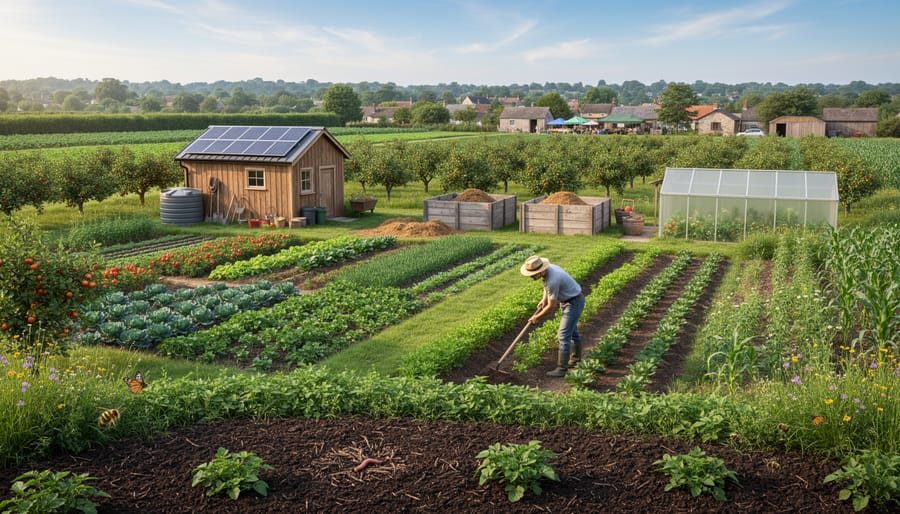
For Alberta producers, the local food movement delivers measurable environmental benefits that align with practical farm management goals. Shorter supply chains mean reduced fuel consumption and emissions. When your beef reaches a Calgary restaurant within hours instead of traveling thousands of kilometers, you eliminate substantial transportation-related carbon output while delivering fresher product.
Diversified cropping systems, often adopted by producers serving local markets, naturally improve farm ecology. Growing multiple crops or integrating livestock creates opportunities to apply soil health principles like maintaining living roots year-round and increasing plant diversity. These practices build organic matter, enhance water infiltration, and reduce erosion, outcomes that boost long-term productivity while supporting sustainability credentials local buyers value.
Local food systems also reduce packaging waste. Direct sales eliminate layers of commercial packaging required for long-distance shipping. Many Alberta producers use returnable containers for CSA deliveries or encourage customers to bring their own bags at farmers’ markets, cutting disposable materials significantly.
The movement creates economic incentives for reduced chemical inputs too. Local buyers often seek produce grown with minimal intervention, which can lead producers to explore integrated pest management strategies. Understanding the connection between pesticides and the environment helps you make informed decisions that satisfy both buyer preferences and responsible stewardship.
Food waste drops when production matches nearby demand. You harvest closer to consumption time, and direct customer relationships let you sell varied sizes and cosmetically imperfect produce that wholesale channels reject. This waste reduction improves your bottom line while supporting environmental goals, a practical win for operations managing tight margins.
Challenges and Practical Solutions
Scaling Production While Maintaining Quality
Scaling up to meet local demand tests your operation differently than commodity farming. The trap many Alberta producers fall into: chasing volume so aggressively they lose the very qualities buyers valued in the first place. Start by defining your non-negotiables, the specific attributes (flavour profile, animal welfare standards, soil health practices) that built your reputation. Then grow incrementally, expanding one market channel before adding another rather than overcommitting to multiple buyers simultaneously.
Consider staged capacity increases tied to proven demand rather than speculative projections. A Drumheller vegetable grower moved from 2 acres to 10 over three seasons, adding land only after securing contracts that covered the expansion costs. He maintained quality by keeping the same harvest timing and post-harvest handling protocols, refusing to pick early or compromise storage conditions despite pressure from distributors.
Automation and improved infrastructure help more than simply adding acreage. Invest in better washing stations, coolers, or processing equipment before expanding your footprint. Some producers start no till farming practices specifically to reduce labour demands while maintaining soil quality as they scale, less tillage time means more attention to harvest windows and crop selection.
Hire and train carefully if you add staff. Your quality standards live in people’s hands, not just your own. Document your processes clearly so seasonal workers understand why certain steps matter, and build quality checks into every stage rather than inspecting only finished products.
Navigating Regulations and Food Safety Requirements
Alberta’s regulatory framework for local food sales is more accessible than many producers assume. The province’s direct marketing regulations permit on-farm sales of many products without a processing license, including fresh produce, eggs, honey, and certain meat cuts processed at inspected facilities.
For value-added products like jams, baked goods, or processed meats, you’ll need to understand which category your product falls into. Low-risk items often qualify for home-based production under specific conditions, while higher-risk foods require licensed facilities. Start by contacting Alberta Health Services’ Environmental Public Health office in your region, they’ll walk you through requirements based on your specific products and sales channels.
Most producers find compliance manageable by starting small. Sell one or two products at farmers’ markets before expanding into retail partnerships. Join local producer networks; experienced members often share practical guidance on labeling requirements, storage protocols, and inspection preparation. The regulatory path isn’t a barrier, it’s a framework that protects both you and your customers while building trust in your local brand.
Managing Logistics and Distribution
Getting products from farm to customer efficiently remains one of the toughest hurdles for Alberta producers entering local markets. The distances between rural operations and urban buyers, combined with small order volumes, create cost structures that can quickly erode profit margins.
Cooperative distribution models offer a practical solution. Several Alberta regions now have producer groups that pool deliveries, splitting fuel costs and driver time. A rancher near Olds, for example, might combine their meat orders with a neighbour’s vegetable boxes for a single Calgary run, cutting per-delivery costs by 60-70%.
Shared cold storage facilities address another pain point. Community-owned freezers and coolers let multiple producers store product closer to market without individual capital investment. Red Deer’s regional food hub provides this shared infrastructure, allowing farmers to fulfill orders throughout the week rather than making emergency trips for single-box deliveries.
Route optimization software designed for food systems helps too. These platforms coordinate multiple farm pickups along efficient paths, matching drivers with consolidated loads. For perishables requiring temperature control, insulated totes with gel packs maintain product integrity during the final mile without expensive refrigerated trucks.
Getting Started: Action Steps for Alberta Producers
Starting your journey into Alberta’s local food market doesn’t require a complete business overhaul. Many successful producers began by testing the waters with a single product or market channel while maintaining their existing operations.
Your first step is assessing what you already have that local markets want. Walk your farm with fresh eyes: which products could you sell directly without significant infrastructure changes? A cattle rancher might start with freezer beef sold in quarters or halves. A grain farmer could mill flour or package heritage varieties for home bakers. Look for products that don’t require expensive processing licenses initially.
- Research your local market by visiting farmers’ markets, talking to restaurant owners, and joining Alberta farm direct marketing groups on social media. Identify gaps between what consumers want and what’s currently available.
- Start small with one product and one sales channel. Choose something you can deliver consistently without straining your current operation. A Saturday farmers’ market or a simple on-farm pickup model lets you test demand before investing heavily.
- Connect with other local producers through organizations like Alberta Farm Fresh Producers Association or your regional agricultural service board. These networks provide mentorship, shared knowledge about regulations, and sometimes cooperative marketing opportunities.
- Get your paperwork sorted early. Contact Alberta Health Services to understand which licenses apply to your product. Many direct farm sales have simpler requirements than you’d expect, but knowing the rules prevents costly mistakes.
- Price your products to reflect their true value. Calculate all costs including your time, then research what similar local products command. Don’t undercut yourself trying to compete with industrial prices, local food customers understand the premium and will pay it for quality and traceability.
- Build your customer base through authentic storytelling. Share your farming practices, your family’s connection to the land, and what makes your operation unique. A simple Facebook page or Instagram account showcasing daily farm life creates the personal connection that drives local food sales.
Once you’ve made your first sales and gathered customer feedback, you can expand strategically. Many producers find that demand grows faster than expected, making reinvestment decisions easier. The key is starting with manageable commitments that fit within your current capacity.
Common Questions About Local Food in Alberta
The transition to local food markets raises practical questions for Alberta producers. Here are clear answers to the concerns we hear most often from farmers and ranchers across the province.
How do I price my products for local markets without undercutting myself or scaring away customers?
Start by calculating your true production costs, including labor, then research what similar products sell for at Alberta farmers’ markets and local retailers. Price competitively within that range while clearly communicating your value, quality, freshness, farming practices, so customers understand why local products cost more than grocery store alternatives.
Do I need special certification to sell directly to consumers in Alberta?
For most whole, unprocessed products sold directly to consumers, you don’t need certification beyond standard business registration. However, if you’re processing food, adding value, or selling to restaurants and retailers, you’ll need appropriate food handling permits and may need to use a licensed facility, check with Alberta Health Services for your specific situation.
Is the local food market large enough to sustain my operation, or is it just a side income?
Many Alberta producers start with local sales as supplemental income, but some have built full-time operations serving local markets through diversified channels, combining farmers’ markets, CSA programs, restaurant partnerships, and online sales. Your potential depends on your location, product type, and willingness to develop multiple revenue streams rather than relying on a single outlet.
How do I find buyers beyond farmers’ markets?
Contact local restaurants, cafes, and grocery stores directly with samples and your story. Join producer cooperatives or food hubs that aggregate products for institutional buyers like schools and hospitals. Attend industry events and connect with Alberta food networks that facilitate wholesale relationships.
What happens during the off-season when I can’t produce fresh goods?
Successful year-round operations often preserve peak-season abundance through freezing, canning, or drying, or they partner with other producers to offer complementary products. Some shift to storage crops, while others use the quiet months for planning, marketing, and building customer relationships for the next season.
Can I realistically compete with large-scale operations on price?
You’re not competing on price, you’re offering something different that justifies a premium: traceability, freshness, local economic impact, and often superior quality or unique varieties. Customers choosing local food are making a values-based purchase, not just a price-driven one, so focus your marketing on what makes your operation special rather than trying to match commodity pricing.
These questions come up repeatedly because they reflect real concerns about profitability and practicality. The producers who succeed in local markets treat these challenges as business planning opportunities rather than roadblocks. They test different channels, adjust pricing based on customer feedback, and build slowly rather than trying to transform their entire operation overnight.
Remember that Alberta’s local food community is collaborative. Other producers, agricultural organizations, and local food networks will share what worked for them. You don’t need to figure everything out alone, reach out, ask questions, and learn from those who’ve already navigated the transition.
The local food movement in Alberta isn’t a passing trend, it’s a sustainable business strategy that’s creating real opportunities for producers across the province. Whether you run a small family farm, manage a larger agribusiness, or operate a ranch, local markets offer a practical path to diversify your revenue streams, build direct customer relationships, and strengthen your operation’s resilience against commodity price fluctuations.
What makes this movement particularly powerful in Alberta is its collaborative foundation. Producers aren’t competing in isolation; they’re building networks, sharing distribution resources, and collectively meeting the growing demand for regionally sourced food. From cooperative processing facilities to shared farmers’ market infrastructure, Alberta’s agricultural community has demonstrated that working together creates opportunities that benefit everyone involved.
Starting doesn’t require a complete business overhaul. Many successful Alberta producers have begun with small steps, testing products at a local market, partnering with one restaurant, or launching a modest CSA program, then scaled gradually based on what worked for their specific operation and circumstances.
Resources are available to support your journey. Agricultural societies, regional economic development offices, and organizations like Alberta Approved provide guidance on everything from food safety compliance to market access. Connect with producers who’ve already made the transition; Alberta’s agricultural community has consistently proven willing to share knowledge and support newcomers.
The question isn’t whether local food markets will continue growing in Alberta, they will. The question is how your operation can participate in ways that align with your goals, capabilities, and vision for the future.