

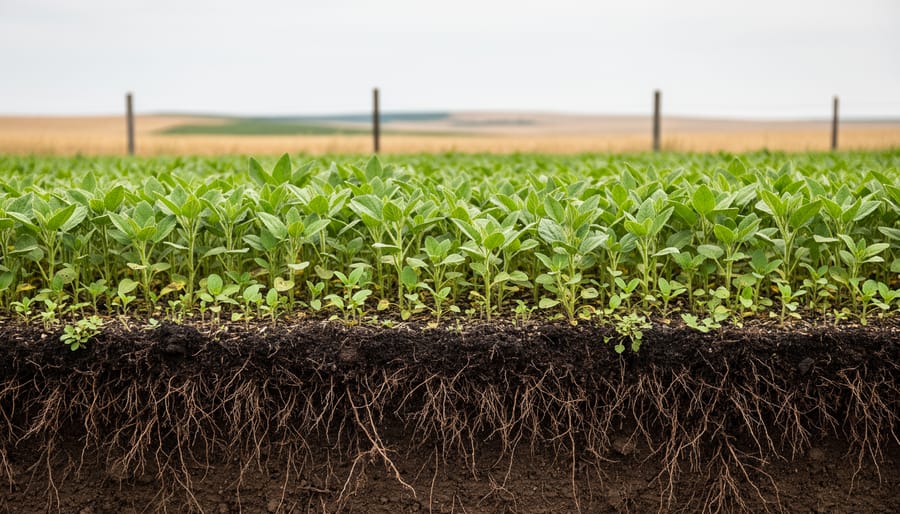
The five soil health principles are a science-backed framework for managing agricultural land to improve biological function, water retention, and long-term productivity: keep the soil covered, minimize disturbance, maximize living roots, maximize diversity, and integrate livestock. Developed by the USDA Natural Resources Conservation Service and refined through decades of field research, these principles guide farmers toward regenerative practices that rebuild soil structure, boost organic matter, and enhance resilience against drought and disease.
For Alberta producers facing variable precipitation, short growing seasons, and the economic pressure to maximize every acre, soil health isn’t abstract theory. It’s the difference between a crop that withstands a July dry spell and one that withers. It determines whether your land can absorb a two-inch rain in May or sends that moisture down the road as runoff. The principles work together as a system: cover crops protect the surface while feeding soil biology, reduced tillage preserves fungal networks that move nutrients to plant roots, and diverse rotations break pest cycles without burning through your input budget.
This guide explains what each principle means in practical terms, how the biological and physical mechanisms actually function below ground, and where Alberta farmers have put them to work. You’ll see how a cattle producer near Lacombe uses adaptive grazing to hit multiple principles at once, and why a grain farmer south of Lethbridge shifted from summerfallow to year-round ground cover. Whether you’re managing 160 acres or 16,000, understanding these principles gives you a roadmap to healthier soil and a more profitable operation.
What Soil Health Principles Mean for Alberta Farms
Soil health principles are nature-based farming practices that support the biological, chemical, and physical systems already at work beneath your fields. Rather than fighting natural processes with intensive inputs, these principles harness them to build productive, resilient farmland that can withstand Alberta’s weather extremes and produce consistent returns.
Think of these principles as working with your soil’s living workforce instead of replacing it. Every cubic meter of healthy soil contains billions of organisms that cycle nutrients, improve water retention, and protect plants from disease. When you apply soil health principles, you’re creating conditions where this underground ecosystem thrives and does much of the heavy lifting for your operation.
- Soil Health
- The capacity of soil to function as a living system that sustains plants, animals, and humans. Healthy soil cycles nutrients efficiently, holds water during dry periods, and resists erosion.
- Soil Biology
- The community of living organisms in soil, from bacteria and fungi to earthworms and insects, that break down organic matter and make nutrients available to plants.
- Soil Armor
- Any protective covering on the soil surface such as crop residue, mulch, or living plants that shields soil from wind, rain, and temperature swings.
- Living Roots
- Active plant roots in the soil that feed microbial communities through carbon-rich compounds and maintain soil structure year-round.
For Alberta producers, these principles translate directly to dollars saved on inputs, better moisture management during dry spells, and improved yields over time. Farms across the province report reduced fuel and chemical costs within the first few seasons of adoption. The environmental benefits matter too: healthier soil captures more carbon, filters water more effectively, and supports wildlife habitat alongside productive agriculture.
The principles work particularly well in Alberta’s varied conditions, from the parkland belt to the semi-arid southeast. Black soils, brown soils, and everything between respond to these practices because they address fundamental biological needs rather than relying on a one-size-fits-all prescription. Your specific climate zone and soil type will shape how you apply each principle, but the underlying framework remains consistent.
How the Five Principles Work Together
Understanding how soil health principles work means recognizing they’re not a checklist, they’re a biological system where each practice amplifies the others. When you minimize disturbance while keeping soil covered, you create stable conditions where microorganisms thrive. Those microbes, fed by living roots year-round, break down organic matter and cycle nutrients more efficiently than any synthetic input could manage alone. Add plant diversity to this mix, and you’re feeding different microbial communities with varied root exudates, creating a richer underground ecosystem. Integrate livestock, and their grazing and manure accelerate the whole cycle.
This interconnection shows up in measurable ways across Alberta farms. Reduced tillage preserves soil structure, which increases water infiltration, but that benefit multiplies when crop residue and living roots hold moisture in place and prevent crusting. One Peace Country grain farmer reported infiltration rates doubling within three years of combining no-till with cover crops, compared to modest gains from no-till alone. The living root systems fed fungi that built soil aggregates, which improved structure, which enhanced the no-till benefits, a compounding effect rather than simple addition.
The biological engine driving these connections is the soil food web. Living roots exude carbon compounds that feed bacteria and fungi. These microorganisms break down organic matter, releasing nitrogen, phosphorus, and other nutrients plants need. Fungi form networks connecting plants, moving nutrients and water more efficiently than root systems alone. When you disturb this network through tillage or leave soil bare, you’re not just losing organic matter, you’re dismantling the infrastructure that cycles nutrients and builds soil structure.
Carbon sequestration illustrates this systems thinking perfectly. Plants pull carbon from the atmosphere through photosynthesis and pump it into soil through their roots. Soil microbes incorporate that carbon into stable organic compounds, but only when conditions support their populations. Disturbance releases stored carbon back to the atmosphere. Bare soil loses carbon to erosion. Without diversity, fewer microbial species means less efficient carbon storage. The practices work together to capture carbon, feed it to biology, and lock it in soil aggregates, a process that strengthens with each principle you implement.
The Five Core Principles of Soil Health
Principle 1: Minimize Soil Disturbance
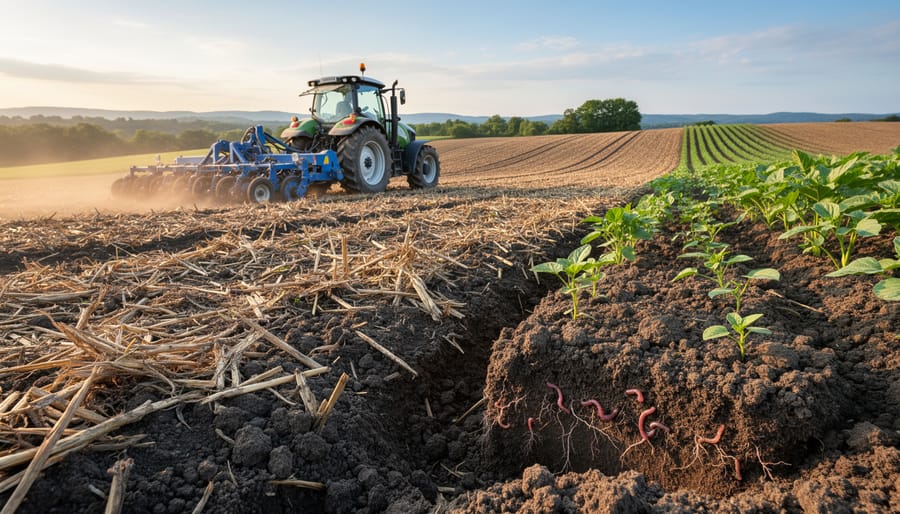
Soil disturbance comes in three forms: physical disruption through tillage, chemical disturbance from synthetic inputs, and biological disruption through practices that harm soil organisms. Each time you work the ground, you break apart the intricate networks that fungi and bacteria have built. Tillage speeds up decomposition of organic matter, releasing carbon into the atmosphere instead of storing it in the soil. It also brings weed seeds to the surface where they germinate, creating more work down the line.
The impact goes deeper than most farmers realize. Research shows that tillage reduces microbial diversity by destroying the habitat that beneficial organisms need to thrive. These microbes form the foundation of nutrient cycling, helping plants access nitrogen, phosphorus, and other essential elements. When you disturb the soil, you disrupt these partnerships and force yourself to compensate with more inputs.
Transitioning away from conventional tillage in Alberta means working with shorter growing seasons and variable moisture conditions. Start by reducing tillage intensity rather than jumping straight to no-till. Many producers find success with strip-till systems that only disturb narrow bands where seeds go, leaving most of the soil structure intact. You’ll need residue management strategies for heavy cereal crops and equipment adjustments for working in higher residue conditions. Spring soil temperatures run cooler without tillage warming the seedbed, so patience during planting season pays off as soil biology recovers and takes over functions you used to handle mechanically.
Principle 2: Keep Soil Covered
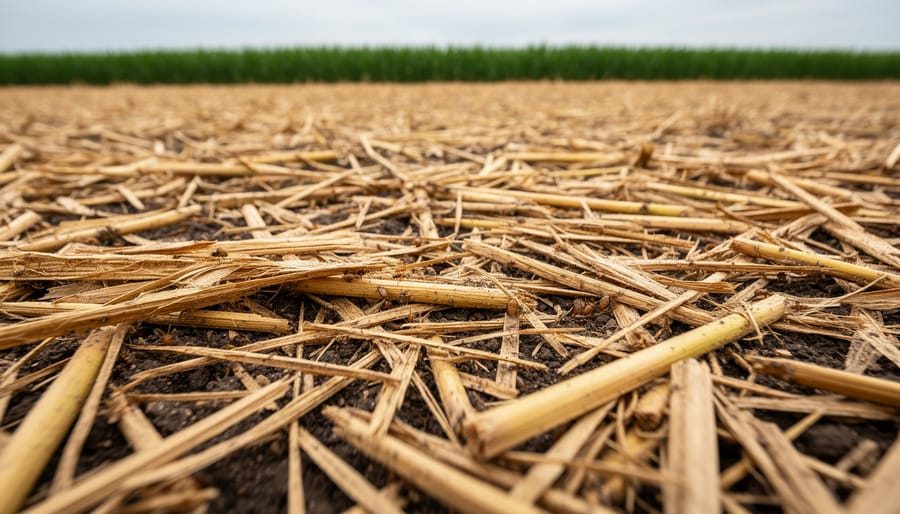
Bare soil is vulnerable soil. When left exposed, it faces erosion from wind and water, loses moisture rapidly through evaporation, and experiences temperature swings that stress soil organisms. Keeping soil covered year-round is essentially providing it with a protective blanket that maintains more stable conditions for the biological activity crucial to soil health.
The most accessible way to maintain cover is leaving crop residue in place after harvest. Stubble from wheat, canola, or barley protects against wind erosion, a persistent threat across Alberta’s prairies, while moderating soil temperature and capturing snow for spring moisture. Many producers who’ve transitioned from burning or aggressive tillage to residue retention report fewer washouts after heavy rains and better moisture retention through dry spells.
Cover crops take this principle further by establishing living plants during periods when cash crops aren’t growing. Fall-seeded cover crops like winter rye or hairy vetch grow before freeze-up and resume early in spring, providing continuous cover and active root systems. Research shows that cover crops reduce evaporation significantly compared to bare soil, a meaningful benefit during Alberta’s dry summers.
Alberta’s short growing season does present challenges. Late spring frosts and early fall freezes compress the window for cover crop establishment and growth. Successful local strategies include planting cover crops immediately after early-harvested cereals, using quick-germinating species like oats or radishes that establish before freeze-up, and selecting cold-tolerant varieties bred for northern climates. Some producers underseed cover crops into standing cash crops, giving them a head start before harvest.
The key is matching the covering strategy to your operation’s realities while keeping soil protected as many days as possible throughout the year.
Principle 3: Maintain Living Roots Year-Round
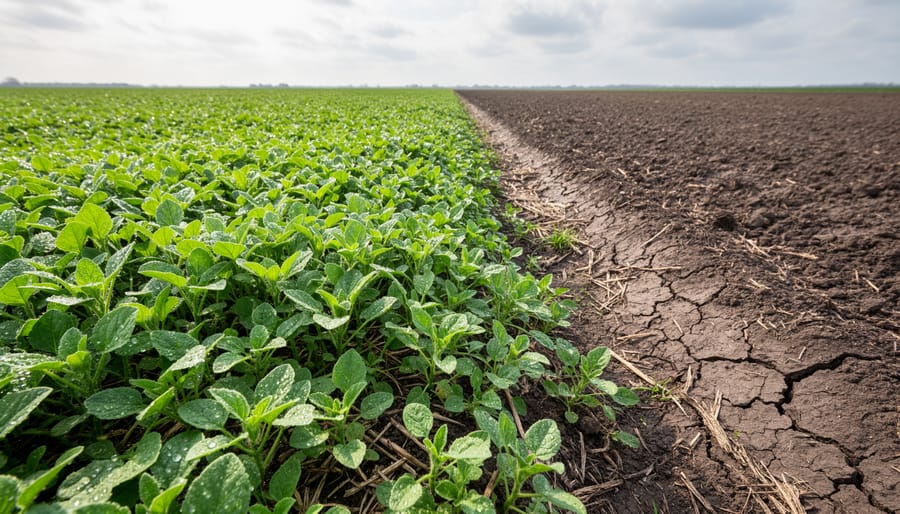
Living roots work as underground pipelines that move sugars and carbon compounds from plants into the soil, feeding the vast microbial workforce that builds soil structure and cycles nutrients. When roots die back during winter or after harvest, much of this biological activity goes dormant or disappears entirely. The third soil health principle tackles this loss by keeping something green and growing as much of the year as possible.
In Alberta’s climate, maintaining year-round living roots requires strategic planning around our short growing season. Cover crops planted immediately after harvest, species like winter rye, hairy vetch, or radishes, can establish before frost and resume growth early in spring. Some producers in southern Alberta have success with fall-planted cereal rye that provides root activity through mild winter periods and greens up weeks before spring seeding begins.
Extended grazing seasons offer another avenue, particularly for livestock operations. Leaving crop stubble with enough residue allows cattle to graze into winter months, and stockpiled perennial forages can provide grazing into November or December in some years. The hoof action and manure deposition during these late-season grazes activate soil biology even as temperatures drop.
Companion planting, growing two or more crops together, extends root presence during the growing season itself. Some grain farmers underseed red clover into cereal crops, allowing the clover to establish while the cash crop grows and then provide fall and spring root activity after harvest. Mixed vegetable producers use perennial walking paths planted with clover between annual vegetable beds, maintaining living roots in portions of their fields continuously.
The payoff shows up in aggregate stability measurements and water infiltration rates that improve year over year.
Principle 4: Increase Plant Diversity
Monoculture farming, planting the same crop in the same field year after year, creates predictable conditions that favor specific pests and diseases while depleting particular nutrients. Plant diversity breaks this cycle by supporting a wider range of soil organisms, each contributing different functions to soil health.
When you rotate crops or plant multiple species together, you’re feeding different microbial communities. Legumes partner with nitrogen-fixing bacteria. Brassicas release compounds that suppress certain pathogens. Deep-rooted plants like alfalfa access nutrients beyond the reach of shallow-rooted cereals, bringing them up for future crops to use. This biological variety creates resilience: if one crop struggles in a given year, others may thrive.
In Alberta’s grain belt, progressive farmers have moved beyond simple wheat-canola rotations to include pulse crops like lentils and peas, which fix atmospheric nitrogen and reduce fertilizer needs for subsequent cereal crops. Some operations add flax or oats to the mix, disrupting pest cycles that plague two-crop systems.
Intercropping takes diversity further by growing multiple species simultaneously. Mixed livestock operations often interseed cover crops like turnips or radishes into cereal fields before harvest, providing late-season grazing while maintaining living roots through fall. These brassicas break up compaction with their taproots and scavenge residual nitrogen that might otherwise leach away.
Ranch operations practice diversity through pasture management, rotating cattle through paddocks containing native prairie species, grasses, forbs, and legumes, rather than monoculture tame grass. This approach mimics natural grazing patterns and maintains the soil microbial diversity that evolved with these plant communities over thousands of years.
Principle 5: Integrate Livestock
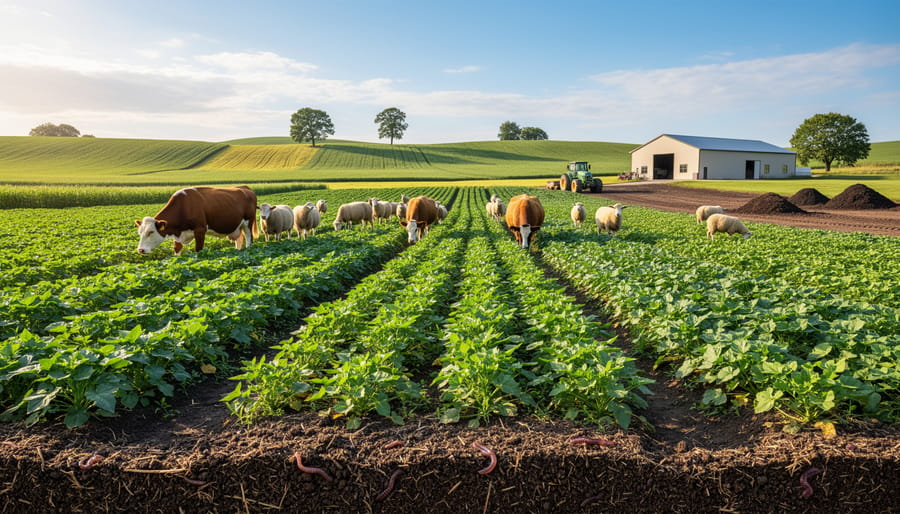
Livestock integration completes the soil health framework by bringing animals into the crop production cycle, whether through direct grazing, manure application, or coordinated crop-livestock rotations. When managed properly, livestock accelerate nutrient cycling, break down crop residues, and deposit organic matter directly where crops will grow.
Managed grazing stands as the most direct integration method. Moving cattle, sheep, or other livestock through paddocks at controlled stocking rates and timing allows animals to harvest forage while trampling residue into the soil surface. Their hooves press seeds and organic matter into contact with soil, and their manure deposits concentrated nutrients. The key lies in the timing, grazing too early or too long damages soil structure, while strategic grazing during appropriate growth stages builds it.
For grain farmers without livestock, integration doesn’t require buying cattle. Many Alberta producers lease grazing rights to neighbouring ranchers after harvest, allowing livestock to graze stubble fields through fall and early winter. The arrangement provides income or reduced fertilizer costs while the livestock owner gains feed access. This simple exchange cycles nutrients back to fields that would otherwise lose residue to wind erosion.
Composting livestock manure offers another pathway. Properly composted manure becomes a concentrated soil amendment, adding both nutrients and carbon. Several Alberta vegetable operations use composted cattle or poultry manure as their primary fertility source, reducing synthetic fertilizer dependence while building organic matter levels.
Even small-scale integration delivers measurable benefits. Research from Alberta farms shows fields with periodic livestock grazing maintain higher microbial activity and better water infiltration compared to grain-only systems, demonstrating that any level of animal integration strengthens soil function.
Practical Applications Across Alberta’s Agricultural Sectors
Across Alberta’s agricultural landscape, farmers are translating soil health principles into practical changes that fit their operations. A grain farmer near Lethbridge implemented no-till seeding combined with diverse crop rotations, switching from wheat-canola to a four-year rotation including pulse crops and fall rye, and measured a 15% reduction in input costs over three seasons while maintaining yields. The operation kept residue on fields year-round and added cover crops on marginal acres, observing improved water infiltration during heavy rains that previously caused runoff.
In central Alberta, a cattle ranch integrated adaptive multi-paddock grazing to keep living roots active longer into the fall. By moving cattle through smaller paddocks with longer rest periods, the rancher reported denser pasture regrowth and eliminated the need for overseeding previously degraded areas. Soil tests showed organic matter increased from 3.2% to 4.1% over four years, translating to better drought resilience during dry summers.
Different sectors adapt these principles to their specific needs:
- Grain operations combine no-till equipment with companion seeding and diverse rotations including flax, lentils, and perennial forages
- Cattle ranches use planned grazing to maintain plant diversity and integrate composted manure into hayfields
- Mixed farms rotate livestock through crop stubble after harvest, turning residue into fertility while minimizing tillage
- Specialty crop producers use intensive cover cropping between high-value crops and maintain permanent pathways with perennial vegetation
A vegetable grower near Calgary grows diverse cover crop cocktails between market garden beds, mixing radishes, clover, and vetch, then terminates them with a roller-crimper rather than tillage, creating mulch that suppresses weeds and feeds soil biology. The operation saw earthworm populations triple and irrigation needs drop by roughly 20% as soil structure improved. These producers demonstrate that soil health principles work across scales and enterprises when matched to local conditions and farmer goals.
Common Questions About Implementing Soil Health Principles
The shift toward soil health principles raises legitimate questions about cost, timing, and practical logistics. Alberta farmers considering these practices want to know what they’re getting into before making changes that affect their entire operation.
Starting Small Reduces Risk
You don’t need to overhaul your entire farm overnight. Most successful transitions begin with a test plot or single field where you can learn without betting the whole operation. This approach lets you identify what works with your specific soil type, microclimate, and equipment before scaling up. Many Alberta farmers start by reducing tillage passes on their best-draining fields or trying cover crops on land that would otherwise sit fallow.
The equipment question often looms large, but you may not need as much new machinery as you think. Reduced tillage can often work with your existing seeder once you adjust settings and maybe add row cleaners. For no-till, some farmers rent specialized equipment for the first few seasons while they assess results. Local equipment co-ops and custom operators across Alberta provide access without the full capital investment.
How long before I see improvements in soil health?
Some benefits like improved water infiltration can appear within one to two seasons, while significant increases in organic matter typically take three to five years. Economic returns often show up sooner than dramatic soil test changes, as reduced fuel and labor costs kick in immediately with fewer tillage passes.
What does the transition cost and how do I manage cash flow?
Initial costs vary widely depending on which principles you adopt first, but reduced tillage actually cuts expenses right away through lower fuel and labor needs. Cover crops add seed costs but many Alberta farmers offset this through grazing value or reduced fertilizer needs in following crops.
How do I manage heavy residue without tillage?
Row cleaners, seed placement depth control, and proper down pressure on your seeder handle most residue challenges. Spring harrowing or vertical tillage tools provide a middle ground that preserves most soil structure while managing surface conditions.
Which cover crops work in Alberta’s short growing season?
Fast-growing options like oats, radishes, and peas establish quickly and provide benefits even with limited growing time. Many farmers seed covers immediately after harvest or use species that tolerate early spring or late fall seeding windows.
Measuring Progress
Track what matters to your operation. Simple observations like easier tillage, better water absorption after rain, and increased earthworm populations tell you plenty. For more precise data, baseline soil tests before you start and follow-up tests every two to three years document organic matter changes, nutrient levels, and biological activity. Provincial ag fieldmen and conservation groups across Alberta offer soil health assessment training and sometimes subsidized testing.
The learning curve exists, but so does the support network. Winter farm shows, online forums, and local soil health groups connect you with farmers who’ve navigated these same questions. Their experience shortens your trial-and-error phase considerably.
Technology and Innovation Supporting Soil Health
Technology has become a practical ally for Alberta farmers implementing soil health principles, with tools ranging from sophisticated to straightforward and accessible regardless of farm size.
Soil sensors now provide real-time data on moisture levels, temperature, and compaction without disturbing the soil profile. These wireless devices transmit information directly to your phone or computer, helping you make timely decisions about planting, irrigation, and traffic management. Some Alberta farmers use simple penetrometers and moisture probes as cost-effective entry points before investing in networked sensor systems.
Precision seeding equipment has evolved to handle diverse seed sizes and rates in single passes, making it easier to establish cover crop mixes or diverse rotations. Several dealerships across Alberta now offer retrofit kits that adapt existing equipment for no-till and cover crop applications, reducing the capital investment barrier for farmers curious about these practices.
Farm management software platforms designed for Canadian conditions help track crop rotations, grazing patterns, and input applications while linking this data to soil test results over time. This longitudinal view reveals how management changes affect soil health metrics, providing tangible evidence of progress.
Key technology categories supporting soil health implementation include:
- Soil sensors and monitoring tools that track moisture, temperature, and compaction
- Precision seeding equipment adapted for cover crops and diverse rotations
- Cover crop rollers and terminators suitable for Alberta’s climate
- Data management platforms that integrate soil health metrics with farm records
- Local agronomic service providers offering soil testing and interpretation specific to regional conditions
The most successful adopters start with one technology that addresses their specific constraint, whether that’s understanding moisture patterns before reducing tillage or tracking diverse plantings more efficiently. Local equipment dealers and agronomists increasingly understand soil health principles and can recommend tools matched to your operation’s scale and goals.
The five soil health principles aren’t a rigid checklist you must implement all at once. They’re a framework that Alberta farmers can adapt to their unique operations, whether you’re managing grain fields near Lethbridge or running a mixed livestock operation in the Peace Country. The strongest results come from treating these principles as interconnected practices that build on each other over time.
Start with the principle that makes the most sense for your operation right now. Many farmers begin by reducing tillage or planting cover crops, then gradually incorporate additional practices as they see results and gain confidence. The timeline varies, some improvements show up within a season, while deeper soil structure changes take years. What matters is moving forward, not achieving perfection immediately.
Alberta’s farming community excels at practical problem-solving and sharing what works. Connect with neighbors who’ve adopted these practices, attend field days where you can see soil health systems in action, and tap into resources from agricultural extension services and conservation groups. The farmers already experimenting with these principles in your region understand the local challenges, short growing seasons, variable moisture, specific soil types, and they’ve developed solutions worth learning from.
Your soil is a long-term investment in your farm’s productivity and resilience. The work you do now to improve its health will pay dividends for years to come.