

Preventing soil compaction requires addressing the problem before heavy machinery, livestock, or foot traffic compress your soil structure beyond natural recovery. The most effective prevention strategy combines controlled field access during vulnerable wet periods, strategic traffic patterns that minimize repeated wheel passes, and scheduled deep-rooting cover crops that create natural fracture lines in the soil profile. Most Alberta operations can implement a basic prevention plan within one growing season using equipment they already own, though the biggest challenge is coordinating field work around moisture conditions rather than just calendar dates.
Compacted soil costs Alberta farmers an estimated 15 to 25 percent in yield losses, yet the damage happens silently. Once soil pores collapse and bulk density rises above 1.6 g/cm³ in our clay loam soils, root penetration stalls, water infiltration drops, and anaerobic pockets form. Reversing that damage takes years and significant expense. Prevention, by contrast, costs primarily in timing and attention.
The six prevention methods outlined here focus on what you can control before compaction sets in. They draw from Alberta soil management research and field trials across our diverse soil zones, from the Black soils of the parkland to the Brown soils of the southeast. Each method works independently, but stacking two or three together creates a resilient system that protects soil structure even under the pressure of modern farm equipment.
You’ll find practical steps for matching tire pressure to soil moisture, designing permanent travel lanes, selecting cover crop species that build deep root channels, and timing field operations to soil conditions rather than weather windows alone. Prevention isn’t about avoiding work. It’s about working smarter so your soil keeps producing.
Understanding When and Where Soil Compaction Happens
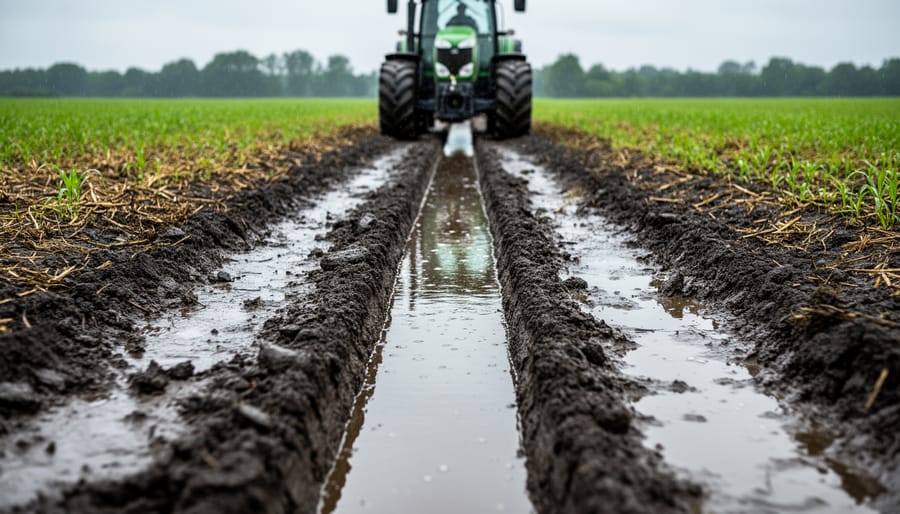
Soil compaction doesn’t happen randomly, it occurs when specific conditions align, and recognizing those patterns is your first line of defense. The primary trigger is working soil when it’s too wet. Alberta’s clay and loam soils become especially vulnerable after heavy rains or during spring thaw, when soil moisture exceeds the field’s load-bearing capacity. At that point, even moderate equipment weight can collapse soil pores and create dense layers that persist for years.
Heavy equipment amplifies the problem significantly. Combines, grain carts, manure tankers, and tractors pulling loaded implements concentrate thousands of pounds onto relatively small contact patches. The deeper the soil is wet, the deeper compaction penetrates, surface compaction from a single pass might extend 6-8 inches down, while repeated traffic or extremely heavy loads can compact soil 18-24 inches deep, well below typical tillage depth.
Repeated traffic in the same areas multiplies the damage. Once you compact soil, each subsequent pass compounds the problem rather than simply maintaining it. This is why certain zones on your farm become chronic trouble spots year after year.
High-risk zones to watch include headlands where equipment turns repeatedly, field entrances and gates that funnel all traffic through narrow corridors, and areas around water sources or feeding stations where livestock and machinery concentrate. Poorly drained low spots, fields with naturally high clay content, and any area you enter during wet conditions deserve extra caution. Walk these zones now and look for the telltale signs: pooling water, stunted crop growth, difficulty pushing a screwdriver into soil, or visible ruts that persist across seasons. Identifying these vulnerable areas before you implement prevention strategies lets you target your efforts where they’ll have the greatest impact.
Equipment and Tools for Compaction Prevention
Preventing soil compaction starts with having the right equipment and tools to monitor soil conditions and minimize ground pressure. The good news for Alberta producers is that effective prevention doesn’t require a complete equipment overhaul, most farms can start with a few strategic additions based on their operation’s size and budget.
The foundation of any compaction prevention program involves measuring and managing two critical factors: soil moisture and ground pressure. A basic soil moisture meter ($50-200) lets you check field conditions before entering, while a penetrometer ($100-500) measures soil resistance to confirm whether compaction is developing. These tools pay for themselves by preventing a single bad decision to enter a wet field.
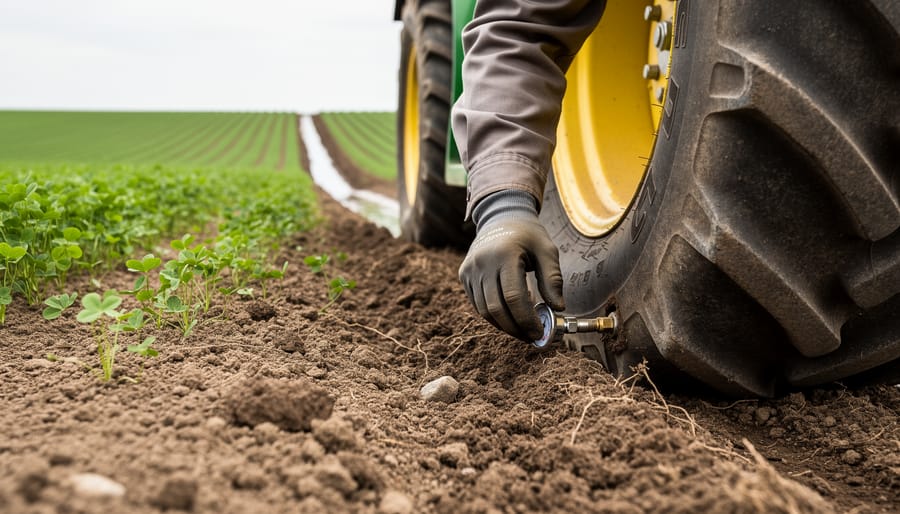
For managing ground pressure, tire pressure gauges designed for agricultural equipment ($30-150) are essential. Proper inflation adjusts your tire’s footprint to soil conditions, lower pressure in the field spreads weight over more surface area, reducing compaction risk. Many Alberta producers overlook this simple modification that costs almost nothing to implement.
Flotation tires and dual-wheel configurations represent the next tier of investment. Flotation tires feature wider profiles that distribute weight more evenly, while adding duals to tractors or combines essentially doubles your tire footprint. Costs range from $800-3,000 per tire depending on size, but the reduction in axle load per tire can cut compaction risk dramatically on vulnerable clay soils common across central Alberta.
Track systems offer maximum ground pressure reduction by spreading weight over the entire track length. Full-track conversions ($25,000-60,000 per machine) suit large operations working heavy clay or frequently operating in marginal conditions. Some Alberta grain farms justify this investment on their heaviest equipment like grain carts.
Controlled traffic farming systems require GPS guidance with repeatable pass-to-pass accuracy. Entry-level systems ($3,000-8,000) work for smaller fields, while RTK-corrected systems ($15,000-30,000) provide the centimeter-level precision needed for permanent wheel lanes on larger operations.
- Small operations (under 500 acres): Soil moisture meter, penetrometer, tire pressure gauge, basic GPS guidance
- Mid-size farms (500-2,000 acres): Above tools plus flotation tires on primary tractor, entry-level CTF guidance system
- Large commercial operations (2,000+ acres): Full tool suite including track systems on harvest equipment, RTK-GPS for precise traffic management, multiple penetrometers for field monitoring
The key is starting with measurement tools that help you make better decisions, then gradually investing in pressure-reduction equipment as your prevention strategy matures. Even rented equipment can be fitted with proper tire pressure for field conditions, you don’t need to own everything to prevent compaction effectively.
Safety Warnings and Precautions
Before you implement compaction prevention strategies, understand that modifying equipment and changing field practices introduces new risks. Taking shortcuts or rushing into changes without proper preparation can compromise safety and actually worsen soil conditions.
If you plan to install flotation tires, dual wheels, or track systems, work with certified equipment dealers who understand your machinery’s specifications. These modifications change your vehicle’s center of gravity, braking distance, and handling characteristics. Never assume a tire or track system rated for one machine will perform safely on another, even if they appear similar. Always follow manufacturer load ratings and installation procedures exactly.
Train every operator who will use modified equipment or follow new field protocols. A GPS-guided controlled traffic system only prevents compaction if operators actually follow the designated lanes. Make sure your team understands why prevention matters, not just what buttons to push. Include hands-on practice with soil moisture testing tools like penetrometers and the ribbon test before anyone makes field entry decisions based on those readings.
Know your soil’s load-bearing capacity limits, which vary by soil type, moisture content, and organic matter levels. Clay soils common in many Alberta regions lose strength rapidly when wet. Technology like tire pressure monitors and GPS guidance helps, but never replace direct observation. Check soil conditions at multiple field locations before entry, especially after rain or during spring thaw. If soil sticks to your boots in thick clumps or you sink more than an inch when walking, it’s too wet for equipment traffic regardless of what your schedule demands.
Six Prevention Methods: Step-by-Step Implementation
Method 1: Manage Field Traffic During Wet Conditions
Wet soil has almost no ability to resist compaction, enter a field too early after rain or snowmelt, and you’ll create damage that lasts for years. This method gives you a clear system to decide when it’s safe to work.
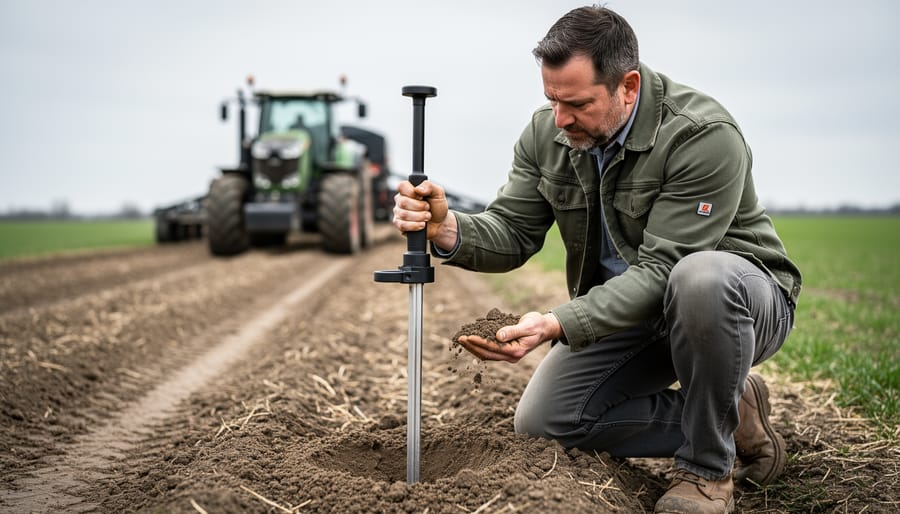
Start by checking soil moisture before every field operation. Grab a handful of soil from the depth you’ll be working (usually 4-6 inches) and squeeze it firmly. When you open your hand, the soil should crumble apart easily. If it forms a ribbon when you press it between your thumb and fingers, or if it feels slick and sticky, it’s too wet. This simple ribbon test takes 30 seconds and prevents costly mistakes.
For a more precise reading, use a soil penetrometer to measure resistance. Insert the probe to 12 inches and take readings every two inches. If you encounter less than 300 psi resistance in the top six inches, the soil can’t support heavy equipment without compacting. Wait another day or two and test again.
Once you know how to assess conditions, establish a formal field entry protocol:
- Designate one person (farm manager or lead operator) to approve field entry each day during wet periods.
- Test soil moisture in three representative spots across the field, low areas, mid-slopes, and hilltops, before any equipment enters.
- Record the date, moisture conditions, and decision in a logbook or farm management app to track patterns over seasons.
- Communicate the go/no-go decision to all operators before they fuel equipment or head to the field.
- If conditions are borderline, restrict entry to the driest areas only, using permanent lanes if you’ve established them.
The hardest part is delaying operations when you’re watching a weather window close. But a two-day wait now saves you from yield penalties and remediation costs that stretch across multiple seasons. Many Alberta producers find that tracking their decisions helps refine their instincts, after a year or two, you’ll recognize problem conditions before you even run a test.
Method 2: Reduce Axle Loads and Increase Tire Footprint
Heavy equipment sitting on the same tire footprint that carries it down the road will sink deeper into field soil, creating compaction. The solution is redistributing weight over a larger contact area.
Start by calculating your current axle loads. Weigh each piece of equipment fully loaded (grain cart at capacity, sprayer with full tank) and divide by the number of axles. Most Alberta soils can handle 10 tonnes per axle when dry, but only 6 to 8 tonnes when moist. If your loads exceed these thresholds, you have three options.
First, reduce the load itself. Run grain carts at 80% capacity during harvest or make more frequent sprayer fills rather than maxing out tank size. Some producers split applications to avoid driving on fields with maximum weight.
Second, add axles or switch to dual tires. Duals roughly double your contact patch, cutting ground pressure in half. A grain cart retrofit with duals might cost $8,000 to $15,000, but the investment pays back through reduced yield drag in compacted zones.
Third, switch to flotation tires designed for agricultural use. These wider, larger-diameter tires spread weight more effectively than standard radials. Match tire selection to your heaviest implement and wettest field conditions.
The relationship between inflation pressure and soil compaction is direct: over-inflated tires create smaller footprints and deeper ruts. Adjust pressure before entering fields. Grain carts might run 40 PSI on roads but drop to 20 PSI in-field. Buy a quality tire gauge and check weekly, because a 10 PSI difference changes your footprint by 15 to 20%.
Method 3: Implement Controlled Traffic Farming
Controlled traffic farming confines all wheel traffic to permanent lanes, leaving up to 90% of your field uncompacted. Here’s how to implement it on your Alberta operation.
Start with field layout planning. Map your field boundaries and identify natural entry points. Decide on lane spacing based on your widest implement, typically 12, 10, or 9 meters for prairie operations. All subsequent equipment must match these widths or be exact multiples. Sketch the layout on paper before making any field changes.
Establish your permanent lanes. If you have GPS guidance, program your initial pass and save it as your base line. All future operations will follow these exact tracks. Without GPS, use physical markers: plant flags or posts at field edges to mark lane positions. Some producers paint rocks or use tall stakes visible from the tractor seat.
Mark lanes for the first season. Drive your planned routes and consider adding temporary visual guides, coloured posts every 50 meters help operators stay aligned until the tracks become visible in crop growth patterns.
Train every operator who enters the field. Show them the lane map, explain why precision matters (drifting even 30 centimeters reduces effectiveness), and demonstrate how to engage GPS or follow markers. Include custom operators and seasonal workers in training sessions.
Start with one field to refine your system before expanding.
Method 4: Build Soil Organic Matter
Healthy soil resists compaction because organic matter acts like a sponge, creating space for air and water while binding particles into stable aggregates. Building this resilience takes time, but the payoff is soil that can handle traffic without damage.
Start by reducing tillage intensity wherever possible. Each pass breaks down aggregates and burns off organic matter. Switch from conventional tillage to minimum-till or no-till on fields that can handle it, even if you do it gradually across your operation.
Add a cover crop into your rotation next season. Plant it after harvest, even a simple oat or winter rye mix will work. The roots create channels, the residue feeds soil biology, and you’ll see measurable structure improvements within two years.
Apply composted manure or commercial compost to fields with the worst compaction history. Spread it in fall and let winter weather work it in naturally. You don’t need heavy rates; 5-10 tonnes per hectare makes a difference.
Leave crop residue on the surface rather than incorporating it. Stubble protects soil from raindrop impact and feeds the organisms that build structure. Following soil health principles creates compounding benefits as organic matter climbs from 2% to 4% or higher.
These changes require patience as you transition practices over three to five seasons, but soil with 4% organic matter handles equipment loads that would destroy soil at 2%.
Method 5: Design Better Field Access and Infrastructure
Concentrate heavy traffic on purpose-built routes instead of letting it spread across productive soil. Start by mapping where equipment enters fields, where you feed livestock, and where gates funnel traffic into narrow zones. These spots take the most abuse and deserve permanent infrastructure.
For main access routes, excavate 15-30 cm and install geotextile fabric as a base layer. Top it with 20 cm of crushed gravel (not rounded river rock, which shifts). This creates a stable all-weather lane that spreads loads and sheds water. One Lacombe producer cut headland compaction by half after building two graveled lanes around his quarter section.
Relocate water troughs and mineral feeders away from field edges into dedicated sacrifice areas. Moving a water point 50 meters prevented years of concentrated hoof traffic on what had been prime cropland.
Consider placing gates where they align with your controlled traffic lanes, not just where fencing is convenient. Temporary electric fence gates cost less than fixing compacted soil.
Budget roughly $15-25 per linear meter for basic gravel lanes. Start with your worst choke points rather than trying to harden every access route at once.
Method 6: Time Operations to Soil Conditions
Timing field operations to soil moisture conditions is one of the most accessible prevention strategies, it costs nothing but requires discipline and planning.
Start by identifying your soil’s optimal moisture window. Most Alberta soils handle equipment best at 50-70% field capacity. Too wet, and wheel traffic causes severe compaction. Too dry, especially with clay soils common across the province, and you risk creating hard clods that resist future tillage.
Create a seasonal operation calendar that reflects Alberta’s climate realities. Schedule harvest during the typical dry window from late August through October. Plan manure spreading for frozen ground conditions in winter, when soil structure is protected, or wait until spring when soils have dried to workable moisture levels, typically late April to early May in southern regions, later farther north.
For tillage operations, target the brief window after spring thaw when soil has drained but before it becomes too dry and cloddy. This might only last two to three weeks in some years.
Keep a moisture meter handy and check conditions before entering fields. When soil forms a ribbon or ball in your hand, it’s too wet for traffic. Delay the operation, even if it means adjusting your entire schedule. One day of waiting prevents years of compaction damage.
Verifying Your Prevention Efforts Are Working
Prevention strategies only deliver value if you can verify they’re actually protecting your soil. You need concrete indicators to confirm your efforts are working, not just assumptions based on what you’ve implemented.
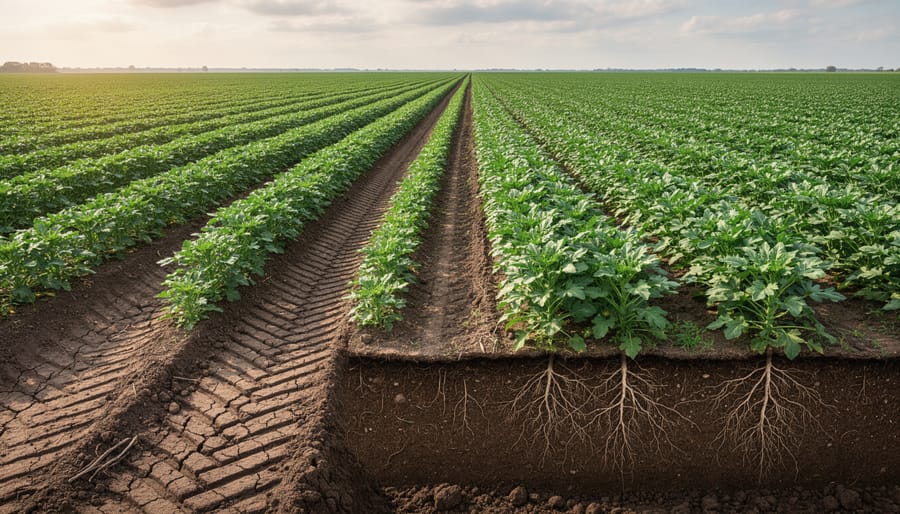
Start with visual soil assessment at the beginning and end of each growing season. Dig inspection pits in both traffic zones and protected areas. Healthy, uncompacted soil crumbles easily in your hand, shows visible pore spaces, and contains earthworms and organic material throughout the profile. Compare these characteristics between your controlled traffic lanes and areas where you’ve reduced equipment passes. If your prevention methods are effective, you’ll see darker soil color, better aggregation, and more biological activity in the protected zones.
Penetrometer testing gives you quantifiable data to track over time. Take readings at consistent locations twice yearly, spring after snowmelt and fall before freeze-up. Push the penetrometer slowly through the soil profile, recording resistance at 6-inch, 12-inch, and 18-inch depths. Create a simple spreadsheet to compare readings year over year. Effective prevention keeps resistance below 300 psi in the top 12 inches. If numbers creep above this threshold despite your protocols, you’re catching compaction early enough to adjust before yield loss occurs.
Watch how quickly water infiltrates after rainfall. Walk your fields within 24 hours of a significant rain event. Areas protected from compaction drain noticeably faster than wheel tracks or headlands. Use a simple infiltration test: pound a coffee can with both ends removed six inches into the soil, fill it with water, and time how long it takes to drain. Rates above 0.5 inches per hour indicate healthy soil structure. Run this test in the same spots each spring to track improvement.
Crop performance tells the story over a full season. Flag wheel tracks and high-traffic zones in spring, then compare plant height, color, and stand density at mid-season against protected areas. Roots should penetrate deeper and spread wider where compaction prevention is working. At harvest, hand-harvest small sections from traffic versus non-traffic zones and weigh the difference. Even a 5% yield advantage in protected areas confirms your prevention investment is worthwhile.
If you’re still seeing compaction signs despite prevention efforts, troubleshoot systematically. Check whether operators are following wet-weather protocols, one person ignoring soil moisture limits can undo months of careful management. Verify tire pressures match your calculations for current loads. Review your traffic patterns to identify if new compaction zones are forming where equipment turns or overlaps. Sometimes the issue is timing rather than technique: you may need to shift sensitive operations like manure application to narrower windows when soil can truly handle the load.
Success Story: How a Central Alberta Grain Farm Cut Compaction by 60%
When John and Sarah Petersen noticed yield drops of 15 to 20 percent in their headlands and gateway areas near Red Deer, they knew compaction had become more than a nuisance. Their 2,400-acre grain operation was showing classic symptoms: standing water after rain, stunted canola plants in wheel tracks, and increasingly difficult seedbed preparation.
In 2022, they committed to two major changes. First, they invested in RTK GPS guidance to establish permanent wheel lanes across their quarter sections. Second, they adopted a strict wet-weather protocol: no field entry when soil moisture exceeded field capacity, verified with a simple ball test each morning during spring and fall operations.
The transition wasn’t seamless. Custom operators initially resisted following the established lanes, worried about efficiency. The Petersens addressed this by marking lanes with biodegradable spray paint during the first season and sharing yield maps that showed a 12 percent advantage in non-trafficked zones. Their combines and grain carts now follow the same paths year after year, limiting traffic to just 15 percent of field area.
By 2025, penetrometer readings in their controlled traffic zones averaged 1,200 kPa at 15 centimeters depth, compared to 2,800 kPa in old random-traffic areas, a 60 percent reduction in compaction severity. Canola yields in previously compacted headlands rebounded by 18 percent. Root depth in wheat increased noticeably, and spring fieldwork required one less pass to achieve seedbed conditions.
Their biggest lesson? Start small. The Petersens piloted controlled traffic on one quarter section before expanding. “We proved it to ourselves first,” Sarah explains. “Now our neighbours are asking how we’re getting crops up faster in wet springs.”
Common Questions About Soil Compaction Prevention
What does compaction prevention cost, and is it affordable for smaller operations?
Prevention costs range widely, from free practices like avoiding wet fields to modest investments in tire pressure gauges ($100-300) or soil moisture meters ($200-500), up to larger commitments like GPS guidance systems ($5,000-15,000). Most Alberta producers start with low-cost monitoring and timing changes before adding equipment modifications as budget allows.
Can these prevention methods work on Alberta’s heavy clay soils?
Yes, prevention is especially critical on clay soils because they compact more easily when wet and recover more slowly than sandy or loamy soils. Focus on strict wet-weather protocols, building organic matter over time, and using flotation tires. Clay soils reward patience, wait for proper moisture conditions rather than rushing field work.
How do I prevent compaction on rented land where I can’t control all traffic?
Start conversations with landlords early about soil health goals and include compaction prevention clauses in lease agreements. Document field conditions with photos and penetrometer readings before and after your operations. Many landlords value tenants who protect soil quality, and showing data builds trust for future discussions about shared prevention protocols.
What’s the best way to get custom operators to follow my compaction prevention protocols?
Communicate expectations clearly before contracts are signed, explain why timing and equipment adjustments matter for your soil type, and consider incentive clauses for operators who wait for optimal conditions. Some Alberta producers provide soil moisture readings and specific field entry dates in writing, making protocols part of the service agreement rather than an afterthought.
If I’m already seeing compaction despite prevention efforts, when do I need remediation?
Prevention reduces risk but won’t eliminate every compaction issue, especially in transition years or after unavoidable wet harvests. If penetrometer readings consistently exceed 2,000 kPa, crop roots show restriction, or water pools in wheel tracks, targeted remediation becomes necessary while you refine prevention strategies for future seasons.
For additional guidance on putting these answers into practice, connect with local agronomists and check implementation resources that walk through soil assessment protocols and equipment modification options. Many regional conservation groups also host workshops where producers share real-world solutions to common prevention challenges, helping you adapt strategies to your specific operation’s soil type, equipment, and seasonal pressures.
Next Steps and Additional Resources
Start with a soil assessment this fall or early spring. Walk your fields with a penetrometer or spade, focusing on headlands, field entrances, and areas where equipment turns or parks. Note where the soil resists penetration or shows platy structure, these are your priority zones.
Pick one prevention method to implement this season rather than attempting all six at once. If wet-weather traffic is your biggest risk, begin with moisture monitoring and field entry protocols. Farms with compaction concentrated in wheel tracks should explore controlled traffic farming options, even if you start with simple GPS guidance rather than a full system. Building soil organic matter through cover crops works well as a long-term strategy you can layer onto other methods.
Connect with an agronomist who understands Alberta soils and your specific crop rotation. Many agronomists offer soil health assessments as part of their consulting services, and they can help you interpret penetrometer data or plan a transition to reduced tillage. Your local agricultural fieldman is another valuable resource for region-specific advice.
Alberta offers several resources and networks to support your soil health journey:
- Alberta Agriculture and Irrigation’s Soil Health webpage provides fact sheets, research updates, and contact information for regional specialists
- Alberta Reduced Tillage Linkages (ARTL) hosts workshops, field days, and maintains a network of producers sharing practical experience with soil conservation
- Local Soil Conservation Councils offer technical assistance and sometimes cost-share programs for conservation equipment or practices
- Farming Smarter and other applied research associations conduct on-farm trials you can visit to see prevention methods in action
Consider attending a regional soil health workshop this winter when field work slows down. These events let you ask questions, see equipment demonstrations, and connect with neighbouring producers who’ve already implemented prevention strategies. Many farmers find that peer-to-peer learning accelerates their confidence in adopting new practices.
Document your baseline conditions now with photos and penetrometer readings so you can track improvement over time. Prevention pays dividends across multiple growing seasons, and measuring progress keeps you motivated through the transition.
Preventing soil compaction isn’t an expense, it’s a safeguard for your farm’s future productivity. Every season you protect your soil structure, you’re banking better yields, improved water infiltration, and healthier crops for years to come. The upfront effort of adjusting tire pressure, timing field entries, or establishing permanent wheel lanes pays dividends that remediation can never fully recover.
You don’t need a large operation or cutting-edge technology to start. A moisture meter, a simple traffic plan, and attention to soil conditions cost little but deliver measurable results. Many of the most effective prevention methods, cover crops, reduced tillage, better timing, rely more on observation and planning than capital investment.
Share what works with your neighbours. Alberta’s farming community thrives when knowledge moves freely between operations. The producer who figures out how to run controlled traffic on rolling land, or the rancher who relocates a water point to spare a pasture, strengthens the entire region’s soil health knowledge base.
As Alberta producers, you’re not just growing crops, you’re stewarding the soil that future generations will depend on. Every decision to wait for drier conditions, every field layout that reduces traffic, every tire pressure adjustment contributes to a more resilient agricultural landscape. Your soil will thank you with decades of productive harvests.