

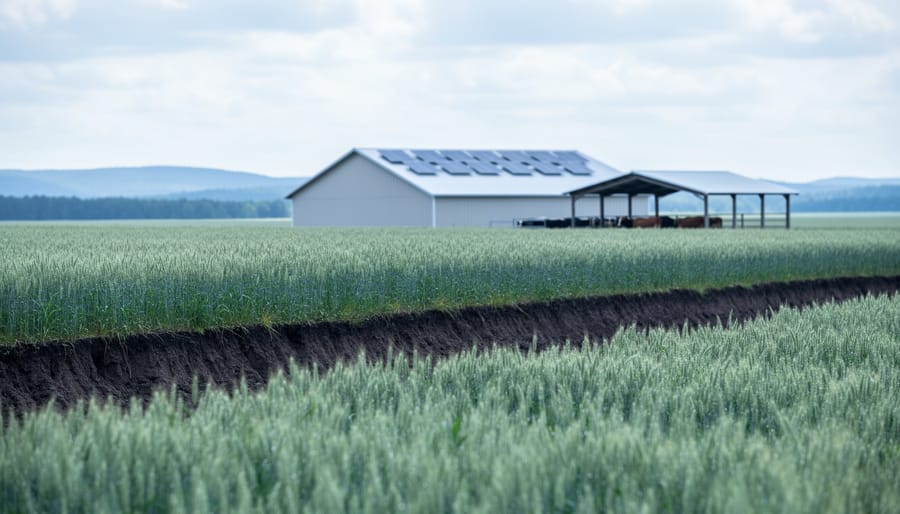
Environmental issues in Canada refer to the ecological challenges threatening the health of our land, water, air, and biodiversity, from soil degradation and water contamination to greenhouse gas emissions and habitat loss. For producers across the prairies, these aren’t abstract concerns. They’re daily realities that affect crop yields, livestock health, input costs, and the long-term viability of the family farm.
Alberta’s agricultural community sits at the intersection of this challenge. Agriculture accounts for roughly 10% of Canada’s total emissions, yet farmers and ranchers are also on the front lines of climate adaptation and conservation. Drought conditions in 2021 and 2023 reduced wheat yields by up to 40% in some regions. Soil erosion removes an estimated 36 million tonnes of topsoil annually across the country. Water quality concerns linked to nutrient runoff affect both farm operations and downstream communities.
But there’s another side to this story. Producers are implementing solutions that work, from precision agriculture that cuts fertilizer use by 20-30% to regenerative grazing practices that rebuild soil carbon. Cover cropping is expanding across the prairies, reducing erosion while improving moisture retention. Solar installations are powering barns and irrigation systems, lowering both emissions and energy bills.
This article breaks down the key environmental challenges facing Canadian agriculture, explains how they impact your operation, and highlights the practical strategies and technologies Alberta producers are using right now to build resilience, cut costs, and protect the land for the next generation.
What Environmental Issues in Agriculture Mean for Canadian Farmers
Environmental issues in agriculture are the ways farming and ranching activities interact with and impact the natural systems they depend on. For Canadian farmers, these aren’t abstract concerns, they’re the tangible challenges that show up in eroding fields, depleted water sources, changing weather patterns, and declining wildlife populations across the landscape.
In the Canadian agricultural context, four main environmental challenges define what producers face daily:
- Soil Degradation
- The loss of soil structure, organic matter, and fertility through erosion, compaction, or chemical depletion that reduces a field’s productive capacity over time.
- Nutrient Runoff
- When fertilizers and manure nutrients wash off fields into waterways, causing contamination and algae blooms while representing lost value from the farm.
- Greenhouse Gas Emissions
- Carbon dioxide, methane, and nitrous oxide released from livestock digestion, manure, fuel use, and soil disturbance that contribute to climate change.
- Biodiversity Loss
- The reduction in variety and abundance of plants, insects, birds, and other organisms that support pollination, pest control, and ecosystem health on farmland.
These issues matter because they directly affect farm profitability and long-term viability. A field losing topsoil produces lower yields. Contaminated groundwater means expensive well drilling or treatment. Extreme weather from climate change destroys crops and stresses livestock. Lost pollinators reduce canola and pulse production.
What makes these challenges particularly significant in Canada is our agricultural diversity, from grain farms on the prairies to cattle ranches in the foothills to irrigated vegetable operations. Each region faces different combinations of environmental pressures shaped by climate, soil type, and production system. An Alberta rancher dealing with drought and grassland conversion confronts different issues than a Manitoba grain farmer managing spring flooding and soil salinity, yet both are wrestling with environmental concerns that threaten their operations’ sustainability.
Understanding these issues isn’t about assigning blame. It’s about recognizing the interconnected relationship between farming practices and natural systems so producers can make informed decisions that protect both their land and their livelihoods.
How Environmental Challenges in Agriculture Actually Work
Soil Degradation and Nutrient Depletion Cycles
Soil degradation in Canadian agriculture operates through several interconnected cycles that compound over time. When farmers repeatedly till the same fields, they break up soil structure and expose organic matter to oxygen, which speeds decomposition. The Prairie provinces lose an average of 1.3 tonnes of topsoil per hectare annually through wind and water erosion, with intensive tillage being a primary driver of this soil erosion from agriculture.
Monoculture cropping accelerates nutrient depletion because the same crop extracts identical nutrients year after year, creating imbalances that synthetic fertilizers can’t fully correct. Heavy equipment compacts soil layers below the surface, reducing pore space and limiting water infiltration and root penetration. Over multiple seasons, these factors create a downward spiral: weaker soil structure leads to more erosion, lower organic matter reduces water-holding capacity, and compaction restricts biological activity that would normally rebuild soil health. The result is farmland that requires increasing inputs while delivering diminishing returns.
Water Quality and Agricultural Runoff Processes
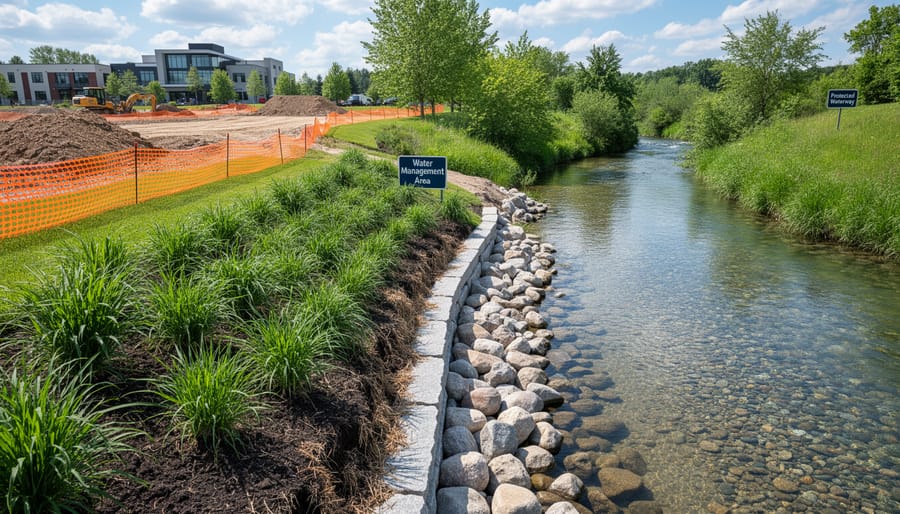
When you apply fertilizers or pesticides to your fields, not all of it stays where you put it. Rain and irrigation water pick up these substances from the soil surface and carry them toward nearby streams, rivers, and groundwater. This process, called agricultural runoff, happens because water follows gravity and takes the path of least resistance, collecting whatever’s in its way.
Nitrogen and phosphorus from fertilizers are particularly mobile. When excess nutrients wash into Alberta’s rivers and dugouts, they trigger algae blooms that consume oxygen as they decompose, creating dead zones where fish can’t survive. The timing matters: spring snowmelt and heavy summer storms cause the most runoff because saturated or frozen soil can’t absorb water quickly.
The journey from field to watershed isn’t instant. Nutrients might move through tile drainage systems within hours, or they can leach slowly through soil layers over months, eventually reaching aquifers that supply drinking water. Pesticides follow similar pathways but pose different risks, some break down quickly while others persist and accumulate. The grade of your land, soil type, and proximity to water bodies all determine how fast and how far contaminants travel from application point to waterway.
Agricultural Greenhouse Gas Emission Sources
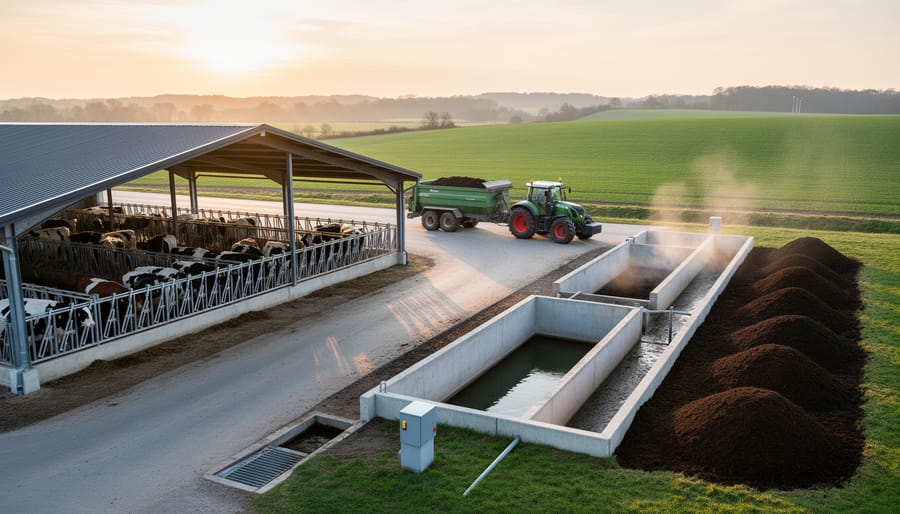
Canadian farms generate greenhouse gases through three primary pathways, each tied to fundamental agricultural operations.
Livestock digestion produces methane through enteric fermentation, a natural digestive process where microbes in the stomachs of cattle, sheep, and other ruminants break down feed. Beef cattle operations account for the largest share of these emissions in Alberta, with a single cow releasing 70 to 120 kilograms of methane annually. The gas forms as a byproduct of processing fibrous feeds like hay and pasture grasses, then gets expelled primarily through burping.
Manure management creates both methane and nitrous oxide depending on storage and handling methods. When manure decomposes in oxygen-poor conditions, common in liquid storage lagoons or deep bedding systems, methane-producing bacteria thrive. Solid manure piles exposed to air generate less methane but release nitrous oxide as nitrogen compounds break down. Winter storage in Alberta poses particular challenges, as frozen conditions limit gas dispersal while spring thaw accelerates emissions.
Fuel combustion from tractors, combines, grain dryers, and irrigation pumps releases carbon dioxide directly into the atmosphere. A typical grain farm burns 15 to 25 litres of diesel per hectare annually during seeding, spraying, and harvest operations. While these emissions per unit are smaller than livestock sources, they accumulate quickly across large acreages and intensive production cycles.
Main Types of Environmental Concerns Facing Canadian Agriculture
Land and Soil Health Challenges
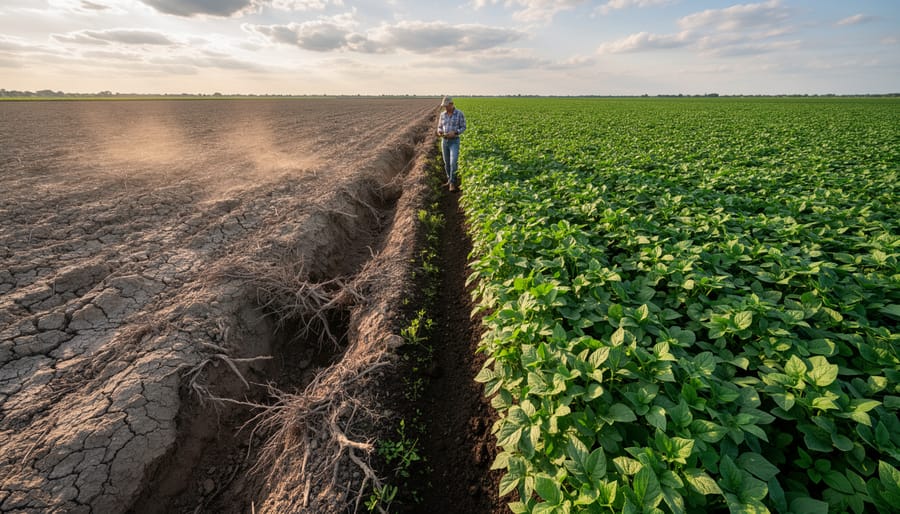
Prairie farmland faces four critical soil health threats that directly impact productivity and long-term viability. Wind and water erosion strip away topsoil at alarming rates, with some Alberta fields losing up to 25 tonnes per hectare annually during heavy rains or spring winds. This loss removes the nutrient-rich upper layer that took centuries to develop.
Heavy machinery and continuous cropping compact soil structure, reducing water infiltration by up to 50 percent and restricting root growth. Compacted layers force roots sideways rather than down, limiting access to moisture during drought periods.
Salinization affects roughly 2 million hectares of Alberta farmland, where salts accumulate in the root zone and reduce crop yields by 20 to 40 percent. This issue intensifies in low-lying areas with poor drainage and high evaporation rates.
Continuous cultivation without proper rotation or cover depletes organic matter, dropping carbon content from historical levels of 4 to 5 percent down to 2 percent or less. These soil health principles erode when unsustainable practices persist without intervention, creating a cycle where degraded soil requires more inputs to maintain yields.
Water Resource and Quality Issues
Canada’s agricultural sector faces mounting water challenges that directly affect farm operations and surrounding ecosystems. Irrigation depletion strains Alberta’s river systems, particularly during growing season when farmers draw heavily from the Bow, Oldman, and Red Deer rivers. Water licenses don’t guarantee supply during drought years, forcing producers to make difficult decisions about which crops receive priority.
Drought vulnerability has intensified across the prairies. When soil moisture drops below critical levels, yields suffer and ranchers struggle to maintain adequate water for livestock. The 2021 drought demonstrated how quickly water scarcity can compound financial stress for farming operations.
Agricultural chemical runoff remains a persistent water quality concern. Excess nitrogen and phosphorus from fertilizers wash into streams and lakes, triggering algae blooms that harm aquatic life and threaten drinking water sources. Pesticide residues, though typically at low concentrations, accumulate in watersheds downstream from farmland.
Wetland loss has removed natural filtration systems. Over 70% of prairie wetlands have been drained for cultivation, eliminating habitat while reducing the landscape’s ability to buffer floods and purify runoff. Each drained slough removes a natural water storage point that once recharged groundwater and supported biodiversity.
Climate and Air Quality Impacts
Agriculture sits at an uncomfortable crossroads with climate change, farms both contribute to the problem and suffer its consequences. In Canada, the sector accounts for roughly 10% of national greenhouse gas emissions, with livestock operations producing the bulk through methane from cattle digestion and manure decomposition. A single dairy cow releases about 100 kilograms of methane annually, a gas 25 times more potent than carbon dioxide over a century.
Diesel tractors, grain dryers, and irrigation pumps add carbon dioxide to the mix, while nitrogen fertilizers trigger nitrous oxide release, 300 times more warming than CO2. Ammonia from manure and urea fertilizers drifts into the atmosphere, contributing to particulate pollution and acid deposition that damages nearby ecosystems.
The feedback loop cuts both ways. Prairie farmers face longer droughts, unpredictable frost dates, and severe weather that flattens crops or floods fields. Heat stress reduces livestock productivity and grain yields. Alberta ranchers now plan for water shortages that were rare two decades ago, while spring seeding windows shift earlier as winters warm. These disruptions force operational changes that carry real costs, making climate adaptation as urgent as emission reduction.
Biodiversity and Habitat Loss
The transformation of Canada’s native grasslands into cropland has eliminated over 70% of prairie ecosystems, taking critical habitat with it. In Alberta alone, less than 25% of native fescue grassland remains, fragmenting the landscape that supports everything from ground-nesting birds to pronghorn antelope.
Agricultural expansion creates isolated habitat patches, cutting off wildlife corridors that animals need for seasonal movement and genetic diversity. Pollinators face a double challenge: fewer native wildflowers for forage and increased exposure to pesticides during bloom periods. Honeybee and native bee populations have declined measurably across the prairies, threatening crop pollination services worth millions annually.
Monoculture farming reduces plant diversity, which cascades through the ecosystem. Fewer plant species means fewer insects, which means fewer birds and small mammals. The loss of wetlands for field expansion removes crucial breeding grounds for waterfowl and amphibians.
Some ranchers are reversing this trend by maintaining native pastures, creating pollinator strips along field edges, and timing hay cuts to avoid nesting seasons. These practices prove that productive agriculture can coexist with thriving wildlife populations when habitat needs are considered in farm planning.
How Environmental Challenges Are Being Addressed on Canadian Farms
Conservation Agriculture and Regenerative Practices
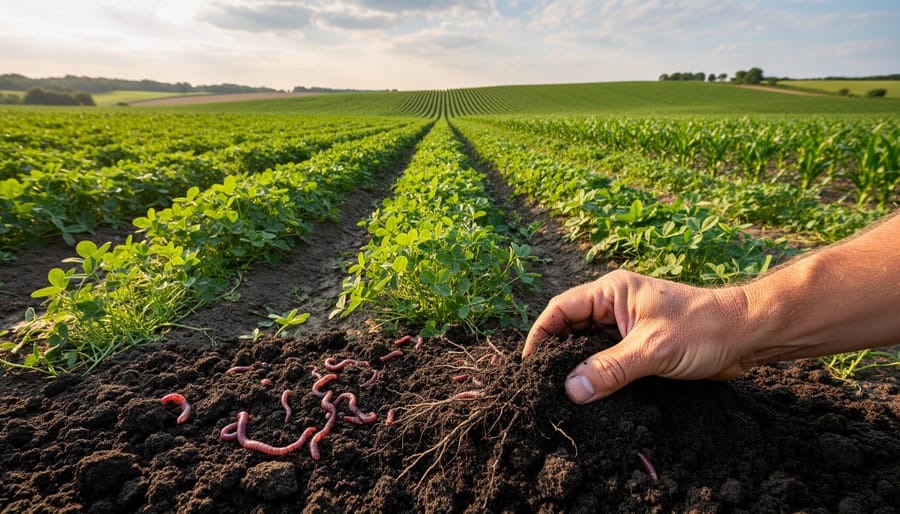
Alberta farmers are leading the way in adopting conservation agriculture practices that rebuild soil health while maintaining productivity. No-till farming has become widespread across the province, with producers leaving crop residue on fields instead of plowing. This keeps soil structure intact, reduces erosion by up to 90%, and improves water infiltration, critical benefits during drought periods.
Cover cropping is gaining momentum as farmers plant species like clover, oats, or radishes between cash crops. These plants protect bare soil from wind and rain, add organic matter when terminated, and break pest cycles. A producer near Lethbridge reported a 15% increase in soil organic matter after three years of consistent cover crop use.
Crop rotation has evolved beyond simple wheat-canola patterns. Progressive operations now integrate pulse crops like lentils and peas, which fix nitrogen naturally and reduce fertilizer needs by 30-50 pounds per acre. This diversity also disrupts weed and disease pressure without additional chemical inputs.
Regenerative ranchers are implementing adaptive multi-paddock grazing, moving cattle frequently to mimic natural bison movement. One central Alberta ranch increased forage production by 40% and saw grassland bird populations return after adopting this approach. The dense root systems from properly managed grazing sequester carbon while building drought resilience, turning pastures into climate solutions rather than contributors to emissions.
Technology and Precision Agriculture Solutions
GPS-guided tractors and combines have transformed how Alberta farmers apply inputs across their fields. Instead of blanket-spreading fertilizer or pesticides, variable rate technology adjusts application amounts based on real-time soil data and yield maps. A quarter-section near Lethbridge might need heavy nitrogen in one corner and minimal input in another, precision equipment delivers exactly what each zone requires, cutting fertilizer waste by 15-20% while protecting water quality.
Soil moisture sensors buried at root depth tell farmers when crops actually need irrigation rather than running on fixed schedules. This matters in southern Alberta, where drought years stretch water allocations thin. Producers using sensor networks reduce irrigation volumes by up to 30% without hurting yields, leaving more water in the Oldman River system.
Drones equipped with multispectral cameras spot nutrient deficiencies, pest outbreaks, and disease pressure days before they’re visible from ground level. Farmers target treatment to affected areas only, sometimes treating two acres instead of the entire 160-acre field. The result: fewer chemicals entering soil and groundwater.
Farm management software ties it all together, analyzing years of data to predict optimal seeding rates, input timing, and harvest windows. These aren’t experimental tools anymore, they’re proven methods helping ranchers and crop producers maintain profitability while measurably reducing their environmental footprint.
Livestock and Manure Management Innovations
Ranchers across Alberta are finding that better livestock management cuts emissions while improving animal health and pasture productivity. Rotational grazing has emerged as a practical solution, moving cattle through smaller paddocks allows vegetation to recover, increases carbon sequestration in grassland soils, and reduces the need for supplemental feed. Many operations report healthier pastures and reduced erosion within two seasons of implementing these systems.
Manure storage improvements make a measurable difference in greenhouse gas emissions. Covered storage facilities and regular agitation reduce methane release by up to 40% compared to open lagoons. Some Alberta farms have installed biogas digesters that capture methane from manure, converting it into electricity or heat for farm operations. While the upfront investment is substantial, these systems can pay for themselves through energy savings and potential carbon credits.
Feed optimization represents one of the most cost-effective emission reduction strategies. Adding specific fats, oils, or seaweed-based supplements to cattle diets can decrease methane production during digestion by 15-30%. Precision feeding that matches nutrient delivery to animal requirements also reduces nitrogen excretion in manure, cutting both ammonia emissions and nutrient runoff. These practices typically improve feed efficiency, meaning ranchers see better growth rates alongside environmental benefits.
Policy and Support Programs for Environmental Stewardship
Canadian farmers have access to a growing array of federal and provincial programs designed to help them tackle environmental challenges while maintaining profitable operations. These initiatives range from direct funding for conservation projects to technical support and regulatory frameworks that recognize the unique pressures facing agricultural producers.
At the federal level, the Sustainable Canadian Agricultural Partnership (Sustainable CAP) provides cost-share funding for environmental projects through 2028. Alberta farmers can apply for support covering up to 50% of eligible costs for initiatives like wetland restoration, riparian buffer establishment, water management infrastructure, and energy efficiency upgrades. The On-Farm Climate Action Fund specifically targets emissions reduction, offering payments for practices such as cover cropping, nitrogen management optimization, and shelterbelts that sequester carbon while improving soil health.
Alberta Agriculture and Irrigation administers several complementary provincial programs. The Farm Water Supply and Dugout Program helps ranchers develop sustainable water sources that reduce stress on natural waterways, while the Environmental Stewardship and Climate Change Program funds projects addressing soil erosion, biodiversity habitat, and greenhouse gas reduction. These programs often align with federal initiatives, allowing producers to stack funding sources for larger conservation investments.
Technical assistance accompanies many funding opportunities. Agricultural fieldmen and extension specialists help farmers navigate soil management steps develop environmental farm plans, and implement best practices tailored to their specific operations. The Canadian Agricultural Partnership’s advisory services connect producers with agronomists, engineers, and conservation experts who provide free or low-cost guidance on everything from precision nutrient application to rotational grazing system design.
Regulatory requirements also shape environmental stewardship. Alberta’s Agricultural Operation Practices Act sets standards for manure management and livestock facility siting to protect water quality, while federal regulations govern pesticide use and emissions reporting for larger operations. Most programs emphasize voluntary adoption and farmer-led solutions rather than strict mandates, recognizing that producers understand their land best and respond more effectively to incentives than restrictions.
Environmental farm plans serve as entry points to many programs, helping farmers assess their current practices, identify risks, and prioritize improvements with professional support.
How Canada S Environmental Issues in Agriculture Works
Environmental issues in agriculture don’t exist in isolation. They form interconnected cycles where one challenge amplifies others across your operation.
Start with soil. When you work the land intensively, you break down organic matter faster than nature can rebuild it. Exposed soil washes away in heavy rains or blows off in wind, carrying nutrients and topsoil with it. That lost soil ends up in waterways, where it clouds streams and delivers excess nitrogen and phosphorus. These nutrients feed algae blooms that suffocate aquatic life.
Meanwhile, depleted soil holds less water. You compensate by irrigating more, drawing down aquifers or diverting surface water. Lower water tables stress ecosystems downstream while your crops become more vulnerable during dry spells.
Livestock add another layer. Cattle digest feed and release methane through normal digestion. Their manure, when stored improperly, continues producing methane and ammonia. If manure runs off during snowmelt or storms, it joins the nutrient load heading into rivers.
Climate change tightens the spiral. Warmer temperatures extend pest ranges, prompting more pesticide use. Erratic weather patterns bring intense downpours that worsen erosion, followed by droughts that crack already-compromised soil.
The good news? Breaking any link in this chain reduces pressure across the whole system. Better soil management cuts erosion and runoff while capturing carbon. Improved manure handling reduces emissions and creates valuable fertilizer. Accessing support resources helps you identify which interventions deliver the biggest environmental and economic returns on your specific operation.
Common Questions About Environmental Issues in Canadian Agriculture
Farmers and ranchers across Canada often face similar questions when confronting environmental challenges on their operations. Understanding the practical realities of compliance, costs, and available support helps producers make informed decisions about implementing sustainable practices.
Are farmers legally required to address environmental issues on their land?
Requirements vary by province and practice, but most Canadian farms must comply with regulations around nutrient management, pesticide use, and water protection. Alberta producers should check with their municipal district and provincial agriculture department for specific obligations that apply to their operation type and size.
Do conservation practices actually pay for themselves?
Many practices reduce input costs over time, no-till farming cuts fuel and labour expenses, cover crops decrease fertilizer needs, and improved manure management creates usable compost or biogas revenue. The payback period varies, but most producers see economic benefits within three to five years alongside environmental improvements.
What financial support is available for implementing environmental improvements?
Federal programs like the Canadian Agricultural Partnership offer cost-share funding for conservation infrastructure and beneficial management practices. Alberta also provides provincial grants for projects addressing soil health, water quality, and emissions reduction, with application deadlines typically in early spring.
How do I know which environmental issues to prioritize on my farm?
Start with a farm environmental assessment through your local agricultural fieldman or conservation district to identify your operation’s specific risks and opportunities. Focus first on practices that address your most pressing concern, whether that’s erosion on sloped land, water efficiency during drought, or emissions from large livestock numbers.
The economic concerns around environmental stewardship are legitimate. Transitioning to conservation practices requires upfront investment in equipment, learning, and sometimes temporary yield adjustments. However, producers who have made the shift consistently report that reduced input costs, improved soil productivity, and access to premium markets offset initial expenses. Some ranchers find that rotational grazing systems, for instance, cut supplemental feed costs while building soil carbon and grassland health.
Liability is another common worry. Farmers wonder whether acknowledging environmental challenges exposes them to regulatory action or public criticism. In practice, proactive engagement with environmental improvements often provides protection, demonstrating good faith efforts and following recommended practices strengthens your position if issues arise. Provincial right-to-farm legislation also offers safeguards for producers operating according to normal farm practices.
The question of scale matters too. Small family operations sometimes feel that environmental regulations favour large commercial farms with dedicated compliance staff. Many support programs specifically prioritize small and mid-sized producers, recognizing that accessible technical assistance and appropriate-scale solutions serve the agricultural community more effectively than one-size-fits-all approaches. Local conservation groups and agricultural organizations provide peer support networks where producers share practical knowledge about what works in Alberta’s specific conditions.
Environmental challenges in Canadian agriculture aren’t isolated problems, they’re deeply connected to how we manage soil, water, livestock, and land across this country. What these connections reveal is both the scale of the work ahead and the tremendous opportunity for farms and ranches to be part of the solution. The good news is that Alberta’s agricultural community has already proven it can adapt, innovate, and lead.
From conservation tillage to precision technology, from improved grazing systems to wetland restoration, producers across the province are implementing practices that protect environmental health while maintaining productive operations. These aren’t theoretical concepts; they’re working solutions being tested and refined on real farms right now. The results show that environmental stewardship and farm profitability can move in the same direction when approached with the right tools and support.
Success depends on collaboration. Farmers sharing knowledge with neighbours, researchers developing region-specific solutions, industry partners providing accessible technology, and government programs offering meaningful support all contribute to meaningful progress. The growing connection between environmental practices and movements like the local food movement demonstrates how sustainable farming strengthens entire communities.
Alberta’s producers have always adapted to challenges, drought, market shifts, changing regulations. Environmental issues are no different. By continuing to innovate, collaborate, and implement practical solutions, the agricultural community isn’t just responding to environmental concerns; it’s shaping a more resilient and sustainable future for farming in Canada.