

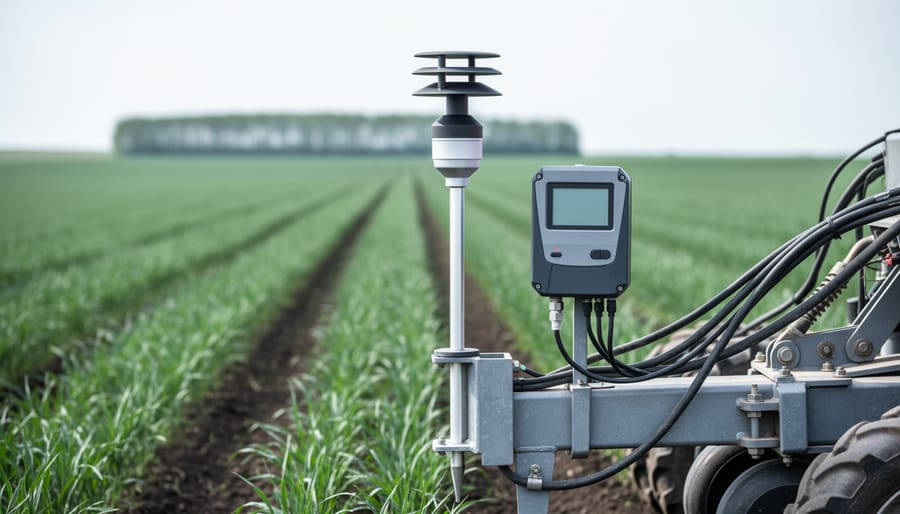
Nuclear materials appear on Alberta farms more often than most producers realize. Devices containing small sealed sources of radioactive material help measure soil moisture, detect pests in grain storage, and monitor crop density, making them valuable tools for precision agriculture. Under federal and provincial regulations, any farm operation using these devices must obtain a nuclear substance license through the Canadian Nuclear Safety Commission (CNSC) and follow strict handling, storage, and disposal protocols.
The licensing requirement catches many farmers off guard. You’re not running a power plant, but that moisture gauge mounted on your seeding equipment contains cesium-137, a regulated nuclear substance. The portable density meter your agronomist uses likely holds americium-241. Both trigger the same regulatory framework that governs much larger nuclear operations, and non-compliance carries significant penalties alongside potential risks to rural communities.
The good news? The licensing process is straightforward when you understand what’s required. Most agricultural applications fall into lower-risk categories with simplified paperwork and reasonable annual fees. The CNSC recognizes that farmers need practical solutions, not bureaucratic roadblocks. Still, the responsibility is real. Improper disposal of a damaged gauge or forgotten source can contaminate soil, trigger costly cleanup operations, and create long-term liability.
This regulatory landscape sits within broader Canada environmental issues that affect agricultural operations. Understanding your obligations protects your operation, your neighbours, and Alberta’s agricultural reputation. Whether you’re already using nuclear-equipped devices or considering adding them to improve efficiency, knowing how to navigate the licensing process and manage these materials safely keeps you compliant and confident.
What Nuclear Materials Are and Where They Show Up on Alberta Farms
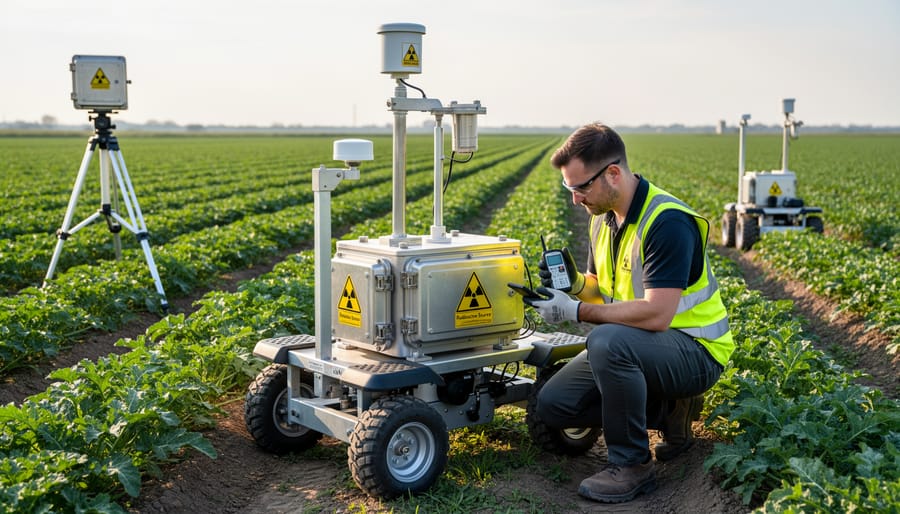
Nuclear materials in agriculture are not what most people imagine when they think of radioactive substances. Forget power plants and weapons, on Alberta farms and ranches, nuclear materials typically show up as small sealed sources inside everyday equipment that helps producers make better decisions about land and livestock management.
A soil density gauge sitting in your truck bed or a moisture meter you use to assess field conditions likely contains a tiny radioactive source, usually cesium-137 or americium-241. These devices work by sending radiation through soil or other materials and measuring how much comes back, giving you precise readings on compaction or water content. Many farmers who use these tools in connection with soil management best practices don’t realize they’re handling licensed nuclear materials subject to federal oversight.
Common equipment containing nuclear materials in Alberta agricultural operations includes:
- Soil density and compaction gauges (cesium-137 or americium-241 sources)
- Moisture meters for grain storage and field assessment (americium-241/beryllium sources)
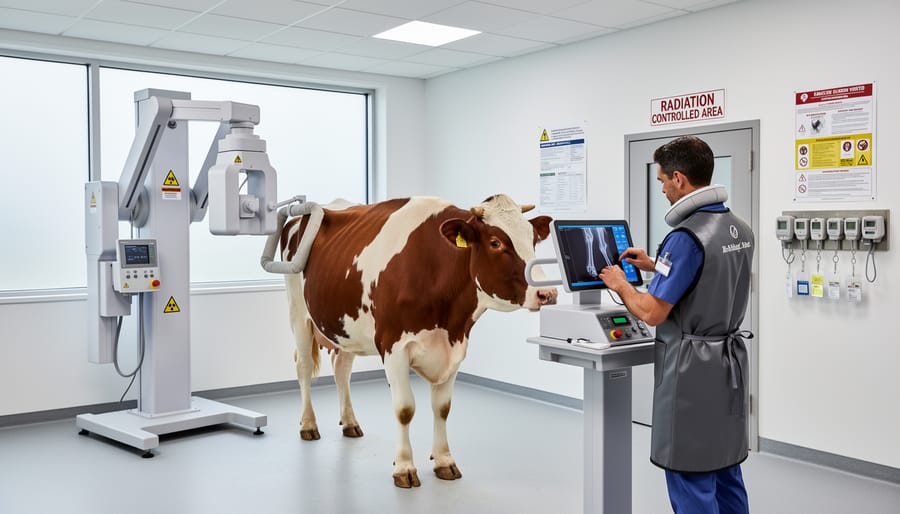
- Veterinary diagnostic X-ray and radiography equipment (cobalt-60 or iridium-192)
- Food irradiation systems for meat processing or pest control (cobalt-60 sources)
- Industrial radiography devices for inspecting heavy machinery, grain bins, and structural welds
The difference between high-level and low-level radioactive materials matters for how you handle and dispose of them. High-level waste comes from nuclear reactors and weapons production, you won’t encounter it in farming. Agricultural equipment uses low-level sources, meaning they emit less radiation and pose minimal risk when properly contained, but they still require licensing, careful handling, and eventual disposal through approved channels.
The catch is that many farmers acquire this equipment secondhand, inherit it with a property purchase, or receive it as part of a service contract without understanding the regulatory strings attached. A soil tester might seem like just another tool, but if it contains a sealed source, you’re responsible for tracking its location, ensuring safe storage, training anyone who uses it, and eventually arranging proper disposal when it reaches the end of its service life. The Canadian Nuclear Safety Commission doesn’t distinguish between a research facility and a family farm when it comes to compliance, the same rules apply regardless of operation size.
Who Needs to Comply: Licensing and Eligibility Requirements for Farmers and Agribusinesses
Small-Scale Equipment Users vs. Waste Generators
Most Alberta farmers who use equipment with radioactive sources, like soil density gauges or moisture meters, don’t actually need their own CNSC license. The equipment supplier typically holds the master license and lists your farm as an authorized user. You operate the tool, follow basic safety protocols, and when it breaks or becomes obsolete, the supplier takes it back. You’re not managing nuclear materials; you’re using licensed equipment under someone else’s regulatory umbrella.
The line shifts when you generate or store nuclear materials independently. Veterinary clinics using diagnostic isotopes, meat processing facilities with food irradiation units, or research farms conducting radiological studies often possess radioactive sources they control directly. You’re responsible for the full lifecycle: procurement, storage, employee training, record-keeping, and eventual disposal. This requires your own CNSC license and a deeper understanding of the nuclear waste definition and classification system.
The practical test: if you can’t hand equipment back to a supplier when you’re done, you’re likely a waste generator. Processing plants that irradiate beef or pork, for example, own large cesium or cobalt sources that must be decommissioned through licensed contractors when retired. Similarly, agricultural research facilities conducting soil or crop studies with radioactive tracers are fully accountable for those materials from acquisition through disposal. If that’s your operation, budget for compliance costs, staff training, and disposal fees, which can run thousands of dollars depending on the source type and activity level.
How to Apply for Licenses and Register Nuclear Materials
Applying for a license to possess or use nuclear materials isn’t as complicated as it sounds, but it does require careful attention to detail and patience. Most Alberta farmers who need licenses are surprised by how thorough the process is, and how important it is to start early.
Gather Your Documentation First
Before you touch the application portal, assemble your paperwork. You’ll need proof of business registration (your farm or agribusiness must be a legal entity), detailed specifications of the nuclear materials or devices you plan to use, and evidence of appropriate storage facilities. If you’re purchasing equipment like a soil density gauge, your supplier should provide technical documentation including the isotope type, activity level, and shielding specifications. You’ll also need a site plan showing where equipment will be stored and used, plus proof that anyone handling the materials has completed radiation safety training. Many applications stall because farmers submit incomplete documentation, double-check everything before moving forward.
Complete Mandatory Safety Training
The Canadian Nuclear Safety Commission requires that anyone who will handle nuclear materials completes accredited radiation safety training. Several organizations offer courses specifically designed for agricultural users, typically delivered online or in Edmonton and Calgary. Basic courses run two to four hours and cover handling procedures, emergency response, and regulatory obligations. Budget $200 to $400 per person for training, and remember certificates expire, renewal is usually required every five years. Keep copies of all training certificates; inspectors will ask for them.
Conduct a Site Assessment
You’ll need to demonstrate that your storage and use areas meet safety standards. This doesn’t usually require hiring a consultant for small operations, most farmers handle this themselves using CNSC guidance documents. Document your storage location (typically a locked metal cabinet or secure room), measure distances to occupied areas, and confirm that signage requirements can be met. Take photos and measurements. If you’re unsure whether your setup complies, contact CNSC staff before submitting your application, they’re helpful and it’s far easier to fix issues now than after a failed inspection.
Submit Through the CNSC Portal
The CNSC licensing process runs entirely through their online portal. Create an account, select the appropriate license type (most farmers need a “possession and use” license for sealed sources), and work through each section methodically. Application fees vary: a basic license for a single density gauge typically costs $1,240, while more complex operations involving multiple devices or higher-activity sources can exceed $3,000. Payment is due when you submit.
Processing times range from 60 to 120 days for straightforward applications. Complex operations or incomplete submissions take longer, sometimes six months or more. The CNSC will assign a licensing officer who may request additional information or clarification. Respond promptly to any requests; delays on your end extend the timeline significantly.
Prepare for Inspection
Once your application is approved in principle, expect an inspection before your license is finalized. Inspectors verify that your storage meets standards, equipment is properly labeled, and staff understand their responsibilities. Common rejection reasons include inadequate storage security, missing or incorrect signage, incomplete training records, and poorly maintained equipment logs. Have your radiation safety officer (even if that’s you) available during the inspection, and ensure all documentation is organized and accessible.
Your Rights and Obligations as a License Holder

Once you hold a CNSC license for nuclear materials, you step into a framework of clear obligations balanced by specific protections. Your primary responsibility is safe storage: licensed devices must be secured in locked areas with controlled access, protected from theft, fire, and environmental damage. The CNSC requires you to maintain an inventory of all nuclear materials on your property, updated whenever equipment moves or changes hands. You cannot store devices in barns accessible to unauthorized workers or leave them unattended in vehicles overnight.
Employee training is mandatory for anyone who operates or handles licensed equipment. Your workers need documented instruction on radiation safety, proper use procedures, and emergency response before they touch a density gauge or irradiation unit. This training must be refreshed periodically, and you must keep signed records proving each employee completed it. If you hire seasonal staff or bring on a new manager, they go through the same process before they can work with the equipment.
Incident reporting is non-negotiable. If a device is lost, stolen, damaged, or involved in an accident, you must notify the CNSC immediately, within 24 hours for serious incidents like loss or exposure events. Even minor incidents, such as a malfunctioning safety interlock, require written reports within specified timeframes. The CNSC provides clear reporting forms and hotlines, and timely reporting protects you from escalated penalties.
You also have rights as a license holder. The CNSC offers guidance documents, webinars, and direct consultation to help you meet your obligations. If you disagree with an inspection finding or enforcement action, you can appeal through established CNSC processes. When you follow proper procedures and maintain your records, you gain significant liability protection, demonstrating compliance shields you from claims that you acted negligently.
Inspections happen without warning, and cooperation is required. CNSC inspectors can enter your property during business hours, examine equipment and records, and interview staff. Refusal to cooperate risks license suspension. Most inspections are routine and straightforward if your documentation is current.
Insurance is a practical consideration the CNSC does not mandate but many farmers find essential. Standard farm liability policies often exclude nuclear materials, so you may need specialized coverage. Talk to your broker about endorsements that cover incidents involving licensed devices, the cost is usually modest compared to potential exposure if something goes wrong.
Managing and Disposing of Nuclear Waste: Practical Steps for Alberta Operations

Managing nuclear waste on Alberta farms starts with recognizing when equipment containing radioactive sources reaches the end of its useful life. A density gauge that no longer calibrates, a moisture meter with a cracked housing, or an irradiation unit you’re phasing out, all become nuclear waste the moment you decide to decommission them. You can’t simply set them aside in a barn or toss them in a dumpster; radioactive materials remain hazardous for decades, and improper disposal triggers serious legal consequences.
Store decommissioned equipment in a secure, dry location away from livestock, water sources, and high-traffic areas. Keep the original radiation warning labels visible, and post clear signage on the storage room door. Lock the space and limit access to trained personnel only. Document everything: the date you removed equipment from service, its serial number, the isotope type, and where you’re storing it. This paper trail protects you during inspections and proves you’re managing waste responsibly while arranging disposal.
Finding a licensed disposal contractor in Alberta takes effort because Canada has limited facilities that accept agricultural radioactive waste. Contact the CNSC for their current list of authorized waste management companies, some operate nationally, while others serve specific regions. Request quotes early; disposal costs vary widely based on isotope type, activity level, and whether the contractor must travel to your site. Expect to pay several hundred to several thousand dollars per item, plus transportation fees.
When a contractor collects your waste, they’ll provide a transport manifest and chain-of-custody documentation. Sign nothing until you verify their CNSC license number and confirm the paperwork matches your equipment’s details. You remain the legal owner until the contractor signs off, acknowledging receipt and assuming responsibility. Keep copies of all transfer documents for at least five years; the CNSC may audit your records to confirm proper disposal.
If you’re closing your operation entirely or shifting to different technology, address nuclear waste disposal before you sell land or dissolve your business. Buyers won’t inherit your CNSC license, and abandoned radioactive materials can derail property transactions or leave you personally liable. Many Alberta farmers now transition away from risk by replacing nuclear-source equipment with non-radioactive alternatives, GPS-based soil sensors, neutron-free moisture meters, eliminating future waste headaches altogether. Planning disposal costs into your equipment budget from day one makes decommissioning predictable rather than a financial surprise when a gauge finally fails after fifteen years of service.
Where to Get Help: Resources and Support for Alberta Farmers
You don’t need to navigate nuclear materials regulations alone. Alberta farmers have multiple support channels specifically designed to help you understand your obligations and manage compliance efficiently.
The Canadian Nuclear Safety Commission maintains a dedicated Prairie and Northern Region office serving Alberta. Call 1-888-229-2672 to speak with compliance officers who understand agricultural contexts, or visit their online licensing portal at for application forms, guidance documents, and inspection schedules. The CNSC’s agricultural equipment team can clarify whether your specific gauges or devices require separate licensing or fall under your supplier’s umbrella license.
Alberta Agriculture and Irrigation operates an Environmental Compliance Section that works directly with farms and agribusinesses on waste management issues, including radioactive materials. Reach their dedicated hotline at 310-FARM (3276) for one-on-one guidance. Their website features downloadable compliance checklists tailored to Alberta operations, and their field staff conduct free pre-inspection walkthroughs to help you prepare for CNSC audits.
Several organizations provide specialized assistance:
– CNSC Prairie and Northern Region: Licensing support, application reviews, inspection coordination | 1-888-229-2672 | cnsc.prairies@cnsc-ccsn.gc.ca
– Alberta Agriculture Environmental Compliance: Free farm assessments, compliance checklists, grant information | 310-FARM (3276) | agriculture.environment@gov.ab.ca
– Agricultural Manufacturers of Canada (Equipment Division): Take-back programs for density gauges, moisture meters, and veterinary equipment |
– Waste Management Resource Council of Alberta: Licensed contractor directory, disposal cost estimates, transportation coordination |
Most major equipment suppliers, including Troxler, Humboldt, and InstroTek, now operate take-back programs for devices containing radioactive sources. When you’re ready to retire a gauge, contact the original manufacturer. Many cover transportation costs and handle CNSC disposal paperwork on your behalf, significantly simplifying decommissioning.
Local success stories demonstrate these resources work. Triple Creek Ranch near Lethbridge faced a complex licensing situation when they discovered three old density gauges in a storage shed during an estate transition. By working with both the CNSC hotline and Alberta Agriculture’s compliance team, they completed the licensing process in under eight weeks and arranged proper disposal through the manufacturer’s stewardship program at no cost to the operation.
Common Questions Alberta Farmers Ask About Nuclear Materials and Waste
What happens if I inherit or acquire equipment with nuclear materials?
You’re legally required to notify the Canadian Nuclear Safety Commission within 15 days of acquiring any device containing radioactive sources, whether through inheritance, property purchase, or business transfer. The CNSC will verify the equipment’s registration status and guide you through transferring the license to your name or arranging proper disposal if you don’t intend to use it. Don’t assume the previous owner’s license covers you, each operator needs their own authorization.
Can I sell or give away used equipment that contains nuclear materials?
You cannot legally transfer equipment with radioactive sources to an unlicensed party. Sales must go through licensed dealers or directly to other CNSC license holders, with proper transfer documentation submitted to the commission. Some equipment manufacturers operate take-back programs that simplify this process, especially for older density gauges and moisture meters. If you’re retiring equipment, contact the supplier first, many will handle the transfer paperwork and arrange for refurbishment or disposal.
What are the penalties for operating without proper licensing?
Non-compliance can result in fines up to $1 million for corporations and $300,000 for individuals, plus potential criminal charges for serious violations. More commonly, first-time infractions where safety wasn’t compromised result in compliance orders, mandatory corrective actions, and administrative monetary penalties ranging from $1,000 to $25,000. The CNSC prioritizes education and correction over punishment when operators demonstrate good faith efforts to comply.
How much does nuclear waste disposal actually cost?
Disposal costs for small agricultural sources typically range from $500 to $3,000 per device, depending on the radioactive material type and activity level. Budget for transportation fees, documentation, and the licensed contractor’s handling charges, all told, retiring a single density gauge runs $1,200 to $2,500 for most Alberta farms.
Do I need special insurance for nuclear materials?
Standard farm liability policies often exclude nuclear materials coverage. Talk to your broker about adding a nuclear liability endorsement, which typically costs $300 to $800 annually for small equipment users. Alberta agribusinesses with multiple devices or higher-activity sources may need standalone policies.
How often will inspectors show up at my operation?
Routine CNSC inspections occur every three to five years for low-risk agricultural license holders. High-activity sources or facilities with compliance history may see annual visits. You’ll typically receive 30 days’ notice, though the commission can conduct unannounced inspections if safety concerns arise.
What if I discover unlicensed nuclear materials on my property?
Contact the CNSC immediately at 1-888-229-2672 and secure the area to prevent access. Don’t attempt to move or dispose of the material yourself. The commission will send specialists to assess the situation, and voluntary disclosure of found materials rarely results in penalties, the priority is safe recovery.
These scenarios come up more often than you’d think across Alberta’s farming community. A rancher near Lethbridge discovered an old gauge in a storage shed during estate settlement and worked with CNSC staff to arrange safe disposal within two weeks. Another producer inherited a veterinary clinic with diagnostic equipment and successfully transferred the license after completing a weekend safety course. The common thread? Reaching out for guidance early prevented complications and kept costs manageable.
Managing nuclear materials on your farm doesn’t have to feel overwhelming. Once you understand what you’re dealing with and which regulations apply to your operation, compliance becomes a routine part of responsible farm management, no different from maintaining fuel storage or handling pesticides safely.
The environmental and safety stakes are real. Proper handling and disposal of radioactive sources protect your land, your workers, your neighbors, and Alberta’s water and soil for generations. By following CNSC guidelines and working with licensed disposal contractors, you’re not just checking a regulatory box. You’re contributing to a culture of stewardship that defines modern Alberta agriculture.
Our farming community has always been early adopters when it matters. As more producers navigate licensing and waste management successfully, you’re setting the standard for how rural Canada handles industrial materials responsibly. That collective track record matters when regulators make policy and when the public evaluates agriculture’s environmental commitment.
If you’re unsure about any aspect of your obligations, reach out now. The CNSC, Alberta Agriculture and Irrigation, and industry associations exist to help you get it right the first time. Waiting until an inspection or equipment failure forces your hand costs more in stress, time, and potential penalties than a proactive phone call ever will.
Looking ahead, innovation is already reducing our reliance on radioactive sources. Non-nuclear moisture sensors, alternative density measurement technologies, and improved food safety methods are entering the market. As these tools become mainstream, the regulatory burden will lighten, but until then, staying compliant keeps your operation safe, legal, and trusted.