

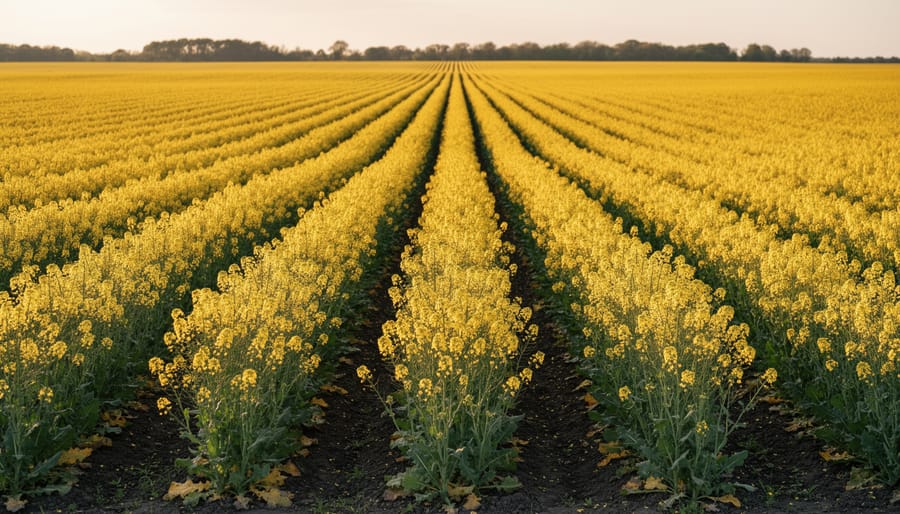
Monoculture farming is the practice of growing a single crop on the same land, season after season, instead of rotating or mixing species. Picture a quarter section of canola, then more canola, with the same equipment, inputs and marketing plan lined up behind it. The appeal is easy to see. One crop means simpler management, specialized machinery, predictable workflows and a clear path to market.
The trade-off shows up underground and on the balance sheet. Repeating one crop can draw down the same nutrients year after year, give pests and disease a steady food source, and tie your income to a single price and a single growing season. For Alberta producers working with short seasons, variable moisture and tight margins, that exposure matters.
This article explains how monoculture works, the forms it takes, and where it fits across prairie operations. You’ll also find practical ways to protect your soil, spread your risk and diversify gradually, plus how smarter data and technology can help you make those calls with more confidence.
What Monoculture Farming Means in Plain Language
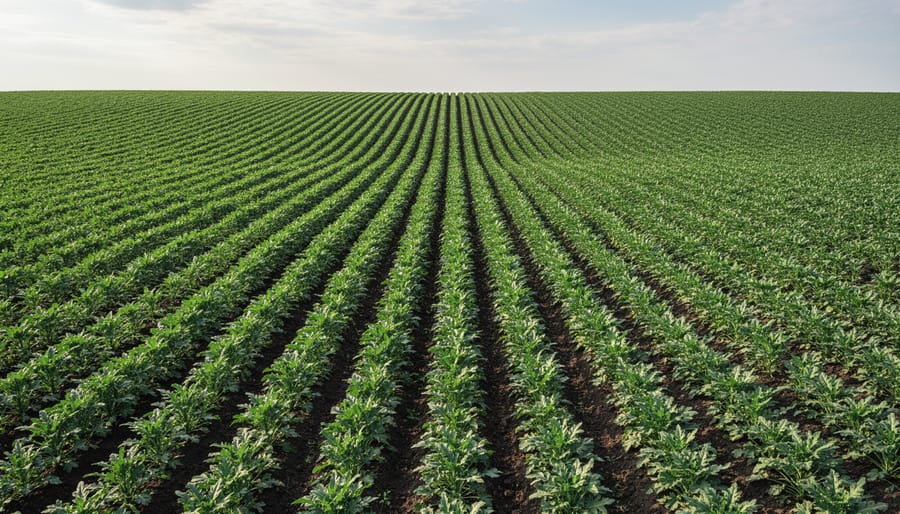
Farming monoculture simply means growing one crop species on a piece of land, often year after year. Picture a quarter section seeded to canola, then canola again the next spring. That’s the basic idea, and it’s a plain management choice rather than a moral stance.
It helps to see it against its opposites. Polyculture means several crops share the same land, either side by side or in close succession. Crop rotation means switching what you grow from one season to the next, say wheat, then peas, then canola. Most real farms sit somewhere between these poles, which is why monoculture works better as a spectrum than an on/off switch. A field that runs wheat-wheat-wheat-canola is more simplified than one running a five-year rotation, but less simplified than the same crop grown a decade straight.
Here are the terms you’ll hear most often:
- Monoculture
- Growing a single crop species on the same land, usually repeated over time.
- Polyculture
- Growing multiple crops together in the same space or sequence.
- Crop rotation
- Changing the crop grown on a field from one season or year to the next.
- Continuous cropping
- Planting crops on a field every season with no fallow period. It can still include several crops or just one.
- Intercropping
- Growing two or more crops in the same field at the same time.
- Cover crop
- A crop grown mainly to protect and feed the soil rather than to harvest and sell.
Neither end of the spectrum deserves automatic praise or blame. A simpler system can mean cleaner workflows, better equipment fit, and clearer marketing. It can also mean more exposure to pests, disease, and price swings. The right balance depends on your land, your goals, and your resources, and the following sections walk through those trade-offs.
How Monoculture Farming Works on the Ground
Why Producers Choose It
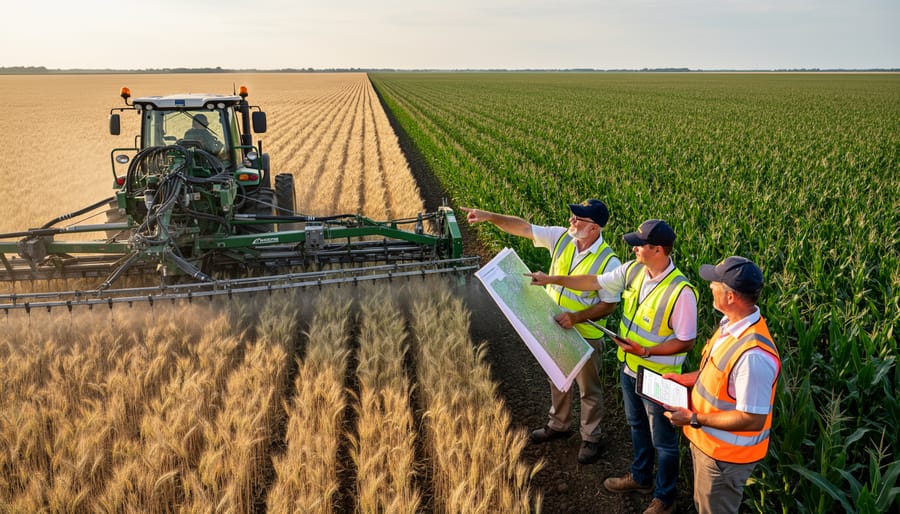
For many small and mid-sized operations, growing one crop is simply the practical answer to a tight calendar. When you seed, spray, and harvest the same crop across your acres, you’re running one set of workflows instead of juggling several, and that matters when you’re short on hours and hands.
Equipment fit is a big part of it. A seeder, sprayer, and combine set up for one crop don’t need constant changeovers or extra machinery. Market contracts can play a role too, since a buyer who wants a steady supply of a specific crop gives you a clear plan for what to grow and where to sell it.
Labour realities seal the deal. Fewer crops means fewer skills to master and a simpler agronomy plan, and today’s smart technologies can help you manage those fields with precision. It’s a reasonable, sensible choice, with trade-offs worth weighing.
What the System Depends On
When a field grows the same crop year after year, a few practices carry more of the load than they would in a varied rotation.
Fertility is the first. A single crop tends to draw down the same nutrients from the same part of the soil profile, so producers lean on regular soil testing and a fertility program matched to what that crop removes. Without a change of crop to mix up root depth and nutrient demand, those gaps can build up quietly.
Weed and pest management matters just as much. When the same crop returns, the weeds, insects, and diseases that favour it can settle in. Scouting through the season, rotating herbicide groups, and choosing resistant varieties help keep pressure from building. The goal is catching small problems before they become field-wide ones.
Soil monitoring ties it together. Checking organic matter, moisture, and structure over time shows whether the system is holding steady or slowly shifting. Tools like soil sensors and GPS-referenced sampling make that tracking easier and more consistent.
None of this is exotic. It’s steady, attentive agronomy, with a bit more watchfulness because the field has fewer natural buffers.
Forms Monoculture Takes: From Single-Year Plantings to Continuous Cropping
Monoculture isn’t one thing. It shows up in a few distinct forms, and where a farm sits on the spectrum depends on how much land is involved and how long the pattern runs.
- Continuous single-crop systems: the same crop on the same field year after year, such as wheat following wheat on a grain quarter.
- Landscape-scale monoculture: a whole district or region dominated by one crop, so even neighbouring farms share the same pests and market swings.
- Perennial monocultures: long-lived single-species plantings like an alfalfa or timothy hay stand, or a fruit orchard.
- Simplified rotations: short cycles of two crops, like canola and wheat, that look varied but behave a lot like monoculture.
Scale and time are what change the picture. A single-crop field on one farm is a management decision you can adjust next season. When a whole region plants the same thing, a disease or a price drop hits everyone at once, and no single producer can fix that alone.
Time horizon matters just as much. An annual crop gives you a yearly chance to switch course. A perennial forage stand or orchard commits you for several years, which is why choices like variety and stand health carry extra weight.
Ranchers are part of this conversation too. A pasture seeded to one grass or a hay field of pure alfalfa is a monoculture, just a perennial one. Livestock operations often lean on these stands for dependable feed, and they face the same trade-offs around soil, pests, and weather. Seeing your own fields in these categories is a useful first step toward deciding what, if anything, to adjust.
Where Monoculture Farming Shows Up and What It Means for Alberta Operations
Soil Health and Conservation Considerations
When the same crop goes into the same field year after year, the soil gets a narrower diet. One root system pulls from the same depths, and the field gets the same type of residue each fall. Over time, that can show up as weaker soil structure, less organic matter, and nutrient cycling that leans harder on purchased fertility.
The good news is that conservation practices work well in single-crop systems. The 5 soil health principles are a handy checklist: keep the soil covered, disturb it as little as possible, keep living roots in the ground, and add diversity where you can.
In practice, that often means reducing tillage so aggregates stay intact. If you’re wondering how to start no-till farming a step-by-step approach on a few fields is a sensible way in. Residue matters too, and a good straw management system keeps cover on the surface and carbon in the soil. A cover crop trial on a small acreage can add the living roots a monoculture lacks.
Managing Risk in a Single-Crop System
When a field carries one crop, a single problem can reach every acre at once. The good news is that most of the risk is manageable with habits you can build into a normal season.
Start with scouting. Walking fields on a regular schedule catches weeds, insects, and disease early, when a targeted response costs far less than a field-wide one. Keep simple notes on what you find and where, so patterns show up from year to year.
Next, look at variety choice. Selecting varieties with resistance to the diseases that show up in your area gives you a built-in buffer, and switching varieties from one season to the next keeps pests from settling in.
Weather and market swings call for a different kind of planning. Spreading out your sales, whether through staggered delivery dates or a mix of contracts and open-market sales, keeps one bad price window from defining your year. Crop insurance planning belongs here too. Review your coverage each winter, before decisions about seed and inputs are locked in, so protection matches the risks you actually face.
Technology can help as well. Soil sensors and field maps make your scouting records easier to compare season to season.
Practical Ways to Add Diversity Without Overhauling Your Operation
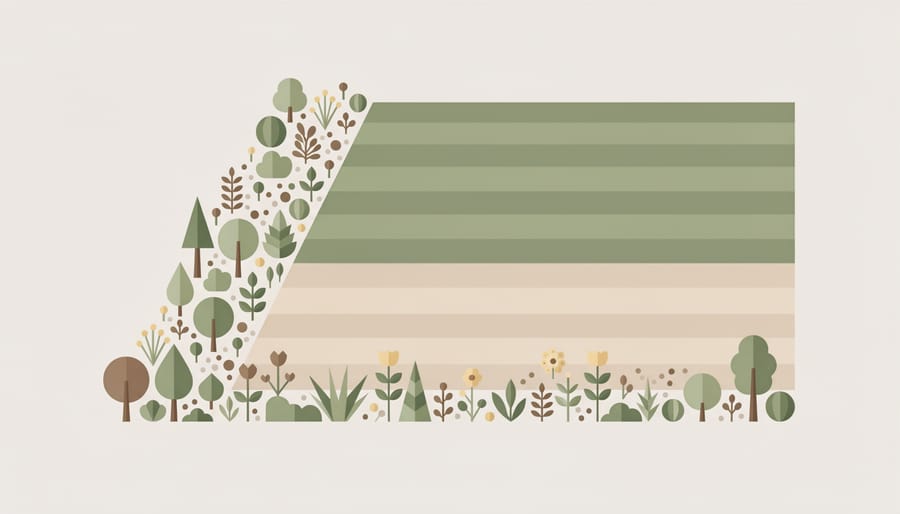
You don’t have to tear up your whole operation to bring more variety onto the land. Most producers get the best results by starting small, watching what happens, and building from there.
Here are a few steps that fit into an existing system:
– Stretch your rotation. Adding one more crop to a two-year cycle gives pests and diseases less to hang onto, and it can ease the pressure on your fertility program.
– Trial a cover crop on a small acreage. Seed one field, or even half a quarter section, after harvest. You’ll learn how it fits your seeding window and equipment before committing more ground.
– Try intercropping. Growing two compatible crops together on a modest block can spread your risk and make better use of moisture and nutrients.
– Add a forage or pulse phase. A stand of forage or a pulse crop in the rotation can give the soil a break, and ranchers may find it pairs well with feed needs.
– Use shelterbelts and field margins. Tree rows and unfarmed edges add habitat and help slow wind, which supports both soil and wildlife.
– Lean on your neighbours. Sharing a drill or sprayer, or swapping notes at a local meeting, cuts the cost of trying something new.
The point is to scale what works for your land and your books. If a trial flops, you’ve lost a little ground, not a season.
[Local success story spotlight: to be sourced from a verified Alberta producer before publication. Include what they tried, what they learned, and how they’d start if they were doing it again.]
Every operation is different, so borrow the ideas that suit your acreage and leave the rest.
Using Open Data to Inform Your Decisions
Before you change what’s growing in your fields, it helps to see what information is already out there. That’s where open data comes in. Open data is structured data that is machine-readable, freely shared, and able to be used and built on without restrictions. In plain terms, you can sort it, compare it, and use it in your own planning without hitting a paywall or a licence barrier.
For producers weighing cropping choices, that matters. Soil, land, and agricultural information can sit alongside your own field records, so you can test an idea before committing acres to it. A search of the Open Government Portal currently returns 48,310 records, and the search results show 48,310 records that you can explore. Start with a narrow question, such as what you’d like to know about your soil or land base, and work outward from there. A small, focused search beats scrolling through everything.
Common Questions About Monoculture Farming
Readers tend to arrive with the same handful of questions, so here are straight answers, followed by a few thoughts on putting them to work.
Is monoculture the same as continuous cropping?
They overlap but aren’t identical. Continuous cropping means growing the same crop on a field year after year, while monoculture is the broader idea of relying on a single crop species, whether across seasons, a whole farm, or a region.
Is monoculture always bad for soil?
Not automatically. Soil outcomes depend heavily on management, and practices like reduced tillage, residue cover, and fertility planning can ease the strain of reduced crop variety. It simply asks more of the producer’s attention.
Can small farms use it successfully?
Yes, many do, especially when a single crop fits their equipment, labour, and market contracts. The key is pairing it with careful scouting and a plan for managing risk.
How is it different from crop rotation?
Rotation changes the crop in a field from one season to the next, while monoculture keeps the same one. A simplified rotation with only two crops sits somewhere in between.
If you’re curious about the simplest first step toward more diversity, start small. Trial a cover crop on a single field, or extend your rotation by one season, and watch what happens before changing anything else.
Questions like these also benefit from good evidence. Open data, meaning structured, machine-readable information that is freely shared and can be built on without restrictions, gives producers a way to research land and soil questions for themselves. A search of the Open Government Portal returns 48,310 records, so there’s plenty to explore.
Monoculture farming isn’t a verdict on anyone’s operation. It’s a management choice, and like any choice it comes with trade-offs. Growing one crop can simplify your workflow, fit your equipment, and match your market contracts. It can also put more pressure on your soil, your pest management, and your bottom line when conditions turn.
The good news is that you’ve got practical tools to work with. GPS guidance and soil sensors help you manage single-crop fields more carefully. Reduced tillage and residue management protect the ground you depend on. And you don’t have to overhaul everything at once. A longer rotation, a cover crop trial on a few acres, or a forage phase can all start small and grow from there.
We’d love to hear how this looks on your land. If you’re an Alberta farmer, rancher, or agribusiness owner, share what’s worked, what hasn’t, and what you’re still figuring out. Your experience helps your neighbours, and this community gets stronger every time someone speaks up.