

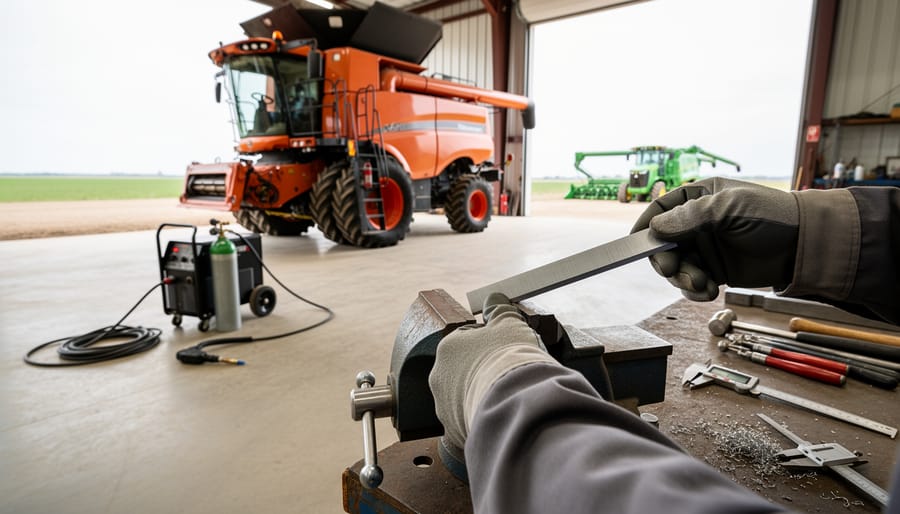
Something’s shifting across rural Alberta. Drive past any mid-sized operation today and you’re as likely to see a welding rig next to the combine as you are a hay baler. Producers aren’t just growing crops or raising cattle anymore. They’re machining custom parts for aging equipment, retrofitting older tractors with modern GPS systems, and building specialized tools that commercial manufacturers don’t make or can’t justify producing for niche applications.
This movement combining agricultural production with mechanical repair and custom fabrication isn’t just a hobby trend. It’s becoming an economic necessity and a competitive advantage. With new equipment costs climbing past what many operations can justify and supply chain delays stretching repair timelines from days to months, Alberta’s ag community has responded the way it always has: by solving problems independently.
The driving forces are practical. Equipment dealers can’t stock every part for every model year. Third-party manufacturers discontinued support for machinery that still has productive years ahead. Custom solutions for specific soil conditions, crop varieties, or operational workflows simply don’t exist in catalogs. Producers who can design and build their own solutions gain operational flexibility and cut costs dramatically.
But there’s more happening here than pure economics. This convergence of farming, fixing, and fabricating represents a return to the self-reliance that built Alberta agriculture while embracing modern technology. CNC mills sit alongside traditional welders. 3D printers produce prototype parts before committing to metal fabrication. Online communities share CAD files and troubleshooting advice across time zones.
Why Alberta Farmers Are Embracing Fixing and Fabricating
Alberta farmers are turning wrenches and firing up welders in record numbers, driven by hard economics and the reality that waiting weeks for a technician can cost an entire harvest window. When a combine breaks down mid-season or a baler snaps a critical component during the narrow hay-cutting period, the clock starts ticking against you. Every day of downtime translates directly to lost revenue, weather risk, and mounting stress.
The financial pressure is real and measurable. Equipment price index trends show farm machinery costs have climbed steadily, pushing even basic repairs into four-figure territory. A dealership service call that once ran $800 now easily tops $1,500, and that doesn’t account for parts markup or travel fees to remote operations. When you factor in the cost of idle equipment during peak season, the true expense of outsourcing every repair becomes unsustainable for many operations.
Several interconnected factors are fuelling this shift toward self-reliance:
- Repair backlogs stretching two to four weeks during planting and harvest, when timing is everything
- Parts shortages forcing farmers to wait months for hydraulic cylinders, bearings, and electronic components
- Service territory consolidation leaving some farms hours away from the nearest qualified technician
- Equipment complexity requiring specialized diagnostic tools that only dealers possess
- Rising labour rates and travel charges that make simple fixes prohibitively expensive
The problem extends beyond inconvenience. As one central Alberta grain farmer put it, equipment delays cause headaches that ripple through entire growing seasons, affecting crop quality, yield potential, and contract commitments. Learning to fabricate a replacement part or diagnose a hydraulic fault isn’t just about saving money. It’s about taking back control of your operation’s timeline and reducing vulnerability to supply chain disruptions that show no signs of easing in 2026.
Essential Skills for the Modern Farm Workshop
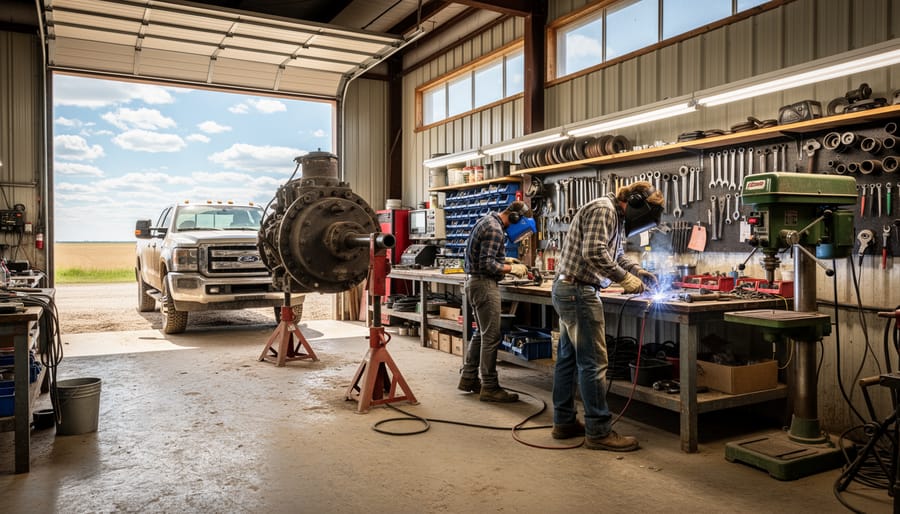
Welding and Metal Fabrication Basics
Welding stands as the cornerstone skill for farmers entering the fixing and fabricating world. MIG (metal inert gas) welding offers the gentlest learning curve and handles most farm repairs, cracked loader buckets, broken gate hinges, or trailer frames. The wire-feed system lets you work with one hand free to position metal, making it ideal for awkward field repairs.
Stick welding delivers raw power for thick steel and outdoor work where wind disrupts MIG’s gas shield. Many Alberta farmers keep a stick welder in the shop for structural repairs on grain bins or heavy implement frames. The electrodes tolerate rusty, painted surfaces better than MIG, saving prep time when you’re racing daylight.
TIG welding produces the cleanest, strongest joints but demands more practice and costs more upfront. Reserve it for precision work like aluminum radiator repairs or stainless exhaust modifications.
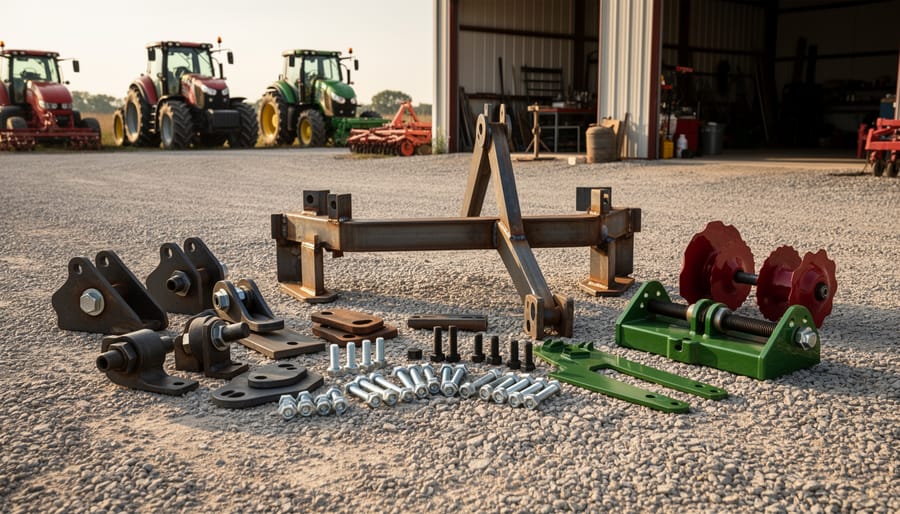
Basic fabrication skills extend beyond joining metal. Learning to cut with an angle grinder or plasma cutter, bend with a brake, and drill accurately transforms you from someone who fixes breaks into someone who builds solutions, custom three-point hitch attachments, specialized feed gates, or modified toolbar mounts that manufacturers never imagined.
Equipment Diagnostics and Repair
Modern farm equipment generates diagnostic codes that once required dealer visits but are now accessible to determined farmers willing to learn. Alberta producers are decoding error messages, tracing hydraulic leaks, and testing electrical circuits with basic tools and online resources. A multimeter, diagnostic laptop, and manufacturer service manuals unlock most common issues, from sensor failures to valve malfunctions. Farmers track error patterns in simple logbooks, catching problems before they sideline equipment during seeding or harvest.
Preventative maintenance extends machinery life and prevents costly breakdowns. Regular hydraulic fluid analysis, electrical connection cleaning, and filter changes keep systems running reliably. Many farmers now perform their own oil sampling, inspect wiring harness conditions, and replace wear parts before failure. This proactive approach complements emerging technologies, AI in farming systems can predict maintenance needs, but skilled operators still interpret the data and execute repairs. Learning basic diagnostics transforms farmers from passive equipment users into active problem-solvers who minimize downtime when every operational hour counts.
Building Your Farm Workshop: Tools and Equipment
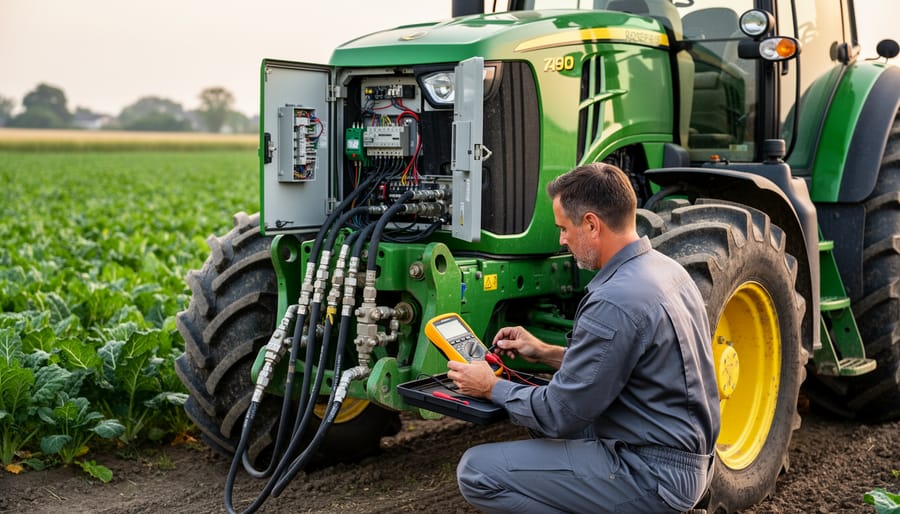
Setting up a farm workshop doesn’t require a massive upfront investment. Start with the basics and expand as your skills and needs grow. A dedicated space, even a corner of an existing barn or shed, gives you room to work safely and keeps tools organized when you need them most.
Your first priority is adequate lighting and ventilation. Natural light through windows helps during day work, but invest in quality LED shop lights for evening repairs. Proper ventilation matters for welding fumes and paint work. A concrete floor makes cleanup easier and provides a stable surface for heavy equipment work.
| Workshop Level | Essential Tools | Approximate Investment |
|---|---|---|
| Starter | Basic hand tools, angle grinder, drill press, bench vise, wire-feed welder, safety gear | $2,000-$4,000 |
| Intermediate | Add MIG welder, plasma cutter, hydraulic press, portable bandsaw, diagnostic scanner | $6,000-$10,000 |
| Advanced | Add TIG welder, metal lathe, milling machine, welding table, advanced diagnostic tools | $15,000-$25,000 |
Safety equipment is non-negotiable. Quality welding helmets with auto-darkening features, leather gloves, steel-toed boots, hearing protection, and fire extinguishers rated for metal fires belong in every workshop. A first-aid kit and eye wash station provide essential backup.
Buy quality where it matters. A reliable welder and angle grinder will serve you for decades. Hand tools can start budget-friendly and upgrade over time. Watch for farm auctions and equipment sales where retiring farmers sell workshop gear at reasonable prices.
Storage systems keep small parts, fasteners, and tools accessible. Pegboards, shelving units, and labeled bins prevent the frustration of hunting for a specific bolt when machinery sits idle. Many farmers integrate smart farm tech with traditional tools, using diagnostic tablets alongside wrenches.
Consider power needs early. A 220-volt circuit supports most welders and larger equipment. Backup power options, whether generator or battery systems, keep critical repairs moving during outages. Plan your space with room to maneuver implements and larger components through doors.
Alberta Success Stories: Farmers Who Fixed It Themselves
# Alberta Success Stories: Farmers Who Fixed It Themselves
Real-world examples prove that farming fixing and fabricating skills deliver tangible results for Alberta operations. Mark Jansen, who runs a mixed grain and cattle operation near Lacombe, cut his annual equipment maintenance costs by $18,000 in 2025 after teaching himself MIG welding and hydraulic repair. When a cylinder failed on his combine header during harvest, he fabricated a replacement mount in his shop rather than waiting three days for a dealer appointment. The repair took four hours and cost $200 in materials compared to a quoted $1,400 dealer service call.
Sarah Chen operates a 2,000-acre canola and wheat farm east of Red Deer. She invested $3,500 in a basic welding setup and online courses in early 2025, then built a custom grain bin unloading system that would have cost $8,000 from a manufacturer. Her approach combined salvaged components with new parts, creating a solution tailored to her bin layout. Chen reports that her fabrication skills have already paid for themselves twice over through custom repairs and modifications she no longer outsources.
The Farming Fixing & Fabricating community demonstrated the collaborative side of this movement when lifting started for the 2026 season in late May. Their hands-on approach brings farmers together to tackle projects and share techniques, creating a knowledge network that extends beyond individual operations. This type of peer learning accelerates skill development and reduces the intimidation factor for farmers just starting their repair journey.
Tom Bakker’s story illustrates the progression many farmers experience. He began with simple bolt replacements and fluid changes in 2024, then moved to brake repairs and bearing replacements. By spring 2026, he’d rebuilt the hydraulic system on his swather and fabricated custom mounting brackets for precision agriculture equipment. His biggest lesson: start with small projects to build confidence, keep detailed records of what works, and never skip safety equipment. Bakker estimates he’s saved $25,000 across two years while gaining skills that make his operation more resilient during critical farming windows.
Right to Repair and Legal Considerations in Alberta
The right-to-repair movement has gained momentum across Canada, with farmers pushing for legal access to diagnostic software, technical manuals, and replacement parts that manufacturers often restrict. In Alberta, you have the legal right to repair equipment you own, but the landscape gets complicated when warranties, proprietary systems, and safety certifications come into play.
Canadian law doesn’t currently prohibit farmers from repairing their own equipment, but manufacturers use licensing agreements and digital locks to limit what you can access. You can legally weld a broken bucket, replace hydraulic hoses, or fabricate custom implements without restriction. Where you’ll hit roadblocks is accessing engine control units, bypassing software locks, or obtaining proprietary diagnostic codes, manufacturers argue these protections ensure safety and emissions compliance.
Safety regulations matter, especially when modifications affect rollover protection structures, lighting systems, or braking mechanisms. Alberta’s Occupational Health and Safety standards apply to farm operations with employees, meaning any equipment modifications must maintain safety integrity. If you’re operating solo, you have more latitude, but structural changes to cabs, frames, or safety systems carry real liability if something goes wrong.
Know when to call a professional. Complex hydraulic systems, high-pressure fuel injectors, and electronic control modules often require specialized tools and training. Electrical work on modern tractors with CAN bus systems can create costly problems if done incorrectly. The farming fixing and fabricating approach works best when you honestly assess your skill level and recognize that some repairs justify professional expertise.
Learning Resources and Community Support
You don’t need to figure everything out alone. Alberta’s farming fixing and fabricating community thrives on shared knowledge, and multiple pathways exist for building your skills in 2026.
Start with YouTube channels like Welding Tips and Tricks or AgriStudios, which offer free tutorials on farm-specific repairs and fabrication projects. The Farming, Fixing & Fabricating community launched their 2026 season in May, providing real-world examples of collaborative problem-solving among farmers tackling equipment challenges together.
Olds College and Lakeland College run short courses in welding, hydraulics, and equipment maintenance designed for working farmers. Many courses now offer weekend or evening formats that fit around planting and harvest schedules.
Local peer networks matter most. Connect through agricultural Facebook groups, attend winter farm shows where repair workshops often run alongside equipment displays, or simply talk to neighbours who’ve built their own shops. Many experienced farmers willingly share what they’ve learned through trial and error.
Farm supply stores like UFA occasionally host hands-on clinics covering specific repairs or tool use. Regional machinery dealer service departments sometimes offer customer training on basic maintenance and diagnostics.
The strongest resource remains your farming community itself. When you fix something, document it. When someone shares a solution, try it. This collaborative spirit turns individual skill-building into collective resilience across Alberta agriculture.
The farming fixing and fabricating movement represents more than a cost-saving strategy, it’s a return to the self-reliant spirit that built Alberta’s agricultural sector. By developing repair and fabrication skills, you’re not just maintaining equipment; you’re investing in your operation’s long-term resilience and independence. The farmers already practicing these skills report reduced downtime, lower expenses, and a deeper understanding of their machinery that makes them better operators overall.
Starting doesn’t require a fully equipped shop or years of training. Begin with one skill, one small repair, or one community workshop. Connect with fellow farmers through local groups or online networks where knowledge flows freely and experience is shared generously. Every weld you learn, every repair you complete yourself, strengthens both your operation and the broader farming community.
We want to hear your fixing and fabricating stories. What repairs have saved your season? What custom solutions have you built? Share your experiences with other Alberta farmers, your hard-won knowledge might be exactly what someone else needs to solve their own challenge.