

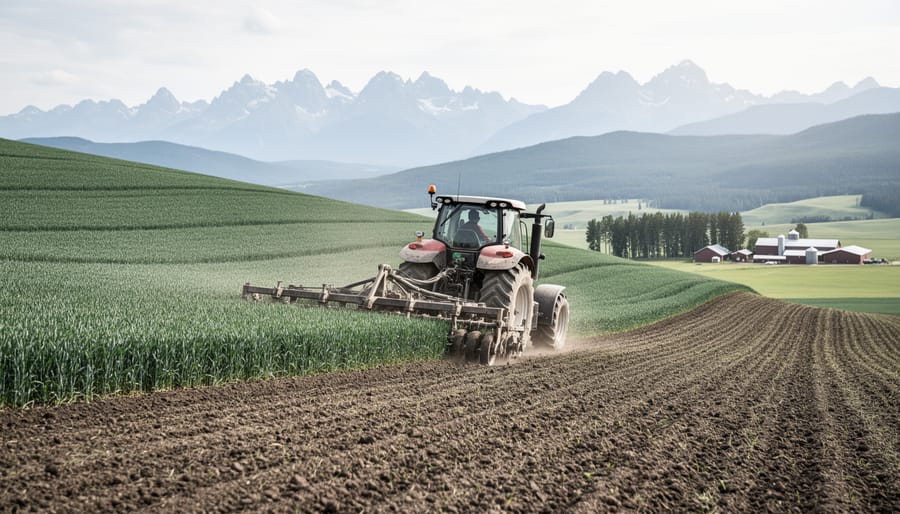
Highland farming refers to agricultural practices on elevated terrain, where altitude, slope, and climate create unique challenges and opportunities. Across Alberta, producers working foothill regions and higher elevations face shorter growing seasons, increased precipitation, cooler temperatures, and steeper land that demands specialized approaches to crop selection, soil management, and equipment use.
Understanding the distinction between highland farming as a practice and specific companies offering custom farming services matters for Alberta producers. While Highland Custom Farming operates as a successful Ontario-based business providing tillage, planting, and harvesting services, the broader concept of highland farming applies directly to thousands of Alberta operations working land above 1,000 meters elevation.
Alberta’s geography makes highland farming particularly relevant. The transition zones between prairie and mountain, especially west of Calgary and throughout the Peace Country’s elevated plateaus, require producers to adapt conventional techniques. Cool-season crops like barley, canola varieties bred for shorter maturity windows, and specialized forage production dominate these regions. Soil erosion control becomes critical on sloped land, demanding contour farming, grass waterways, and reduced tillage strategies that differ from flatland approaches.
Technology has transformed highland farming in 2026. GPS-guided variable rate application adjusts seeding and fertilizer rates based on topography and soil moisture variations. Drone imagery identifies problem areas before they escalate. Weather monitoring stations positioned at different elevations help producers time operations precisely, critical when working windows shrink at higher altitudes.
This article explores proven practices from Alberta producers successfully farming elevated terrain, equipment adaptations that improve safety and efficiency on slopes, and crop selection strategies that turn altitude from liability into advantage.
Understanding Highland Farming: Agriculture in Elevated Terrain
Highland farming refers to agricultural production adapted specifically for elevated terrain, typically above 600 metres, where environmental conditions differ markedly from valley and prairie agriculture. While not defined by a precise elevation threshold, highland farming emerges wherever altitude creates distinct challenges: compressed growing seasons, sharper temperature swings between day and night, modified precipitation patterns, and soils shaped by elevation-specific weathering processes.
Alberta’s foothills, elevated plateaus, and transitional zones all qualify as highland environments where these principles apply. A producer working land at 900 metres near Sundre faces fundamentally different conditions than someone farming the plains at 700 metres elevation, even within the same regional climate zone.
- Shortened Growing Seasons
- Highland areas experience later spring frosts and earlier fall frosts, reducing the frost-free period by two to four weeks compared to lower elevations at similar latitudes. This compression demands crop varieties that mature quickly and tolerate cooler soil temperatures at germination.
- Temperature Variation
- Elevated terrain shows greater diurnal temperature swings, with warm days followed by significantly cooler nights. These fluctuations affect crop development rates, pest cycles, and livestock comfort, requiring adjusted management strategies.
- Drainage Patterns
- Highland topography creates complex water movement, with rapid runoff on slopes and occasional waterlogging in depressions. Proper water management becomes critical to prevent both erosion on hillsides and saturation in low spots.
- Soil Composition
- Highland soils tend toward thinner profiles with higher stone content, greater organic matter accumulation in cooler conditions, and variable fertility depending on slope position. Nutrient management must account for these spatial differences across a single field.
Wind exposure intensifies at elevation, affecting both crop desiccation and livestock windchill. What works on sheltered lowland farms often requires modification when applied to exposed highland operations. Understanding these environmental realities allows producers to work with elevation rather than fight it, selecting appropriate enterprises and practices that turn challenging terrain into productive agricultural land.
Alberta’s Highland Farming Opportunities
Alberta’s geography offers significant highland farming opportunities that many producers overlook or underutilize. The foothills region stretching from Waterton to Grande Prairie represents the most obvious highland farming zone, with elevations ranging from 1,000 to 1,500 metres creating distinct microclimates and growing conditions compared to the prairie flatlands to the east. These areas typically experience 10 to 15 fewer frost-free days than lower elevations, but benefit from reliable moisture patterns and natural drainage that reduces waterlogging issues common in flatter terrain.
The Peace Country contains substantial elevated plateaus where highland farming principles directly apply. Areas around Grande Prairie and Dawson Creek sit at elevations above 600 metres, with some farmland reaching 800 metres. These plateaus combine the region’s long summer daylight hours with cooler temperatures that favour certain crops and livestock operations. Producers here work land that shares more characteristics with traditional highland agriculture than with southern Alberta’s irrigated districts.
Transitional zones between major geographic regions create additional highland opportunities. The Porcupine Hills south of Calgary, the Neutral Hills northeast of Stettler, and the elevated benches along the North Saskatchewan River near Edmonton all present terrain where highland farming techniques solve problems that conventional flatland approaches cannot address effectively.
Alberta’s varied topography creates distinct trade-offs. Elevated land typically costs 20 to 40 percent less than comparable prairie acreage, making entry more affordable for new producers or expansion more feasible for existing operations. However, these savings come with shorter windows for field operations, increased fuel costs for working slopes, and the need for specialized equipment or techniques to prevent erosion and manage runoff.
The opportunities extend beyond cost savings. Highland pastures support grazing operations into late fall when lower elevations turn muddy. Cooler temperatures reduce heat stress in livestock and create niche markets for cold-hardy crop varieties. Many successful Alberta producers have built profitable operations specifically by mastering the challenges highland terrain presents rather than avoiding it.
Custom Farming Models for Challenging Terrain
Custom farming operations offer a practical solution when managing difficult terrain becomes economically challenging for individual producers. Instead of investing hundreds of thousands in specialized hillside equipment that sits idle most of the year, farmers can contract services from operations that spread those costs across multiple clients. This model particularly benefits Alberta producers working foothills properties or elevated land where conventional equipment struggles with slopes, soil moisture challenges and uneven terrain.
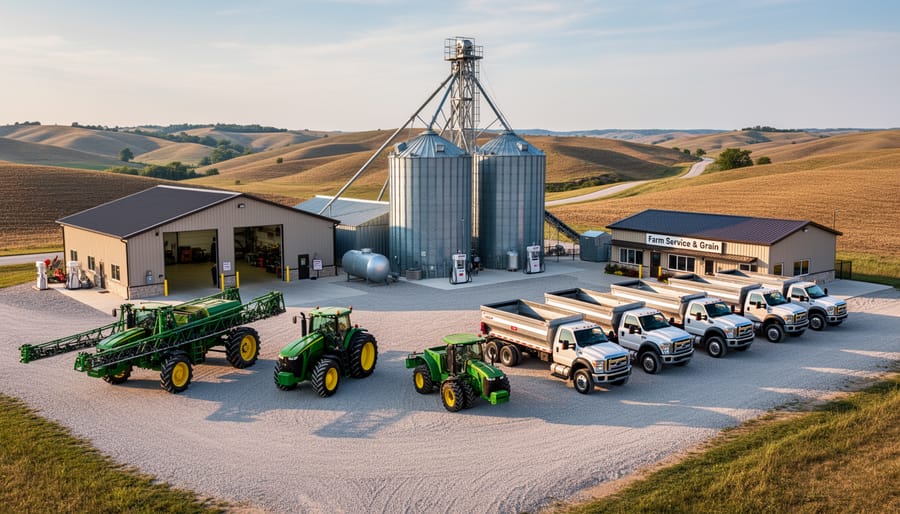
Highland Custom Farming in Ontario demonstrates how this approach works at scale. Launched in Grey County in 2005, the Dundalk-based operation built its business around serving producers facing similar elevation challenges. Their model centers on significant infrastructure investment that individual farmers couldn’t justify alone. At their Proton Station facility, they’ve constructed an office, mechanic bay, wash bay, and flex space building alongside a 1.2 million bushel elevator and weigh station. This infrastructure supports a fleet of specialized equipment designed specifically for challenging terrain work.
The company’s recent expansion to Iroquois Falls shows the model’s adaptability to different highland contexts. By concentrating expertise, equipment, and facilities in one operation, they deliver economies of scale that make highland farming viable where it might otherwise pencil poorly for individual operators.
For Alberta producers, the takeaway isn’t copying an Ontario company’s exact approach. It’s recognizing the economic logic: specialized equipment and expertise become affordable when shared. A custom operator can justify purchasing hillside combines, variable-rate technology for elevation changes, or drainage equipment because they deploy it across thousands of acres annually. The individual farmer working 400 acres of sloped land pays only for services rendered, avoiding both the capital outlay and the maintenance burden.
This partnership model works particularly well in Alberta’s foothills regions and elevated parkland zones, where topography varies dramatically within short distances. Custom operators familiar with terrain-specific challenges bring both equipment and knowledge that help smaller producers compete effectively on difficult ground.
Practical Highland Farming Techniques for Alberta Producers
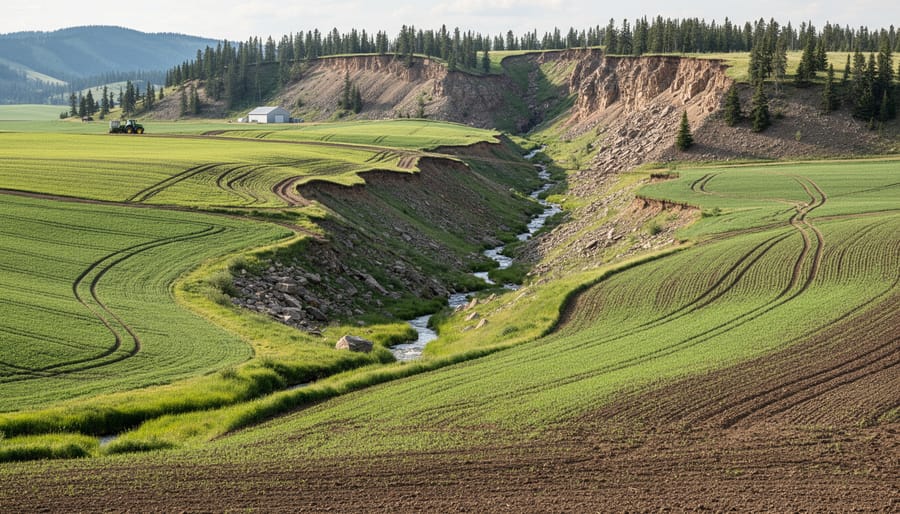
Working elevated terrain demands different approaches than flatland farming, but Alberta producers don’t need to reinvent the wheel. Start with soil conservation that matches your slopes. Contour planting reduces runoff by up to 50% compared to straight rows running downhill. Where slopes exceed 8%, consider establishing grass waterways in natural drainage paths before erosion cuts channels for you. Cover crops between cash crops anchor soil through wind and water events that hit exposed highland sites harder than sheltered valleys.
Water behaves differently at elevation. Rainfall comes harder and leaves faster on slopes, so catch it where it falls. Dugouts positioned mid-slope collect runoff without becoming sediment traps if you establish vegetated buffer strips upslope. Tile drainage works in highland clay soils, but plan lines to follow natural contours rather than forcing water downhill too quickly. Some producers install small retention ponds at field edges, creating micro-wetlands that slow spring melt and provide late-season moisture during dry spells.
Crop selection separates struggling highland operations from profitable ones. Shorter growing seasons at elevation favour varieties bred for northern zones rather than heat-lovers that never mature. Barley consistently outperforms corn in Alberta’s cooler highland areas. Forage varieties like timothy and brome handle temperature swings better than alfalfa monocultures. One Peace Country producer switched entirely to fall rye after repeated spring frost losses with wheat, gaining three weeks on his harvest window. Match your crops to your actual frost-free days, not the regional average that assumes valley conditions.
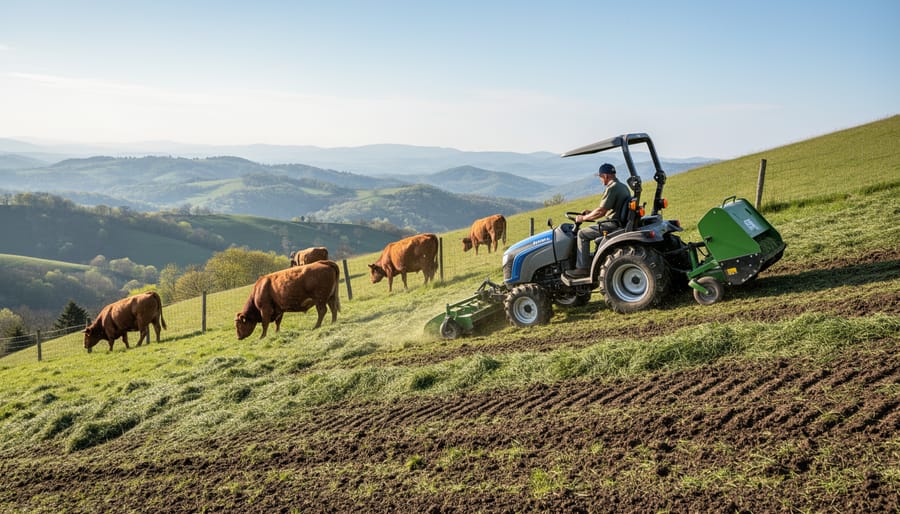
Grazing rotation protects highland pastures from degradation that happens quickly on slopes. Divide larger pastures into smaller paddocks, moving cattle every 3-5 days during growing season. This prevents overgrazing high spots while underutilizing draws and gullies. Leave 4-6 inches of residual height before rotating, especially on slopes where shorter grass invites erosion. Winter grazing works well on highland sites if you use straw management to protect soil during freeze-thaw cycles.
Equipment modifications make hillside work safer and more efficient. Hillside combines with self-leveling shoes prevent grain loss and reduce rollovers on slopes exceeding 15%. Tractor ballasting matters more on uneven ground than flat fields. Many producers working rolling terrain find right-sized equipment handles elevation changes better than oversized machines that compound stability issues on sidehills.
Economic Considerations: Making Highland Land Work
Highland land in Alberta typically carries lower per-acre values than prime flatland, making it an attractive entry point for new producers or those looking to expand without premium price tags. Foothills acreages and elevated plateaus in regions like the Peace Country often sell at 30-50% less than comparable valley-bottom farms, though accessibility and infrastructure can affect these figures significantly.
However, lower land costs don’t automatically translate to higher profits. Input expenses on highland terrain run differently than conventional operations. Fuel consumption increases with slope work, specialized seed varieties suited to shorter seasons often cost more, and lime applications to manage naturally acidic highland soils add to annual budgets. Producers should expect yields 15-25% below valley averages for common crops, though this gap narrows with proper soil management and variety selection.
The real economic opportunity in highland farming lies in differentiation. Cooler climates and pristine elevated environments create natural advantages for organic certification, heritage livestock breeds that thrive in harsh conditions, and specialty crops like certain pulses, buckwheat, or cold-hardy berries that command premium prices. These niche markets often compensate for lower volumes with significantly higher returns per unit.
| Operation Size | Equipment Ownership Cost (Annual) | Custom Services Cost (Annual) | Break-Even Point |
|---|---|---|---|
| Small (Under 500 acres) | $45,000-$65,000 | $18,000-$28,000 | Custom saves 40-60% |
| Medium (500-1,500 acres) | $85,000-$120,000 | $55,000-$85,000 | Custom saves 20-30% |
| Large (Over 1,500 acres) | $150,000-$200,000 | $120,000-$180,000 | Ownership competitive |
For most Alberta highland producers working under 1,000 acres, custom farming partnerships make solid financial sense. The capital freed from equipment purchases can fund soil improvements, fencing for rotational grazing, or marketing initiatives for premium products. Larger operations benefit from ownership, particularly when terrain-specific modifications to machinery become necessary and the equipment gets used intensively enough to justify the investment.
The decision hinges on your specific context: land base size, available capital, mechanical skills, and whether you’re pursuing conventional commodity production or value-added niche markets that reward the unique characteristics of highland-grown products.
Environmental Benefits and Soil Conservation
Highland farming practices deliver measurable environmental benefits that extend far beyond individual operations. When Alberta producers manage elevated terrain properly, they protect watersheds that supply water to communities and agricultural operations downstream. Sloped land acts as a natural filter, and maintaining vegetation cover prevents sediment from contaminating water sources during spring runoff and heavy rainfall events.
Soil health on highland properties requires specific conservation approaches. Contour cultivation, terracing, and strategic planting of shelter belts significantly reduce erosion on slopes. Many Alberta producers working foothills terrain report that maintaining permanent vegetation on the steepest sections while rotating crops on gentler slopes preserves topsoil that took centuries to develop. This approach prevents the gullying and soil loss that can render highland acreage unproductive within a single generation.
Highland soils offer substantial carbon sequestration potential. Cooler temperatures and higher organic matter content in elevated terrain mean carbon stays locked in the soil longer than in lowland agricultural zones. Producers who adopt minimal tillage practices and maintain year-round ground cover maximize this benefit while improving soil structure.
Biodiversity thrives when highland farming respects natural ecosystems. Elevated terrain often provides habitat corridors connecting wildlife populations across landscapes. Rotational grazing systems that allow native grasses recovery time support pollinators, ground-nesting birds, and beneficial insects. Several Alberta ranchers working transitional zones between foothills and prairie report that strategic grazing management has increased wildlife diversity on their properties while maintaining livestock productivity. This balance proves that economic viability and environmental stewardship aren’t competing goals, they’re complementary outcomes of thoughtful highland management.
Getting Started: Resources for Alberta Highland Producers
Starting with elevated terrain requires both knowledge and connections. Alberta producers have access to several resources that make highland farming more manageable, whether you’re just evaluating a foothill property or refining practices on land you’ve worked for years.
Your regional Alberta Agriculture and Irrigation office provides soil classification maps that identify elevation-related characteristics across the province. Request a detailed topographic analysis before purchasing highland property, and schedule soil testing that specifically measures organic matter levels, drainage capacity, and nutrient availability at different elevations on your land. Highland soils often show significant variation over short distances, making zone-specific testing worthwhile.
For equipment, start by assessing what modifications your existing machinery needs rather than replacing everything. Hillside combines with leveling systems, tractors with lower centers of gravity, and specialized mowers for steep pastures represent smart incremental investments. Contact equipment dealers familiar with Peace Country operations or foothill ranching, as they understand the practical modifications that work in Alberta’s elevated terrain.
Before committing to major equipment purchases or custom farming partnerships, walk through this evaluation:
- Calculate your current equipment utilization rates and identify gaps where specialized machinery sits idle most of the season
- Get quotes from at least two custom operators for the specific services your highland acreage requires
- Compare five-year costs of ownership (payments, maintenance, storage, depreciation) against custom rates for the same period
- Assess whether custom partnerships free up capital for higher-return investments like fencing, water infrastructure, or breeding stock
- Consider seasonal timing constraints on your operation and whether custom operators can realistically meet your windows
The Alberta Forage Industry Network connects producers managing similar terrain challenges. Their regional meetings and online forums let you learn from neighbors who’ve solved problems you’re just encountering. Don’t overlook commodity groups specific to your production focus, whether cattle, grain, or specialty crops, as many maintain subgroups focused on marginal or challenging land management.
When evaluating custom farming partnerships, verify the operator’s experience with terrain similar to yours, confirm equipment insurance and liability coverage, and establish clear performance expectations in writing before the season starts.
Understanding highland farming as a set of agricultural practices, rather than just a company name, opens real opportunities for Alberta producers working elevated terrain. Whether you’re managing foothills acreage, Peace Country plateaus, or transitional zones, recognizing your land’s highland characteristics helps you make smarter decisions about crops, grazing, equipment, and conservation.
The techniques we’ve covered aren’t theoretical. They’re proven strategies that address the specific challenges elevation brings: shorter growing seasons, variable drainage, temperature swings, and terrain that standard equipment struggles with. Some producers will tackle these challenges with their own modified equipment, while others will find that custom farming partnerships make better economic sense.
What matters most is building knowledge within our community. Alberta’s topography is too diverse for one-size-fits-all solutions. Your experience managing a specific piece of elevated land contributes valuable insight that helps neighboring producers solve similar problems.
Take stock of your land’s elevation characteristics. Connect with other farmers working highland terrain. Share what’s worked, what hasn’t, and what innovations you’ve developed to make challenging land productive. The collective knowledge of Alberta producers adapting to elevation will drive better practices across the province. What highland farming techniques have made a difference on your operation?