

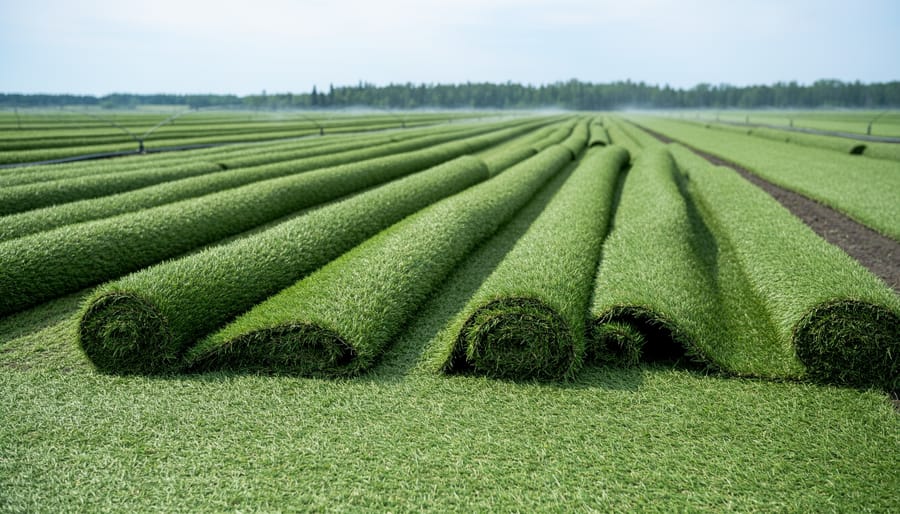
Sod farming transforms ordinary agricultural land into a high-value crop business, generating $15,000 to $25,000 per acre annually in Alberta’s competitive turf market. This specialized sector combines intensive production methods with strategic timing, requiring 12 to 18 months from seeding to harvest and modest startup capital compared to grain or livestock operations.
For Alberta producers evaluating diversification opportunities in 2026, sod farming offers compelling economics. The business delivers consistent demand from residential developers, commercial landscapers, and municipal projects across the province’s growing urban centers. Unlike commodity crops subject to global price swings, sod operates in a localized market where quality, delivery speed, and customer relationships drive profitability.
The production model suits smaller acreages particularly well. A 10-acre operation can generate substantial income while remaining manageable for family-run farms. Producers need irrigation infrastructure, specialized harvesting equipment (which can be rented initially), and access to markets within a two-hour delivery radius. Alberta’s climate presents specific considerations. The growing season runs roughly May through September, with spring and fall representing peak installation periods when customers prioritize establishing lawns before extreme weather.
Success in this sector depends on understanding soil preparation, selecting grass varieties suited to our short summers and cold winters, managing irrigation precisely, and building relationships with landscape contractors who become repeat buyers. The barriers to entry remain reasonable, but the learning curve is real. Producers who treat sod farming as a specialized horticultural business rather than a row crop typically achieve better margins and customer retention.
Understanding the Sod Farming Business Model
Sod farming operates fundamentally differently from conventional grain or oilseed production. Rather than planting and harvesting a single crop annually, producers grow a living product that must reach maturity, be harvested at precise timing, and arrive at the customer’s site alive and viable, often within 24 hours of cutting. This creates a business model built around just-in-time delivery and customer coordination rather than commodity markets and storage.
The production cycle typically spans 12 to 18 months from seeding to first harvest in Alberta’s climate, depending on variety and growing conditions. During this period, the turf requires intensive management including irrigation, fertilization, pest control, and mowing to develop the dense root system and uniform appearance customers demand. Once mature, the same field can be harvested multiple times if properly managed, though most producers prefer the quality and consistency of first-year sod.
Alberta’s market drivers distinguish the business from operations in longer-season regions. The province’s construction boom and urban expansion create steady demand from residential developers, commercial landscapers, and municipal projects. Short growing seasons concentrate both production and sales into compressed windows, creating cash flow patterns unlike traditional crops. Spring installation demand peaks before local sod reaches harvestable maturity, while late-season projects face weather constraints that limit the selling window.
Success in sod farming requires thinking like a service business as much as a crop producer. Customer relationships, delivery logistics, and quality consistency matter as much as agronomic skills. The typical operation balances field production with sales management, equipment maintenance, workforce coordination, and the constant pressure of perishability that defines this specialized agricultural enterprise.
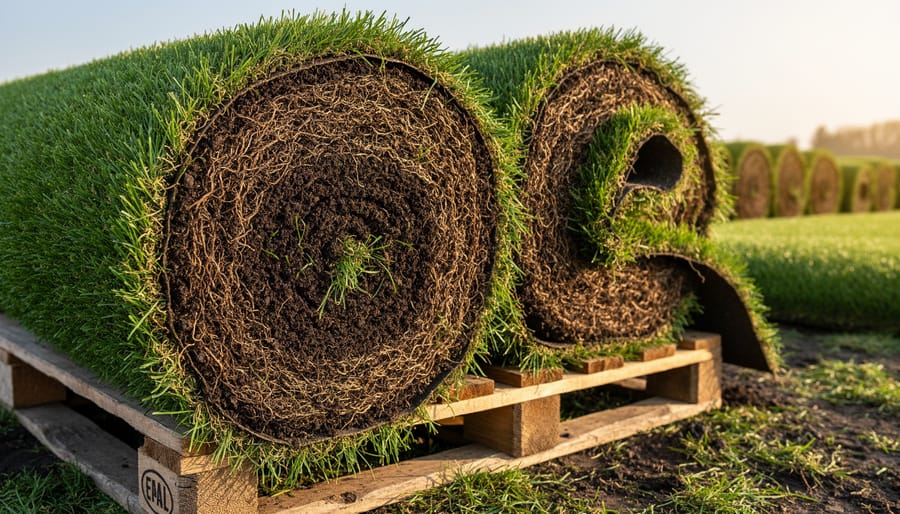
Breaking Down the Economics: What It Really Costs
Initial Capital Investment
Establishing a commercial sod farming operation requires substantial upfront capital, with initial investments considerably higher than traditional row crops. Industry data from midwestern operations producing Kentucky bluegrass shows total startup costs reaching $3.4 million for a 382-acre commercial farm, approximately $9,000 per acre before the first harvest.
The capital-intensive nature of sod farming stems from specialized equipment requirements and infrastructure needs that distinguish it from conventional agriculture. Producers must invest in harvesting machinery designed specifically for turf cutting, irrigation systems capable of precise water delivery, and land preparation that creates the perfect growing base for premium sod production.
| Capital Investment Category | Typical Cost Range | Critical Considerations |
|---|---|---|
| Specialized Equipment | $800,000 – $1,200,000 | Sod harvesters, stackers, delivery vehicles |
| Irrigation Infrastructure | $600,000 – $900,000 | Pivots, pumps, water rights in Alberta |
| Land Preparation | $400,000 – $600,000 | Grading, soil amendments, drainage |
| Storage & Processing Facilities | $300,000 – $500,000 | Coolers, loading areas, equipment sheds |
Alberta producers face additional considerations beyond these baseline figures. Shorter growing seasons necessitate more aggressive irrigation capabilities, while distance to major markets may require enhanced cooling and transportation infrastructure. The substantial capital requirement means most successful sod operations start with existing agricultural land and equipment that can be adapted, rather than building from scratch. Financing these investments typically requires demonstrating market contracts and production expertise, as lenders recognize both the opportunity and the specialized risk in this niche sector.
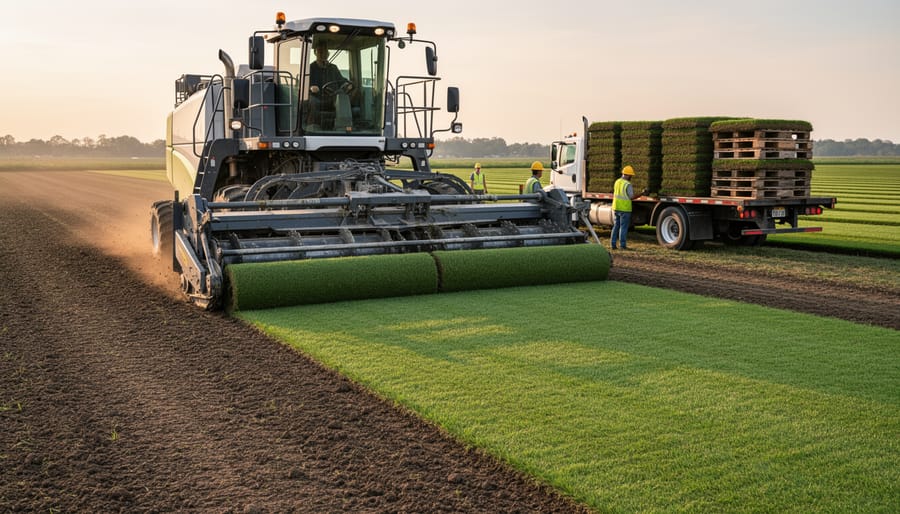
The Labor Reality: Why Workforce Costs Dominate
Labor dominates sod farming economics in ways that shock producers accustomed to grain or hay operations. The 52% labor share of per-acre costs stems from three realities that set turf production apart.
Harvesting is the primary driver. Unlike grain crops where a combine does most of the work, sod requires specialized teams cutting, rolling, stacking, and loading product within tight windows. A Kentucky bluegrass field ready for harvest demands immediate action. Crews must cut mature turf, handle delicate rolls without tearing, and prep loads for same-day or next-day delivery. This process resists full automation, human judgment still guides quality control at every step, and machinery breakdowns during peak harvest multiply labor needs fast.
Timing constraints amplify workforce challenges in Alberta’s compressed growing season. Sod farms face concentrated demand from May through September when landscapers and developers need product. You’re either staffed for peak season with workers sitting idle in shoulder months, or you’re scrambling to find reliable crews exactly when every landscaping outfit in the province is competing for the same labor pool. Experienced harvesters who understand turf handling command premium wages.
Seasonal workforce management presents ongoing headaches. Training temporary crews takes time most farms don’t have during harvest rush. Weather delays create unpredictable schedules that frustrate even dedicated workers. Alberta’s agricultural labor shortage hits turf operations particularly hard because the work is physically demanding, weather-dependent, and offers limited year-round stability. Producers considering sod farming must factor robust labor recruitment and retention strategies into their business plans, not treat workforce costs as a variable they can easily control.
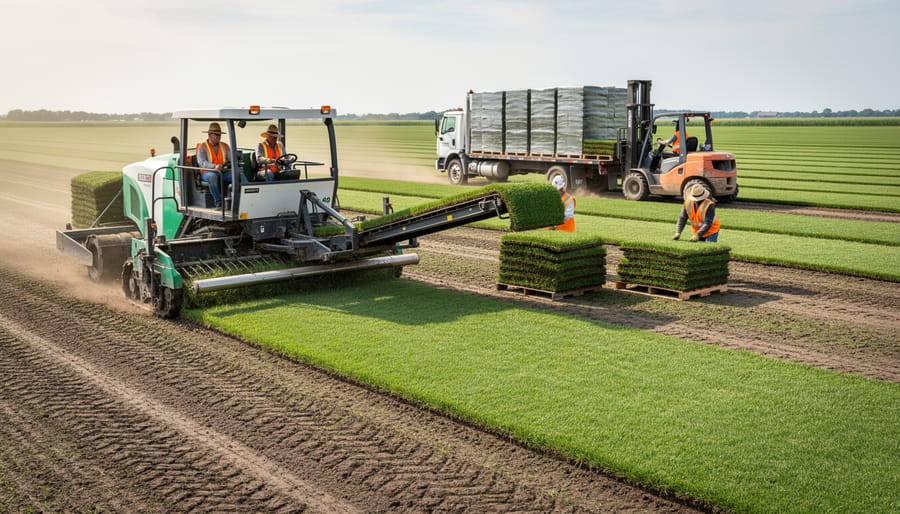
Understanding Pricing and Breakeven Points
Industry pricing for sod currently averages $0.26 per square foot, but understanding profitability requires looking beyond the sale price. The breakeven threshold sits at $0.12 per square foot, meaning producers must achieve this price just to cover production costs before realizing any profit. The gap between these figures represents your potential margin, but only if you can consistently hit market pricing.
Breakeven yield for Kentucky bluegrass operations is 19,468 square feet per acre. This benchmark matters because it represents the minimum production level needed to recover your investment in that acre. Fall short of this yield, and you’re operating at a loss regardless of pricing. Exceed it, and your per-square-foot costs drop while revenue climbs.
The challenge? Alberta’s shorter growing season compresses production cycles compared to operations in warmer regions, affecting both yield potential and harvest timing. Your actual margins will depend on negotiating favorable contracts with landscapers and developers, managing labor costs that consume 52% of total expenses, and maintaining consistent quality that commands premium pricing. Producers who treat sod farming as a volume business with tight cost control tend to hit profitability targets more reliably than those banking on premium pricing alone.
Production Systems and Varieties for Alberta Conditions
Alberta’s challenging climate demands turf varieties proven to survive winters that routinely drop below -30°C and thrive despite a compressed growing season. Kentucky bluegrass cold-hardiness makes it the dominant commercial variety in the province, typically marketed as cultivars specifically selected for zone 3 conditions. Producers commonly plant blends of three to four Kentucky bluegrass cultivars to create disease resistance and improve turf density, with names like ‘Nuglade’, ‘Midnight’, and ‘Blue Velvet’ appearing frequently in Alberta field mixes.
Fine fescues serve as valuable blend components, particularly creeping red fescue, which tolerates shade better than bluegrass and establishes faster in spring. Some operations produce specialty blends with higher fescue ratios for properties with tree cover or reduced irrigation access. Perennial ryegrass, while quick to establish, faces winter survival challenges in Alberta and works best in small percentages for its wear tolerance rather than as a primary component.
The shortened growing season forces strategic timing decisions. Most operations seed between mid-July and mid-August, allowing six to eight weeks of establishment before freeze-up. Spring seeding remains possible but pushes harvest into the following year, tying up land longer. The turf enters dormancy by late October and doesn’t resume active growth until late April, meaning Alberta sod develops slower total biomass compared to operations in warmer regions.
Soil preparation matters intensely in this climate. Commercial operations target loam or sandy loam textures with pH between 6.5 and 7.0, incorporating organic matter to improve winter hardiness and spring recovery. Poor drainage proves fatal during freeze-thaw cycles, so fields require grading precision and often tile drainage installation before establishment. Most producers also invest in consistent irrigation infrastructure, as Alberta’s dry summers demand supplemental water even though annual precipitation creates different challenges than southern operations face.
Fields reaching harvestable maturity show root systems penetrating 10 to 15 centimeters deep, though Alberta’s freeze depth means roots must tolerate far greater temperature extremes than the shallow rhizome layer suggests. This cold-hardening process, combined with Alberta’s intense sunlight, actually produces exceptionally durable turf once established, giving local producers a quality advantage when competing for commercial and municipal contracts requiring proven winter survival.
Market Opportunities in Alberta’s Turf Industry
Alberta’s turf market presents distinct opportunities shaped by the province’s robust construction sector and environmental restoration needs. Understanding where demand originates helps producers position their operations strategically and build sustainable customer relationships.
Residential development drives consistent local demand across Alberta’s major urban centers. Edmonton and Calgary’s ongoing suburban expansion creates steady requirements for instant lawn installations in new housing developments. Builders prefer working with established sod suppliers who can deliver large volumes on tight schedules, making reliability as valuable as competitive pricing. The spring and early summer construction rush generates concentrated demand that can strain supply, creating opportunities for producers who plan inventory carefully.
Commercial landscaping represents another substantial market segment. Office parks, shopping centers, hotels, and municipal projects require high-quality turf that establishes quickly and withstands Alberta’s climate extremes. These projects often specify particular varieties and carry premium pricing for consistent quality and delivery dependability. Building relationships with landscape contractors who service commercial accounts provides steadier cash flow than residential-only markets.
Erosion control and reclamation work offers emerging opportunities tied to Alberta’s resource sector. Pipeline rights-of-way, highway projects, and industrial site restoration require quick vegetation establishment to prevent soil loss and meet environmental compliance standards. This segment values sod’s immediate erosion protection over seeded alternatives, particularly on slopes or during short construction windows. Reclamation contractors often work with longer lead times than residential projects, allowing better production planning.
The sports and recreation sector, including golf courses, athletic fields, and parks, creates specialized demand for specific turf varieties and maintenance characteristics. While smaller in volume than residential markets, these customers often pay premium prices for cultivars selected for durability and performance under intense use.
Market success requires matching your production capacity and variety selection to the segments you can serve consistently and profitably.
Technological Innovation in Modern Sod Operations
Modern technology has fundamentally changed what’s possible in sod production, addressing some of the industry’s biggest efficiency challenges. For Alberta operations competing on tight margins, these innovations aren’t luxuries, they’re increasingly necessary tools for staying viable.
Precision irrigation systems represent one of the most impactful advances. GPS-controlled sprinklers paired with soil moisture sensors allow producers to deliver exactly the water needed, when and where it’s needed. Given Alberta’s variable precipitation patterns and the industry’s substantial water requirements, this technology cuts costs while maintaining the consistent moisture levels critical for quality turf. Some systems integrate weather forecasting data to adjust watering schedules automatically, reducing labor while preventing over-irrigation that wastes resources and compromises soil health.
Automated harvesters equipped with GPS guidance have transformed the harvesting bottleneck. Modern machines can cut, roll, and stack sod with minimal crew requirements compared to older equipment. The precision matters, consistent cut depth protects root systems and reduces waste. When labor represents 52% of total costs per acre, equipment that cuts harvest time directly improves profitability.
Inventory management software has evolved to handle sod’s unique challenges as a perishable product. These systems track field maturity, coordinate harvest timing with delivery schedules, and optimize truck routing to minimize the critical window between cutting and installation. For operations managing hundreds of acres at different maturity stages, digital tracking prevents costly mistakes that older paper systems couldn’t catch.
Alberta producers adopting these technologies report measurable improvements in both efficiency and product quality, though the upfront investment requires careful financial planning given the industry’s already substantial capital requirements.
Environmental Considerations and Sustainability Practices
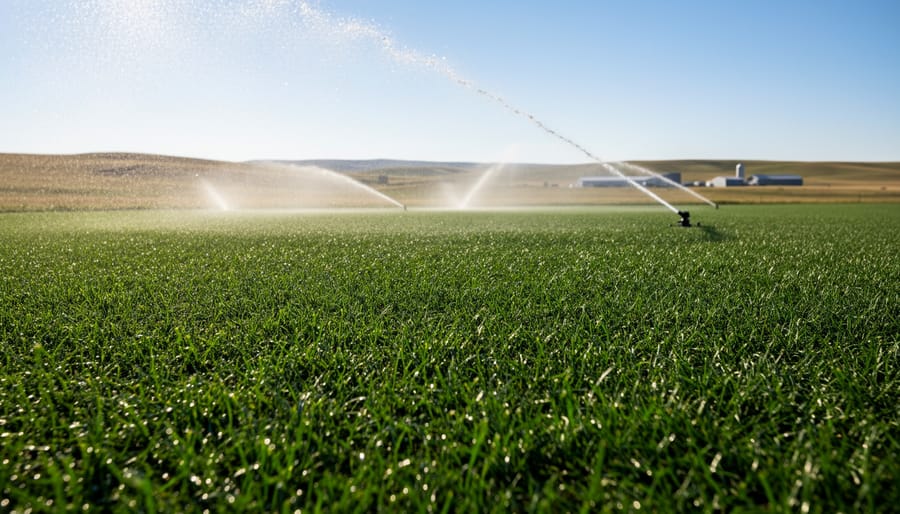
Sod farming presents both environmental challenges and opportunities that Alberta producers must manage carefully. Water consumption stands as the most significant concern, establishing and maintaining healthy turf demands consistent irrigation during Alberta’s dry growing season, particularly in the first year. Modern smart irrigation systems help producers optimize water use through soil moisture sensors and weather-based scheduling, reducing waste while maintaining turf quality. Some operations are exploring drip irrigation beneath the sod layer to minimize evaporation losses.
Soil health requires active management in sod production. Repeated harvests remove topsoil along with the turf, necessitating careful fertility programs and organic matter replacement between crops. Progressive producers incorporate compost, apply cover crops during field preparation, and conduct regular soil testing to maintain productivity without degrading their land base.
The carbon sequestration potential of turf production offers a genuine environmental benefit. Growing sod captures atmospheric carbon in both plant tissue and root systems, and established turf continues sequestering carbon after installation. Additionally, sod provides immediate erosion control for construction sites, reclamation projects, and disturbed landscapes, a valuable service in Alberta’s oil and gas regions.
Forward-thinking operations are reducing their environmental footprint through precision agriculture tools. GPS-guided equipment minimizes compaction and overlapping applications, while technologies adapted from robotic farming help some producers automate monitoring tasks. Integrated pest management reduces chemical inputs, and some farms are transitioning to electric harvesters to lower emissions. Sustainable sod farming balances production demands with responsible resource stewardship.
Is Sod Farming Right for Your Operation?
Deciding whether to enter sod production requires honest evaluation of your operation’s strengths, resources, and market position. This is not a casual diversification, it’s a capital-intensive commitment to a living product that demands precision timing and specialized infrastructure.
Start with the fundamentals. Do you have consistent access to high-quality irrigation water? Can you secure reliable labor during critical harvest windows when timing literally makes the difference between profit and loss? Are you positioned within reasonable delivery distance of active construction markets or landscaping contractors? These aren’t negotiable requirements, they’re the foundation of viable sod farming.
- Premium pricing potential at $0.26 per square foot provides strong revenue per acre compared to traditional field crops.
- Steady demand driven by urban development and landscaping needs creates reliable market opportunities.
- Sod production contributes to carbon sequestration while generating income, offering both economic and environmental benefits.
- Shorter crop cycles than permanent forage allow faster capital recovery once production is established.
- Initial capital investment exceeds $3.4 million for a commercial-scale operation producing 382 acres.
- Labor costs dominate at 52% of total per-acre expenses, requiring dependable workforce management.
- Narrow harvest windows and tight delivery timelines leave little room for operational delays or workforce gaps.
- Specialized equipment and infrastructure have limited alternative uses if you exit the business.
- Product perishability means you cannot store inventory through weak demand periods.
Consider your risk tolerance carefully. Traditional crops allow storage and flexible marketing timing. Sod harvested today needs delivery within 24 hours. Equipment breakdowns, labor shortages, or customer delays create immediate losses of perishable inventory.
The financial threshold matters. Reaching breakeven requires achieving 19,468 square feet of saleable product per acre at $0.12 per square foot minimum pricing. Your operation needs both the production expertise to consistently hit quality standards and the market connections to move volume reliably. Understanding the environmental impact of irrigation demands and chemical inputs is essential for sustainable production planning.
This sector rewards producers who bring strong logistics capabilities, workforce management skills, and established relationships with landscapers or developers. If your operation excels at precision timing, quality control, and customer service, and you can commit the capital without jeopardizing your core business, sod farming offers genuine opportunity. If these aren’t your strengths, or if capital is tight, traditional diversification options carry less execution risk.
Sod farming represents a significant agricultural opportunity for Alberta producers, but success requires careful evaluation of your specific circumstances. The economics are clear: operations demand substantial capital investment, skilled workforce management, and access to reliable markets. With labor consuming over half of production costs and breakeven yields requiring precise execution, this isn’t a venture for tentative diversification.
Alberta’s growing urban centers and ongoing reclamation projects create genuine market demand, but the specialized nature of turf production means you need more than available land and water. You need distribution channels, harvest timing flexibility, and the operational expertise to deliver a living product within tight quality windows.
Before committing resources, conduct thorough feasibility analysis specific to your location and market access. Connect with established Alberta turf producers through local agricultural networks to understand regional challenges and opportunities firsthand. Talk to landscape contractors and developers in your target market area to validate demand. Calculate your true costs including specialized equipment, irrigation infrastructure, and seasonal labor availability.
The producers succeeding in this sector approach it as a dedicated business line, not a side venture. If you have the capital, market positioning, and commitment to master the operational complexities, sod farming offers viable returns. Just ensure you’re building on solid business fundamentals, not assumptions.