

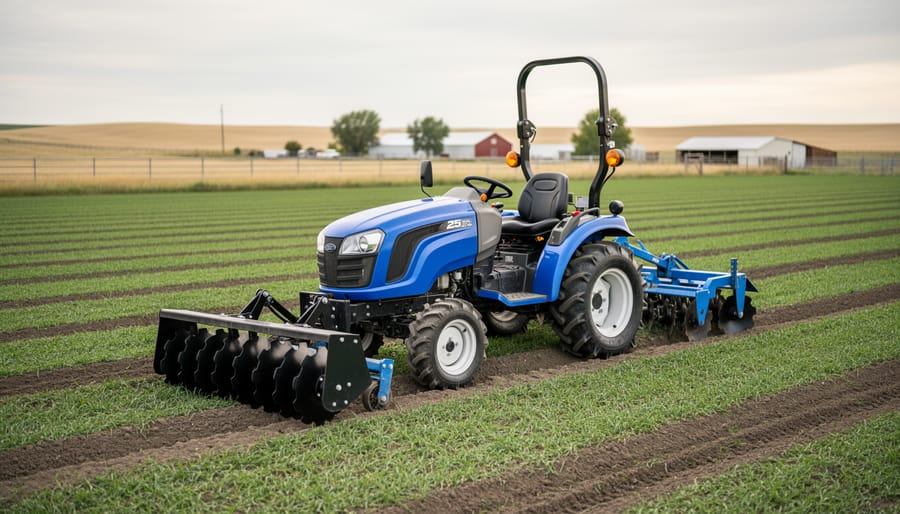
Small farming equipment has shifted from a compromise to a strategic advantage for Alberta producers working 50 acres or less. The right compact machinery can triple your productivity per dollar spent compared to oversized alternatives that drain fuel, require costly storage, and sit idle most of the season.
Choosing equipment scaled to your operation means matching horsepower and capacity to actual workload, not aspirations. A 25-horsepower compact tractor with interchangeable implements handles everything from seedbed preparation to hay handling on properties under 40 acres, while full-sized models designed for thousand-acre operations waste resources on smaller plots. Your neighbors running profitable market gardens and specialty crop operations already know this.
The market has responded. Canadian manufacturers now offer Alberta-specific solutions that perform in our climate, from walk-behind tractors designed for intensive vegetable production to sub-compact loaders that navigate greenhouse rows. These aren’t scaled-down versions of commercial equipment; they’re purpose-built tools engineered for precision work where maneuverability matters more than brute force.
Success stories prove the economics. Three producers near Olds transitioned from conventional grain farming to high-value crops using compact equipment packages costing 60 percent less than traditional setups. They’re harvesting better margins per acre because their machinery investments align with actual operation size.
This article breaks down what qualifies as small-scale equipment in 2026, provides selection criteria based on Alberta conditions, and connects you with local suppliers who understand regional farming challenges. Whether you’re starting fresh or rightsizing an established operation, the equipment landscape offers more practical options than ever before.
The Economics That Changed the Equation
The math that made sense for decades stopped adding up somewhere around 2020. A new four-wheel-drive tractor in the 150-horsepower range now costs upward of $200,000, with GPS and precision features pushing that figure closer to $250,000. For an Alberta farm running 120 acres of vegetables or 80 acres of specialty grains, that investment represents nearly five years of gross revenue, not profit.
Fuel costs tell a parallel story. A large tractor burns 12 to 15 liters per hour under load, while a 40-horsepower compact uses three to four liters doing the same work on smaller fields. Over a 200-hour season, that’s a $3,000 difference at current diesel prices. The gap widens when you factor in the reality that oversized equipment spends half its time idling or running at partial capacity on tasks that don’t require the horsepower.
Maintenance access shifted the equation further. Dealerships consolidated, parts inventories shrank, and wait times for service stretched from days to weeks during critical windows. A compact tractor’s simpler hydraulics and mechanical systems mean more repairs can happen in the farm shop with standard tools, not a service truck charging $150 per hour plus travel. One Lacombe-area farmer cut his annual maintenance costs by 60% after switching from a 120-HP workhorse to two smaller tractors that he services himself.
The break-even point became impossible to ignore. Farms under 160 acres simply can’t generate enough throughput to justify six-figure equipment purchases when a $40,000 compact tractor and $15,000 in attachments accomplish the same seasonal tasks. The calculation isn’t about capability anymore. It’s about matching capital outlay to actual revenue potential, and for thousands of Alberta operations, smaller equipment delivers better returns per dollar invested. The industry sold efficiency through scale, but true efficiency means right-sizing to your operation’s real demands.
What ‘Small Equipment’ Actually Means in 2026
When Alberta farmers talk about “small equipment” in 2026, they aren’t describing toys or weekend hobby gear. They’re discussing commercial-grade machinery scaled to match operations typically between 10 and 160 acres, where precision and efficiency matter more than raw horsepower.
The backbone of most small-scale operations is the compact tractor. These machines range from 20 to 50 horsepower and represent a significant departure from the 100-plus HP behemoths dominating conventional grain operations. A 35 HP compact tractor with a front-end loader, three-point hitch, and PTO capability can handle everything from tillage preparation to snow removal, making it a year-round workhorse rather than a seasonal investment.
- Sub-Compact Tractors (15-25 HP)
- Best suited for market gardens under 5 acres, greenhouse operations, and intensive vegetable production where maneuverability in tight rows matters more than pulling power.
- Compact Tractors (25-40 HP)
- The versatile core for mixed operations between 10-80 acres, capable of handling tillage, seeding, haying, and loader work across diverse crop types and terrain.
- Utility Compact Tractors (40-50 HP)
- Designed for operations approaching 100-160 acres or handling heavier implements like small balers, deeper tillage, and livestock feeding in rangeland conditions.
- Walk-Behind Implements
- Commercial-grade two-wheel tractors with interchangeable attachments for precision work in high-value crops, offering control that four-wheel equipment cannot match in tight spaces.
Beyond tractors, the small equipment spectrum includes purpose-built tools that commercial operations demand. Mini-tillers with 5 to 8 HP engines work permanent beds without destroying soil structure. Small-scale seeders deliver precise spacing and depth control for specialty crops where every plant counts toward profitability.
The critical distinction separating commercial from hobby-grade equipment lies in three areas: durability of construction, availability of replacement parts through established dealer networks, and serviceability. A commercial compact tractor features serviceable hydraulics, replaceable wear parts, and frame construction meant for daily use across seasons. Hobby equipment might look similar but fails under the sustained demands of production agriculture, leaving farmers without crucial functionality during narrow planting or harvest windows.
Equipment Categories Every Small Farm Should Consider
Compact Tractors and Attachments
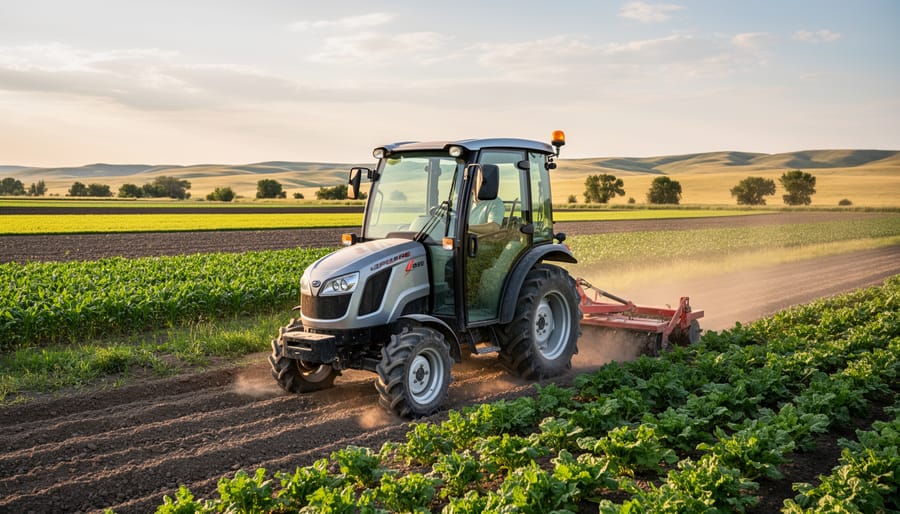
The heart of most small-farm equipment setups is a compact tractor in the 25-40 HP range. This power band handles rotary mowing, light tillage, loader work, and three-point hitch implements without the fuel consumption or purchase price of larger machines. Alberta’s diverse terrain demands models with adequate ground clearance and four-wheel drive, particularly if you work sloped land or navigate spring mud.
PTO compatibility determines which implements you can run. A 540 RPM rear PTO is standard, but confirm the shaft type matches your intended attachments before buying. Some compact models offer mid-mount PTOs for belly mowers, expanding your seasonal utility. Loader capacity matters more than many realize: a 1,200-pound lift rating lets you move round bales, fill bins, and handle palletized supplies, while lighter-duty loaders limit your operation’s flexibility.
The attachment ecosystem separates versatile platforms from expensive lawn ornaments. Look for tractors with established aftermarket support and standardized quick-attach systems. A box blade, rotary cutter, and front-end loader form the foundational trio. From there, add based on your production focus: a compact disc harrow for seedbed prep, a post-hole digger for fencing projects, or a snow blower that earns its keep through Alberta winters.
Hydraulic remotes expand capabilities significantly. Two rear remotes let you control grapples, log splitters, and powered attachments without manual intervention, saving hours across a season and reducing the physical strain that accumulates on small operations where you handle most tasks yourself.
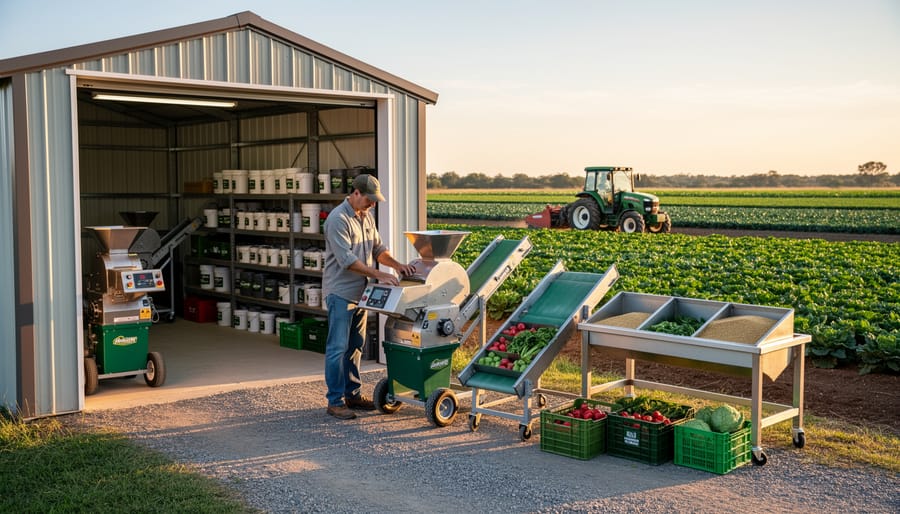
Specialized Harvesting and Processing Tools
Small-scale harvesting equipment has evolved far beyond scaled-down versions of industrial machines. Today’s compact combines handle grain operations on 20-80 acre parcels with surprising efficiency, offering adjustable headers that accommodate everything from wheat to specialty grains like quinoa or buckwheat. These machines typically process 5-15 acres per day, matching the pace of diversified Alberta operations where speed matters less than gentle handling and minimal loss.
For vegetable and berry operations, mechanical harvesters designed for niche crops transform labor economics. Walk-behind greens harvesters cut and collect leafy crops in a single pass, while small-batch berry pickers reduce hand-labor hours by 60-70% without the bruising common in larger commercial systems. The key advantage lies in their selectivity, you can harvest row by row as crops reach peak ripeness rather than committing to whole-field operations.
Post-harvest processing deserves equal attention. Mobile washing stations with recirculating water systems let you clean produce in the field, reducing transport of soil and debris. Small-scale root washers, tumble dryers, and grading tables occupy minimal barn space while adding significant value. Even basic processing equipment like compact grain cleaners or small seed separators opens direct-marketing opportunities that offset equipment costs within two seasons.
These tools also integrate naturally with efficient straw management and residue handling, letting you maintain clean fields without burning or extensive tillage. The investment scales with your operation, and most equipment serves multiple crops across the growing season.
Precision Hand Tools with Modern Features
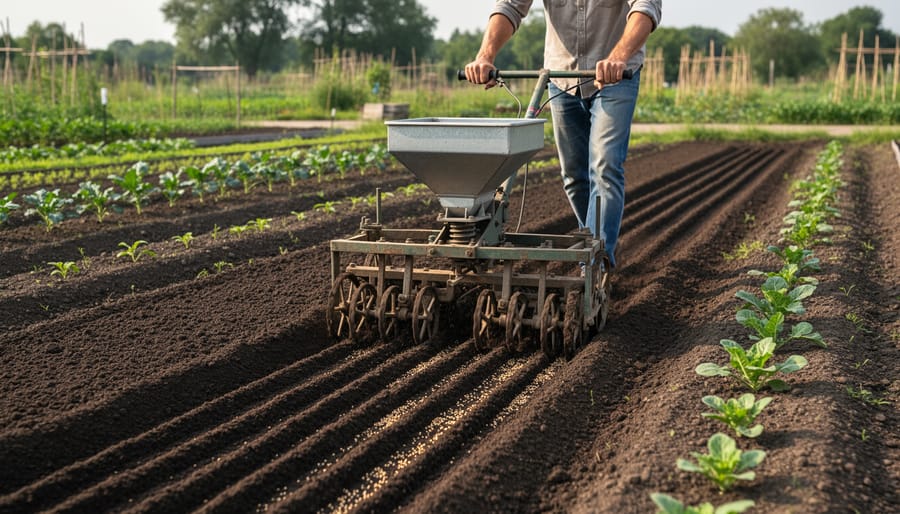
The hand tools working Alberta farms today share little beyond aesthetics with the implements your grandparents used. Lightweight aluminum handles with vibration-dampening grips have replaced solid wood, reducing repetitive strain on wrists and forearms during eight-hour planting days. Battery-powered seeders now drop individual seeds at precise spacing with a thumb trigger, eliminating the guesswork and back-bending of manual broadcasting while maintaining the control that mechanical spreaders can’t match on diverse terrain.
Ergonomic wheelbarrows feature dual-wheel front ends that prevent tipping on uneven ground and distribute load across wider contact points, cutting the physical toll of moving compost or harvested vegetables. Rechargeable electric cultivators weigh under fifteen pounds but break compacted soil between rows without the shoulder fatigue of push-style tools, running ninety minutes on a single charge. Precision depth gauges built into modern dibbers ensure consistent seed placement for crops like carrots and radishes, where even quarter-inch variations affect germination rates.
These tools bridge the gap between pure manual labor and powered machinery. A battery-powered pruner handles three hundred cuts before recharging, maintaining clean blade angles that hand shears can’t sustain through afternoon fatigue. Digital soil moisture probes eliminate the squeeze-and-guess method, giving readings in seconds that inform irrigation decisions across small plots where overhead systems make no sense.
The investment sits between traditional hand tools and compact equipment, typically ranging from eighty dollars for upgraded hand implements to six hundred for battery-powered assists, with rechargeable batteries adding versatility across multiple tools.
Local Success: How Three Alberta Farms Made the Switch
When Sarah Chen downsized from 320 acres to 80 acres near Red Deer in 2024, she sold her 200-horsepower tractor and replaced it with a 35-horsepower Kubota compact tractor with interchangeable implements. The decision felt risky at first. Two growing seasons later, her fuel costs dropped by 60 percent, and she cut her annual maintenance budget from $8,000 to under $2,000. The smaller footprint allowed her to work between raised beds without compaction damage, and she can now operate the equipment herself rather than hiring seasonal help just to move machinery. Her vegetable yields per square foot increased 15 percent once she eliminated the soil damage from oversized equipment.
In the Peace Country, Jim and Maria Kowalski run a mixed operation with 40 head of cattle and 60 acres of feed crops. They replaced their aging full-size tractor with a compact model and added a small square baler designed for operations under 100 acres. The transition required rethinking their workflow, but the results proved the effort worthwhile. Their baling time per acre increased slightly, but they saved three hours per week on routine tasks like moving feed and clearing snow because the compact tractor fits into their barn layout. Equipment payments dropped to less than half their previous commitment, freeing capital they redirected toward fencing improvements and a livestock water system upgrade.
South of Calgary, Daniel Friesen converted 25 acres to certified organic culinary herbs in 2025. He started with walk-behind equipment and a small tiller, later adding a battery-powered precision seeder that delivers consistent spacing his previous broadcast method could not match. The electric seeder paid for itself in one season through reduced seed waste and eliminated gaps that previously required hand-filling. His labor costs for planting dropped 40 percent, and the quiet operation lets him work early mornings without disturbing neighboring properties. He estimates his total equipment investment at $18,000, compared to the $60,000 he would have spent adapting conventional machinery to his herb rows.
Technology Innovations Reshaping Small Equipment
GPS guidance systems once reserved for $500,000 combines now come standard on compact tractors priced under $40,000. This shift marks a fundamental change in what small-scale producers can access. Alberta farmers running 80-acre mixed operations can now plant with the same centimeter-level accuracy that large grain operations use, eliminating overlap and reducing input waste by up to 15 percent.
Electric power systems represent the clearest break from traditional equipment design. Battery-powered cultivators and small harvesters deliver consistent torque without the maintenance overhead of diesel engines. Several Alberta vegetable growers have switched to electric walk-behind tillers that run three hours on a single charge, enough to prepare two acres of bed space without fuel costs or morning warm-up routines.
Telemetry and smart technologies have moved beyond tracking hours and fuel consumption. Current systems monitor soil moisture in real time, adjust implement depth automatically, and log exactly where each operation occurred. This data proves valuable during organic certification audits and helps identify field variability that affects yield.
Smart sensors on seeders now detect skip events and blockages, alerting operators immediately rather than at row’s end. Compact sprayers equipped with nozzle sensors adjust application rates based on canopy density, cutting chemical use while maintaining coverage. These precision agriculture technologies cost less than $3,000 to retrofit onto existing small-scale equipment.
The democratization extends to software as well. Mapping applications that once required specialized training now run on smartphones, with interfaces designed for operators who split time between field work and marketing. Cloud-based platforms let small farms analyze their operation data using the same algorithms commercial operations employ, without hiring dedicated ag tech staff.
Where to Find and Test Equipment in Alberta
Finding the right equipment starts with hands-on experience, not catalog browsing. Alberta producers have several pathways to evaluate compact machinery before committing thousands of dollars.
Regional dealers who specialize in compact and small-scale equipment offer a different experience than large-iron franchises. Look for dealers who stock 20-50 HP tractors year-round, not just display models. The best ones maintain demonstration units you can actually operate on varied terrain. In central Alberta, several dealerships around Red Deer and Lacombe focus specifically on acreage and small farm equipment. Southern Alberta producers find concentrated options near Lethbridge and Medicine Hat, while Peace Country farmers often travel to Grande Prairie for the widest compact equipment selection.
Test before you buy, always. A tractor that feels nimble in a dealer’s lot behaves differently in wet clay or on a slope. Request a trial period or attend spring demonstration days when dealers bring equipment to working farms. These field days let you compare brands side-by-side under real conditions.
Cooperative purchasing arrangements are gaining traction across the province. Farm groups in the Olds and Vermilion areas have organized collective orders to secure volume discounts on attachments and implements. Shared ownership models work particularly well for seasonal equipment like small combines or specialty harvesters that sit idle most of the year.
The used equipment market deserves careful attention. Compact tractors hold value well, but inspect for loader frame fatigue and PTO wear, common weak points. Online farm equipment marketplaces and local auction sales offer opportunities, though parts availability becomes critical. Verify that your local dealer stocks common wear items for any used model you’re considering. A great price means nothing if you’re waiting six weeks for a hydraulic seal.
Environmental Benefits Beyond the Balance Sheet
Lighter equipment leaves a measurably smaller footprint. A compact tractor weighing 2,500 pounds exerts roughly half the ground pressure of a full-size model, which directly translates to less soil compaction. This matters tremendously in Alberta’s clay-heavy soils, where compaction creates hardpan layers that restrict root growth and water infiltration for years. Producers working smaller parcels can maintain soil structure by matching their equipment weight to their actual needs rather than adopting industrial-scale machinery.
The fuel equation shifts noticeably with right-sized equipment. A 35-horsepower compact tractor burns approximately 1.5 gallons per hour under load, compared to 4 to 6 gallons for conventional tractors. Over a season, that difference adds up to thousands of dollars and significantly reduced carbon emissions. Smaller equipment also makes no-till and reduced-tillage approaches more practical on diversified farms, where precision matters more than coverage speed.
Equipment scale directly affects what can survive on your land. Walk-behind tillers and compact implements allow producers to leave buffer strips, maintain hedgerows, and work around natural features that provide habitat for pollinators and beneficial insects. Heavy machinery requires turning radiuses and access lanes that often eliminate these ecological assets. With Alberta soil drying trends making moisture retention critical, gentler equipment preserves the organic matter and soil structure that hold water.
The connection to soil health runs deeper than avoiding compaction. Appropriately-scaled equipment lets producers make more frequent, lighter passes when conditions are optimal rather than waiting for windows when heavy machinery will not cause damage. This flexibility supports biological activity, maintains aggregate structure, and builds the resilient soils that Alberta farms will need as climate patterns continue shifting.
Making Your Equipment Decision
Start by mapping your actual work hours against your land. Calculate how many days you currently spend on tasks a machine could handle, then price both equipment ownership and continued manual work over five years. The real cost of undersized equipment shows up in missed planting windows and harvest delays, not just the purchase price.
Your equipment decision needs to account for where your operation is heading, not just where it stands today. If you’re planning to expand from 40 to 80 acres within three years, factor that growth into your horsepower and attachment requirements now. Buying twice wastes more than buying right the first time.
Follow this assessment process to match equipment to your operation’s reality:
- Document every field task you perform across a full season, noting hours spent and whether timing constraints (weather, crop stage) apply to that work.
- List your current crops and any you’re considering within two years, then identify which equipment would serve multiple crops versus single-use tools.
- Assess your labor situation honestly: available hours per week, physical capabilities, skills for maintenance, and whether you can afford downtime while learning new equipment.
- Calculate total cost of ownership including purchase price, annual maintenance, fuel, insurance, and storage, then divide by projected hours of annual use.
- Project your operation three years forward for acreage, crop mix, and revenue targets, then verify the equipment still fits that scenario.
The most expensive mistake is over-buying capacity you’ll never use. A 50-horsepower tractor sitting idle because your typical jobs need 25 horsepower costs you in depreciation, insurance, and the opportunity cost of that capital. Conversely, under-estimating attachment needs leaves you cobbling together workarounds or renting equipment during peak season when availability is scarce.
Test before you commit. Borrow similar equipment from a neighbor for a day, attend dealer demo events, or rent for a season if you’re uncertain. Equipment that performs beautifully on 10 acres can frustrate on 60, and specifications on paper don’t reveal how a machine handles your soil type or crop residue.
The shift toward right-sized equipment isn’t about settling for less. It’s about matching your tools to your actual operation, not to outdated assumptions about what “real” farming looks like. For many Alberta producers working diversified land under 160 acres, compact tractors and specialized small-scale implements deliver better outcomes than equipment built for thousand-acre monocultures.
The producers making this transition report measurable gains: lower fuel costs, reduced soil compaction, easier maintenance they can handle themselves, and equipment that actually fits through their gates and between their crop rows. These aren’t minor conveniences. They’re operational advantages that directly affect profitability and land stewardship.
Beyond individual farm economics, the environmental benefits extend to entire communities. Lighter equipment preserves soil structure. Precision at smaller scales supports biodiversity. Reduced fuel consumption cuts emissions. When your equipment fits your land, you can farm it more thoughtfully.
The innovation pipeline for small-scale equipment continues to accelerate in 2026, with manufacturers finally recognizing this market segment. GPS guidance, electric power systems, and smart sensors are no longer exclusive to six-figure machinery. As technology becomes more accessible and more producers share what works in Alberta’s specific conditions, the knowledge base grows stronger.
Evaluate your operation based on what you actually grow, on land you actually farm, with labor you actually have. The right equipment for your farm might look nothing like your neighbour’s, and that’s exactly as it should be.