

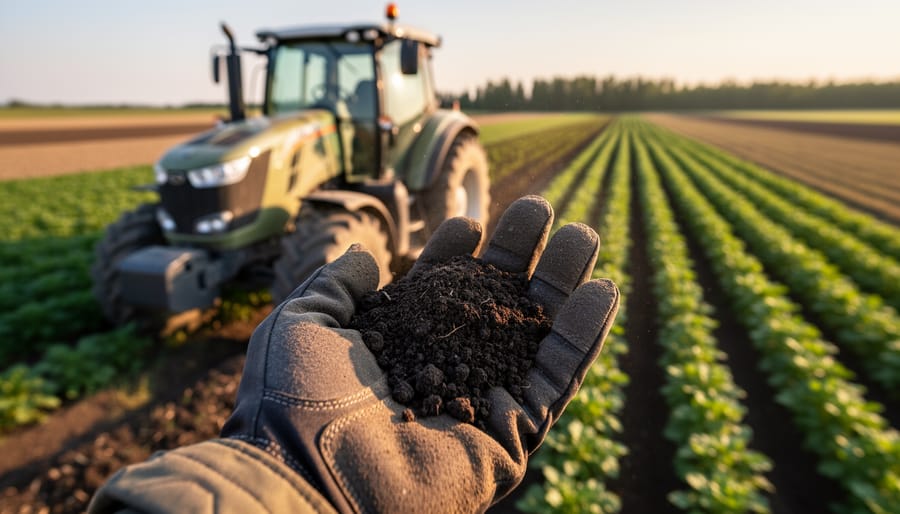
Unsustainable agricultural practices are techniques that degrade soil health, deplete water resources, or rely on inputs that can’t be maintained long-term without causing economic or environmental harm. If you’re using intensive tillage year after year, applying synthetic fertilizers without soil testing, or continuously cropping the same fields without rotation, you’re likely reducing the productivity and resilience of your land. The good news? Most farmers can identify these patterns in their own operations and transition to proven alternatives without sacrificing profitability.
Alberta’s farming community has begun shifting away from practices that seemed productive in the short term but carried hidden costs. Overgrazing, excessive groundwater extraction, and monoculture cropping all show returns until the soil structure collapses, water tables drop, or pest resistance sets in. By that point, recovery becomes expensive and slow.
The challenge isn’t lack of knowledge. Most producers recognize when a field isn’t responding the way it used to or when input costs are climbing faster than yields. The real barrier is knowing which practices to change first and how to make the switch without risking a season’s income. Transitioning to sustainable methods requires understanding what makes a practice unsustainable, assessing your current operations honestly, and accessing the right support to make changes stick.
This guide walks you through the core unsustainable practices affecting Alberta farms, shows you how to evaluate your own operation, and connects you with the programs, funding, and peer networks that make transitioning practical. You’ll also hear from producers who’ve made the shift and what they learned along the way.
What Are Unsustainable Agricultural Practices?
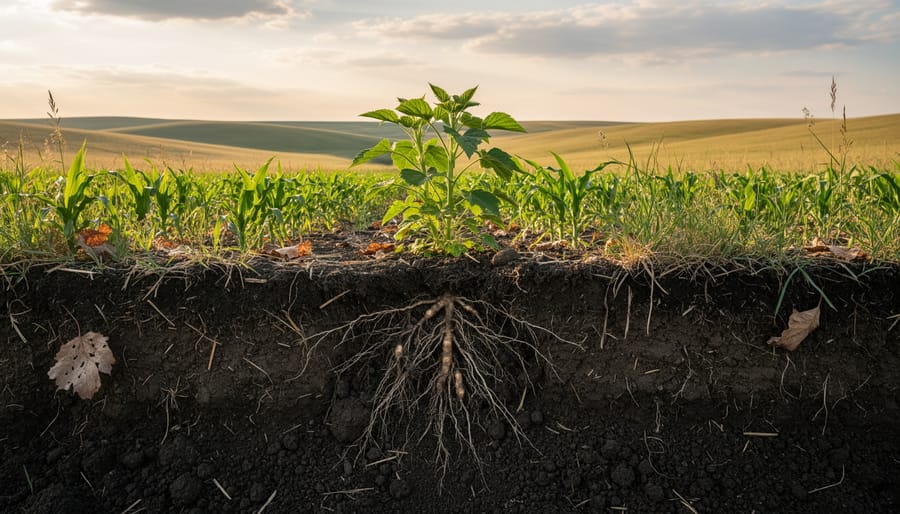
Unsustainable agricultural practices are farming and ranching methods that deplete natural resources faster than they can regenerate, undermining the long-term productivity of the land. In Alberta’s context, these practices typically degrade soil health, waste water, reduce biodiversity, and increase dependency on external inputs like synthetic fertilizers and pesticides. While they might deliver short-term yields or immediate cost savings, they erode the foundation your operation depends on, healthy soil, clean water, and resilient ecosystems.
The distinction between sustainable and unsustainable practices comes down to regeneration versus extraction. Sustainable practices work with Alberta’s natural systems, building soil organic matter, cycling nutrients efficiently, conserving water, and supporting diverse plant and animal communities. Unsustainable practices extract value without replenishing it, leaving soils compacted and depleted, water tables drawn down, and farms increasingly vulnerable to drought, pests, and market volatility.
Alberta’s agricultural landscape presents unique challenges that can accelerate unsustainability. Our semi-arid climate means water is often the limiting factor, especially in southern regions where irrigation is essential. Prairie soils, while naturally fertile, are prone to wind erosion when protective cover is removed through excessive tillage. Short growing seasons push some farmers toward intensive practices to maximize yields in a narrow window, but these same practices can backfire when they degrade the soil structure and moisture retention capacity you need to survive dry years.
Understanding what makes a practice unsustainable isn’t about assigning blame. It’s about recognizing that farming methods developed decades ago under different economic and environmental conditions might not serve your operation’s long-term health. The good news? Once you can identify unsustainable elements in your current system, you can start making targeted changes that improve both your land and your bottom line.
Common Unsustainable Practices in Alberta Agriculture
Intensive Tillage and Soil Degradation
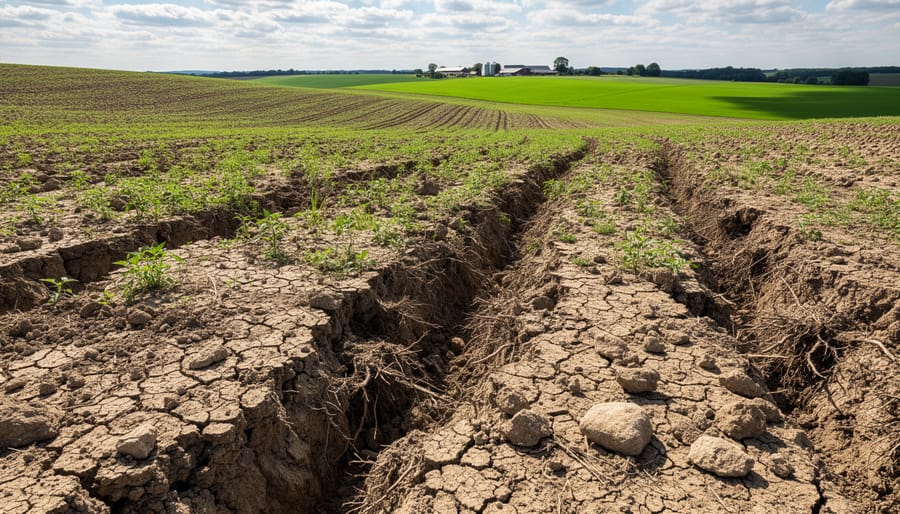
Intensive tillage, plowing, disking, and harrowing multiple times per season, breaks down soil structure and accelerates the loss of organic matter that holds moisture and nutrients. Each pass exposes carbon stored in the soil to oxygen, releasing it into the atmosphere and diminishing the soil’s ability to support crops long-term. Alberta’s prairie soils, naturally high in organic carbon after millennia of grassland growth, are particularly vulnerable: repeated tillage can halve organic matter levels within a few decades of cultivation.
The physical impact is just as severe. Tillage pulverizes soil aggregates, leaving fine particles exposed to wind. Southern Alberta faces significant wind and tillage erosion risk especially during dry springs when bare fields lose topsoil at rates that can strip away an inch in a single generation. This erosion removes the most fertile layer, carries nutrients and pesticides into waterways, and creates dust clouds that affect air quality and neighboring operations.
Adopting soil health principles minimal disturbance, continuous cover, diverse rotations, reverses these trends by keeping soil intact, building organic matter, and protecting against wind.
Overreliance on Chemical Inputs
Excessive application of synthetic fertilizers has become a cornerstone of yield maximization across Alberta farms, but it comes with hidden costs. When nitrogen and phosphorus inputs consistently exceed crop requirements, the surplus doesn’t simply disappear. Excess nutrients leach into groundwater and run off into surface water, contributing to algae blooms and compromising drinking water quality in rural communities. High nitrogen rates also disrupt the relationship between fertilizers and soil life suppressing beneficial microbes that naturally cycle nutrients and improve soil structure.
Similarly, prophylactic pesticide use, spraying herbicides, insecticides, and fungicides on a calendar schedule rather than based on pest pressure, kills non-target organisms including pollinators, earthworms, and predatory insects that control pest populations naturally. Over time, this creates a chemical treadmill: pests develop resistance, beneficial organisms decline, and farmers face escalating input costs to maintain yields. Many Alberta producers now spend $100 to $150 per acre annually on crop protection products alone, a dependency that erodes profitability when commodity prices drop. Breaking this cycle starts with soil testing, integrated pest management scouting, and variable-rate technology that matches inputs to actual field needs rather than blanket applications.
Monoculture and Lack of Crop Diversity
Growing the same crop year after year on the same land starves soil and invites trouble. When canola follows canola, or wheat follows wheat across Alberta’s grain belt, root diseases like clubroot and fusarium build up because pathogens find a steady host. Beneficial soil microbes decline, and specific nutrients, nitrogen, phosphorus, potassium, get stripped in the same pattern each season, forcing farmers to apply more synthetic fertilizer just to maintain yields.
Research confirms that monocultures raise pests and disease pressure, creating a cycle where chemical inputs increase but soil health deteriorates. In Alberta’s short growing season, this dependency becomes expensive and fragile. Fields locked into continuous canola face blackleg outbreaks; continuous cereal rotations see take-all root rot and prairie grain wireworm damage climb. The soil’s natural pest suppression weakens, and the farm’s resilience to weather stress drops.
Rotating crops, pulses, cereals, oilseeds, breaks disease cycles, restores nitrogen biologically, and improves soil structure. Even a simple pulse-cereal-canola rotation cuts input costs and stabilizes yields over time.
Overgrazing and Poor Pasture Management
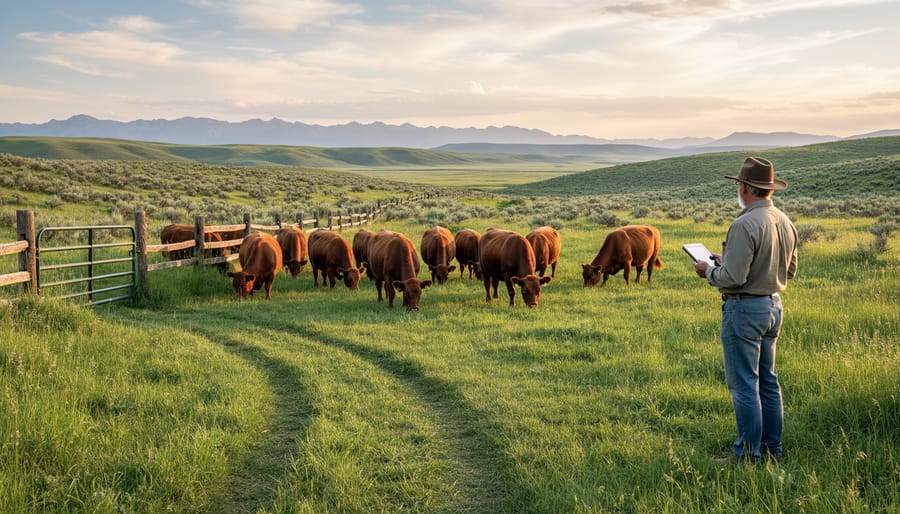
Overgrazing occurs when cattle or other livestock graze pastures too heavily or too frequently, leaving insufficient time for grasses and forbs to recover. In Alberta’s ranching operations, this practice degrades the very resource base that supports livestock production.
When pastures are overgrazed, plant roots weaken and die back, reducing the soil’s ability to absorb and retain water. Bare patches develop where desirable forage species once thrived, creating openings for invasive weeds like Canada thistle and leafy spurge. The native mixed grasslands of southern Alberta, adapted to periodic grazing followed by rest, suffer particularly under continuous heavy use.
Soil compaction from excessive hoof traffic is another major concern. Compacted soils limit water infiltration, increasing runoff and erosion while restricting root growth. During wet periods, compaction worsens as livestock traffic churns pastures into mud, destroying soil structure that takes years to rebuild.
Poor pasture management also means lost productivity. Overgrazed rangelands produce less forage per acre, forcing ranchers to either carry fewer animals or purchase supplemental feed, both of which hurt profitability. Transitioning to rotational grazing systems that allow adequate rest periods rebuilds pasture health and improves long-term carrying capacity.
Inefficient Water Use and Irrigation Practices
Southern Alberta’s irrigated agriculture faces unique water challenges, with practices that made sense decades ago now straining limited water supplies. The region’s semi-arid climate and dependence on snowpack and river flows make every drop count, yet inefficient systems waste thousands of litres per hectare annually while degrading soil quality.
Several common practices contribute to this problem:
- Flood irrigation on sandy soils that allow rapid water loss through percolation
- Lack of soil moisture monitoring, leading to guesswork-based irrigation schedules
- Over-irrigation that raises water tables and triggers soil salinization
- Failure to capture and reuse tailwater runoff from fields
These inefficiencies don’t just waste water, they create compounding problems. Excessive irrigation leaches nutrients below the root zone, requiring more fertilizer inputs. It can also bring salts to the surface, permanently damaging productive land. Meanwhile, aquifer levels in some irrigation districts have dropped measurably over the past two decades, threatening long-term water security for entire communities. Transitioning to precision irrigation systems, soil moisture sensors, and proper scheduling cuts water use by 20 to 40 percent while often improving yields through better-timed applications.
Who Is Affected: Understanding Eligibility for Support and Transition Programs
Unsustainable practices affect virtually every farming and ranching operation in Alberta to some degree, regardless of size or commodity focus. If you’re cultivating crops, raising livestock, or managing pasture, chances are at least one practice in your current operation could benefit from transition support. The good news: Alberta’s support programs are designed to be inclusive rather than exclusive, targeting a broad cross-section of producers who recognize room for improvement and are ready to take action.
Provincial and federal programs typically target primary producers with active farming operations. That includes grain farmers, oilseed producers, cattle ranchers, mixed operations, irrigators, and even smaller market gardeners looking to scale sustainably. Most programs don’t set strict acreage minimums, though some cost-share initiatives prioritize operations that can demonstrate measurable environmental impact. If you’re actively working the land and registered as an agricultural producer in Alberta, you’re likely eligible for at least some level of support.
Specific eligibility often hinges on what you’re trying to change. Programs addressing soil health might require baseline soil testing. Water efficiency incentives may target irrigators in specific watersheds. Grazing management support frequently goes to ranchers with Crown grazing leases or significant pasture acreage. The practice you’re transitioning from matters less than your commitment to implementing something better and your willingness to track results.
| Program | Who Qualifies | Practices Covered | Typical Support |
|---|---|---|---|
| Canadian Agricultural Partnership (CAP) | All active Alberta producers, priority to demonstrated need | Soil testing, precision ag, water management, rotational grazing infrastructure | 50-70% cost-share up to set maximums |
| Environmental Farm Plan (EFP) | Any farm operation, no minimum size | Comprehensive assessment of all practices, gateway to other programs | Assessment support, access to follow-on funding |
| On-Farm Climate Action Fund | Producers with eligible cropping systems | Cover cropping, nitrogen management, rotational grazing | Varies by practice, formula-based per acre or animal unit |
| Alberta Irrigation Rehabilitation Program | Irrigators in established districts | Water delivery efficiency, conversion to precision systems | Up to 75% cost-share on approved upgrades |
Start with the Environmental Farm Plan if you’re unsure where you fit. Completing an EFP assessment opens doors to additional funding streams and provides a clear picture of which practices need attention and which programs align with your operation’s specific needs. Many cost-share programs require a current EFP as a prerequisite, making it the logical first step for most producers.
Financial need matters, but it won’t disqualify you. Programs recognize that transition costs can strain farm budgets, which is precisely why they exist. Demonstrating willingness to co-invest through in-kind contributions, labour, or partial funding often carries more weight than your operation’s balance sheet.
How to Transition Away from Unsustainable Practices
Step 1: Conduct a Farm Sustainability Assessment
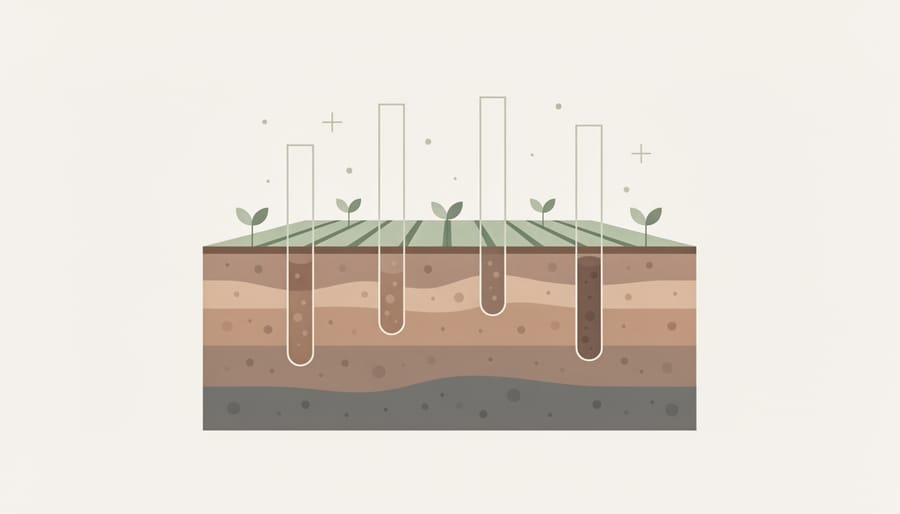
Start with a simple walkthrough of your farm. Grab a notebook and move through each field, pasture, or production area, noting what you see: bare soil patches, water pooling, weed pressure zones, or areas where yields have declined. This isn’t about judgment, it’s about honest observation. Pay attention to tillage frequency, how often you’re applying inputs, whether you’re rotating crops or grazing the same pastures year-round, and how your irrigation system performs.
Next, test your soil. Alberta Agriculture offers subsidized soil testing programs through most agricultural service boards, and many also provide access to Environmental Farm Plan facilitators who can walk you through a formal assessment at no cost. Focus on organic matter levels, nutrient balance, and compaction indicators, these reveal whether practices are building or depleting your land’s capacity.
Finally, prioritize changes based on impact and feasibility. Practices that improve soil health like reducing tillage or adding cover crops, often deliver measurable results within one to two seasons and qualify for cost-share funding, making them logical first steps.
Step 2: Connect with Technical Advisors and Programs
Once you’ve assessed your current practices, connecting with the right technical support is crucial. Alberta Agriculture and Irrigation offers free extension services through regional Agricultural Service Boards, your local ASB can connect you with agrologists who understand your area’s specific soil and climate conditions.
For specialized soil health guidance, the Alberta Soil Information Viewer provides baseline data, while private agrologists certified through the Alberta Institute of Agrologists offer field-level consulting. Many are familiar with transitioning from intensive practices to regenerative systems.
Environmental Farm Plans remain Alberta’s foundational diagnostic tool. The program is voluntary and confidential, providing a comprehensive review of your operation’s environmental risks and opportunities. Plans are developed at your own pace, with facilitators guiding you through modules covering soil management, nutrient use, and water stewardship. Completion opens doors to several cost-share programs.
Conservation districts across Alberta also provide technical assistance tailored to local watersheds, particularly for irrigation efficiency and riparian management issues.
Step 3: Develop a Transition Plan
A successful transition plan breaks changes into manageable phases, typically spanning three to five years. Start with one or two practices that offer quick wins, maybe reducing tillage on a quarter-section or adding a cover crop to one field rotation. These pilot areas let you test regenerative practices without risking your entire operation, building confidence and gathering data before scaling up.
Your plan should map specific actions to each growing season, accounting for cash flow realities. If fertilizer costs are squeezing margins now, prioritize soil testing and variable-rate application to cut waste immediately while planning longer-term nutrient cycling strategies. Include contingency steps for setbacks, a failed cover crop or unexpected weather, so you’re not derailed by normal farming challenges. Set clear, measurable goals (reduce synthetic nitrogen by 20%, improve soil organic matter by 0.5%) and review progress annually with your advisors, adjusting timelines as you learn what works on your land.
Step 4: Apply for Available Funding and Incentives
Alberta farmers transitioning to sustainable practices can access several funding streams to offset implementation costs. Start by reviewing the Canadian Agricultural Partnership’s Environmental Stewardship and Climate Change Program, which offers cost-sharing up to 50% for approved projects like cover cropping systems or improved grazing infrastructure.
Carbon offset programs through Alberta’s Emission Offset System reward farmers financially for adopting practices that sequester carbon, no-till conversion, shelterbelts, and rotational grazing qualify. Applications require baseline documentation and third-party verification, but payments continue annually.
Most programs operate on intake windows, typically spring and fall. Gather farm operation details, financial records, and your transition plan before deadlines. Agricultural service boards can help complete applications and navigate eligibility requirements. Don’t overlook municipal and watershed-specific grants for water conservation or riparian restoration, these smaller programs often have faster approval timelines and less competition.
Step 5: Implement and Monitor Changes
Once you’ve secured funding and finalized your transition plan, implementation begins with small, manageable changes rather than wholesale transformation. Start with one field or pasture as a pilot area, this lets you test new practices, troubleshoot challenges, and demonstrate results before scaling up across your entire operation.
Keep detailed records from day one. Document what you changed, when you implemented it, input costs, labor hours, and weather conditions. This baseline data becomes invaluable for measuring progress and satisfying program reporting requirements. Most cost-share programs require annual reports showing practice adoption and maintenance.
Monitor soil health indicators regularly. Conduct soil tests before implementation and annually thereafter, tracking organic matter content, aggregate stability, and biological activity. Visual observations matter too, note earthworm presence, residue breakdown rates, and water infiltration during rain events. These on-farm signs often reveal changes before lab results catch up.
Track economic outcomes alongside environmental ones. Compare input costs, yields, and net returns to your pre-transition baseline. Many farmers find certain sustainable practices reduce costs immediately through lower fertilizer or fuel use, while others require two to three seasons before economic benefits appear. Honest tracking helps you adjust course when needed and builds confidence in practices that deliver.
Stay flexible and adjust based on what you’re seeing. If a cover crop isn’t establishing well, consult your agrologist about species selection or seeding timing. If reduced tillage causes temporary yield dips, don’t panic, this adaptation period is normal and usually resolves as soil structure improves.
Your Rights and Obligations When Transitioning Practices
When you commit to transitioning away from unsustainable practices, you gain specific rights and assume certain obligations under Alberta’s agricultural programs. Understanding both ensures you can access support effectively while meeting your responsibilities.
You have the right to apply for any provincial or federal sustainability program for which you meet eligibility criteria, regardless of your farm size or previous practices. This includes access to unbiased technical advice from extension staff, agrologists, and soil specialists funded through public programs. You’re entitled to fair treatment in application review processes and clear explanations if your application is denied or requires modification. Program administrators must respect your confidentiality regarding farm data and business information you provide during assessments or applications.
Your obligations begin when you accept program funding or participate in cost-share initiatives. Most programs require accurate record-keeping of practice changes, input use, and outcomes for a specified period, typically three to five years. You must implement practices according to approved plans and maintain them for the program’s duration. If you receive Environmental Farm Plan funding, you’re obligated to complete your planned beneficial management practices within agreed timelines and allow verification visits.
You’re also responsible for complying with Alberta’s environmental regulations regardless of program participation. This includes respecting nutrient management bylaws, water use permits, and pesticide application regulations. Some programs require you to maintain or improve baseline environmental conditions on enrolled land, meaning you cannot degrade soil, water, or habitat quality even in areas not directly targeted by your transition plan.
If circumstances change and you cannot fulfill obligations, contact program administrators immediately. Most offer flexibility for weather events, market disruptions, or family emergencies rather than demanding rigid adherence that could jeopardize your operation.
Where to Get Help: Resources and Support in Alberta
Alberta farmers don’t have to navigate the transition from unsustainable practices alone. The province offers extensive support through government agencies, industry organizations, research institutions, and peer networks that understand the unique challenges of farming in this region.
Provincial and Government Resources
Alberta Agriculture and Irrigation maintains regional offices across the province staffed with agrologists, soil specialists, and environmental advisors who provide free technical guidance. Their Growing Forward programs offer cost-share funding for practice changes, while the Environmental Farm Plan program helps producers identify sustainability improvements specific to their operations. Contact your nearest regional office to schedule a farm assessment or discuss available incentives.
Industry Associations and Technical Support
Several organizations provide specialized assistance for different agricultural sectors:
- Alberta Beef Producers, grazing management resources and ranch sustainability workshops
- Alberta Wheat Commission and Alberta Pulse Growers, regenerative cropping research and farmer networks
- Irrigation districts in southern Alberta, water efficiency audits and modernization support
- Agricultural Service Boards in your county or municipality, local expertise and connection to provincial programs
- Alberta Soil Conservation Association, soil health testing, cover crop guidance, and field demonstrations
- University of Alberta Faculty of Agricultural, Life and Environmental Sciences, extension services and applied research trials
Peer Networks and Learning Communities
Connecting with farmers who’ve already made the transition provides invaluable practical knowledge. Organizations like the Organic Alberta and the Alberta Reduced Tillage Linkages network facilitate peer-to-peer learning through field days, winter workshops, and online forums. Many producers find these connections through the local food movement which emphasizes sustainable production methods alongside market development.
For financial planning support during transitions, the Farm Business Advisory Services program connects producers with business consultants who understand the economics of practice changes and can model long-term return on investment.
Local Success Stories: Alberta Farmers Leading the Way
When the Peterson family took over their 2,400-acre grain operation near Drumheller in 2018, they inherited decades of intensive tillage and continuous canola-wheat rotations. Soil organic matter had dropped to 2.1%, and erosion gullies scarred their fields after every heavy rain. Within three years of switching to no-till and introducing peas, flax, and cover crops into their rotation, they’ve raised organic matter to 3.4% and cut fuel costs by 60%. “We were skeptical about yield impacts,” admits third-generation farmer Marcus Peterson, “but our five-year average is actually up 8% while input costs dropped significantly. The soil holds moisture better now, which matters more every year.”
In the foothills west of Calgary, rancher Sarah Chen faced a different challenge. Her 800-head cattle operation had been running continuous grazing on native grassland, leading to bare patches, thistle invasion, and declining forage quality. After attending a holistic management workshop in 2020, she divided pastures and implemented adaptive multi-paddock grazing. The transformation took patience, Chen spent two seasons adjusting stocking rates and rest periods, but results followed. Native grass species returned, soil compaction decreased measurably in the top six inches, and she now runs 15% more animal units on the same land base. “The hardest part was trusting the rest periods,” she notes. “Leaving grass that looked ready to graze went against everything I’d learned, but the regrowth proved the system works.”
Near Lethbridge, the Kowalski brothers modernized their 600-acre irrigated potato and sugar beet farm by replacing flood irrigation with drip systems and variable-rate fertilizer application. Their previous approach wasted an estimated 40% of applied water and created nutrient hotspots that leached into local waterways. The upfront investment of $180,000 seemed daunting, but provincial cost-share programs covered nearly half. Three growing seasons in, they’ve cut water use by 52%, reduced fertilizer applications by 35%, and improved crop uniformity. Power costs for pumping dropped enough that the system will pay for itself in seven years, well ahead of projections.
Common Questions About Unsustainable Practices and Transition
Farmers across Alberta ask similar questions when considering a shift away from unsustainable practices. The decision to change long-standing methods raises practical concerns about cost, timing, and economic viability. These questions reflect real operational pressures and deserve straightforward answers grounded in Alberta’s farming reality.
How do I know if my practices are unsustainable?
Start by examining whether your soil, water, and productivity are declining over time. Increased input needs for the same yield, visible erosion, poor water infiltration, or reliance on a single crop or chemical solution are warning signs worth investigating through a farm sustainability assessment.
How much does transition cost?
Costs vary widely depending on which practices you’re changing and how quickly, but many transitions reduce input expenses over time. Cost-share programs, carbon offset payments, and technical grants can cover 25 to 75 percent of initial implementation expenses for eligible farmers.
How long before I see benefits?
Some changes deliver immediate savings on inputs, while soil health improvements typically take three to five years to become measurable. Economic returns often follow a similar timeline, though reduced fuel and chemical costs can show up in the first growing season.
Will I lose yield during transition?
Many farmers experience stable or slightly reduced yields in years one through three, followed by recovery and often improvement as soil biology rebuilds. The timeline depends on starting soil health, crops grown, and which practices you’re shifting, but catastrophic yield loss is uncommon with a well-planned transition.
What if I can’t afford to change everything at once?
You don’t have to. A phased approach lets you tackle high-impact changes first, monitor results, and expand as cash flow allows, spreading both risk and cost over multiple seasons.
Can I still be competitive?
Yes. Alberta farmers who have transitioned report competitive yields with lower input costs, improved resilience during droughts, and growing market access for sustainably produced grain and beef, which increasingly commands premium prices.
These concerns are legitimate, and addressing them head-on is part of building a realistic transition plan. No farmer operates in a vacuum where profitability doesn’t matter. The most successful transitions happen when you match practice changes to your specific operation, access available support, and connect with other farmers who have navigated the same shift. The resources and programs outlined earlier exist precisely because Alberta’s agricultural sector recognizes that individual farms need practical help, not just encouragement, to make these changes work economically.
Shifting away from unsustainable practices isn’t something that happens in a single season. It’s a gradual process that unfolds over time, shaped by your farm’s unique circumstances, resources, and goals. What matters most is taking that first step, whether it’s booking a soil test, reaching out to an agrologist, or simply starting a conversation with a neighbour who’s made similar changes.
You’re not alone in this transition. Alberta’s agricultural community is full of farmers and ranchers who’ve navigated this path before you, and many are eager to share what they’ve learned. The province offers robust support through extension services, cost-share programs, and technical expertise designed specifically for our climate and cropping systems. These resources exist to make the journey more manageable and less financially daunting.
The long-term rewards extend well beyond environmental stewardship. Farmers who’ve embraced sustainable practices consistently report improved soil health, reduced input costs, and greater resilience during Alberta’s unpredictable weather extremes. Their operations become more adaptable, their land more productive over time, and their businesses better positioned for the next generation.
Alberta’s agricultural future depends on producers who are willing to question old habits and explore better alternatives. You’ve already shown that willingness by reading this far. Now it’s time to move from awareness to action. Reach out to your local agricultural service board, connect with a peer network, or schedule that farm assessment you’ve been considering. Your farm, your community, and Alberta’s agricultural landscape will be stronger for it.